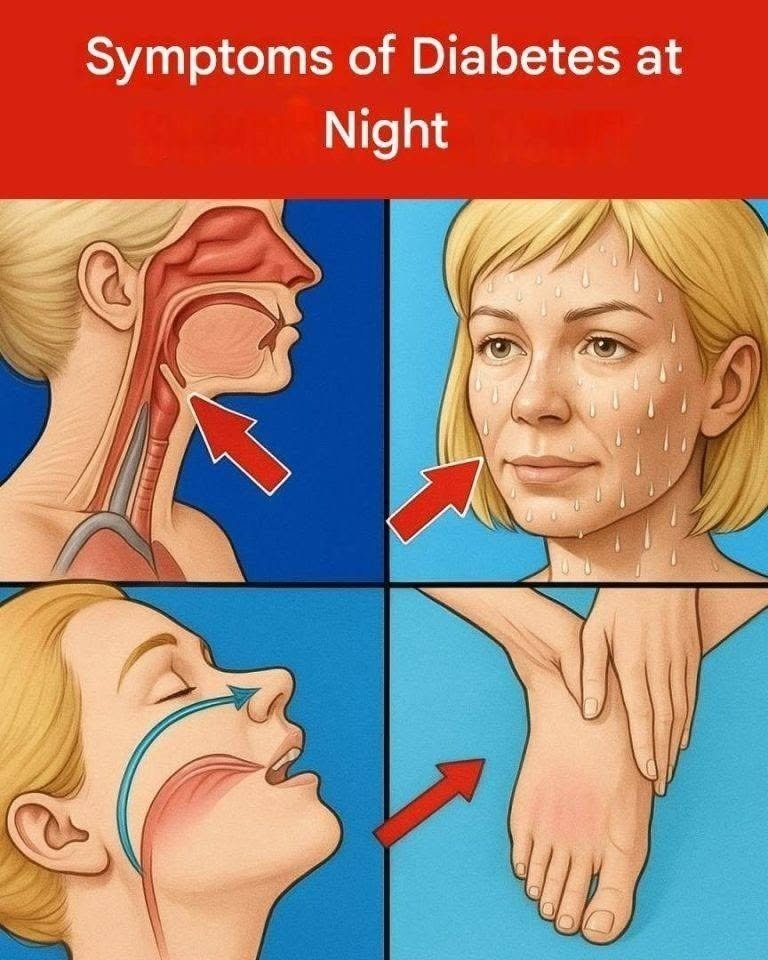
Viral health feeds and clickbait articles love to publish alarming lists of “nocturnal symptoms” designed to make every nighttime twitch, sweat, or bathroom trip look like an immediate sign of undiagnosed diabetes. While chronic high blood sugar (hyperglycemia) does affect the body 24/7, recognizing the actual clinical signs that manifest or worsen at night helps separate legitimate medical indicators from internet anxiety.
Endocrinologists and diabetes specialists point to specific, physiological consequences of poorly managed glucose that become noticeable during sleep hours.
5 Diabetes Symptoms That Can Appear or Worsen at Night
-
1. Nocturia (Frequent Nighttime Urination):
-
Why it happens: When blood sugar levels are chronically elevated, your kidneys go into overdrive trying to filter and expel the excess glucose. Because your body pulls water from surrounding tissues to dilute the sugar, it floods your bladder, forcing you to wake up multiple times during the night to urinate.
-
-
2. Nocturnal Hypoglycemia (Sudden Night Sweats, Shaking, and Vivid Dreams):
-
Why it happens: This is particularly common in people taking certain diabetes medications (like insulin or sulfonylureas). If blood sugar drops too low during sleep, your body panics and releases emergency counter-regulatory hormones (like adrenaline and cortisol) to push glucose back up. This sudden hormone surge triggers heavy night sweats, racing heartbeats, shaking, or waking up disoriented from vivid or disturbing nightmares.
-
-
3. Peripheral Neuropathy (Burning, Tingling, or “Pins and Needles” in the Feet):
-
Why it happens: Long-term high blood sugar damages the small blood vessels and nerves supplying your extremities. While nerve pain (neuropathy) can happen all day, it often feels dramatically worse at night because there are fewer external distractions, and lying still makes you hyper-aware of the burning, sharp, or shooting discomfort in your feet and toes.
-
-
4. Excessive Nighttime Thirst (Polydipsia) and Dry Mouth:
-
Why it happens: Directly linked to frequent urination, losing excess fluid leaves your body dehydrated. Waking up with an unquenchable thirst and a parched mouth in the middle of the night is a classic sign your body is desperately trying to restore its fluid balance.
-
-
5. Restless Legs Syndrome (RLS) or Nocturnal Cramps:
-
Why it happens: People with diabetes experience higher rates of Restless Legs Syndrome or painful muscle cramps. While the exact overlap is multifactorial—involving nerve irritation, poor circulation, or electrolyte shifts—the intense crawling or aching sensations flare up precisely when you try to rest in bed.
-
The Clinical Takeaway
Occasional night sweats or waking up once to use the bathroom are normal and can be caused by room temperature, evening hydration, or heavy dinners. However, a persistent combination of extreme thirst, frequent nighttime urination, and waking up drenched in sweat or dealing with burning feet points to metabolic disruption that warrants a proper fasting blood glucose or HbA1c test from your primary care doctor.
💡 The Big Takeaway
While viral posts often exaggerate symptoms to generate clicks, nighttime issues like severe polyuria (frequent urination) and nocturnal hypoglycemia are genuine physiological red flags that your body is struggling with glucose regulation.
Are you looking into metabolic health symptoms, or did a sensational health warning catch your attention?
