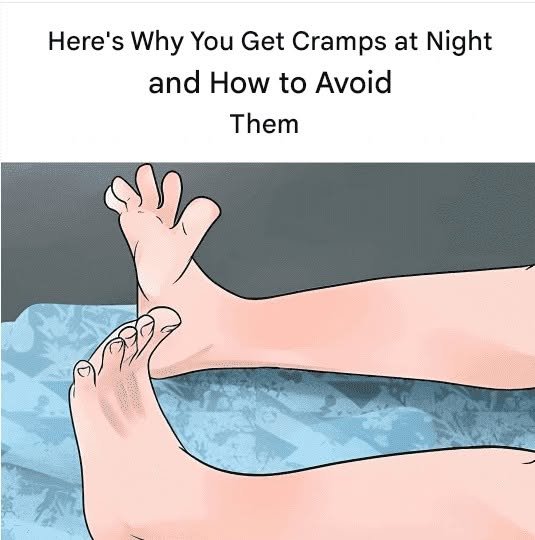
Viral health content loves to blame nighttime leg cramps on a single culprit—usually screaming that you are severely dehydrated or desperately low on potassium and need to buy an expensive electrolyte supplement immediately.
While hydration matters, neurologists and sports medicine specialists point out that nocturnal leg cramps (most commonly hitting the calf muscles) are usually a combination of neuromuscular hyperexcitability and mechanical positioning, rather than a simple dietary deficiency.
What Actually Triggers Nighttime Leg Cramps?
-
1. The Sleeping Position (Shortened Muscle Fibers):When you lie on your back or side with your toes pointed downward (plantar flexion), your calf muscles are placed in a naturally shortened position. In this relaxed state, even a tiny, uninhibited signal from the lower motor neurons can cause the muscle fibers to hyper-contract violently instead of relaxing, triggering a cramp.
-
2. Lower Motor Neuron Hyperactivity:Clinical research suggests that most nocturnal cramps originate from hyperactive nerve endings in the lower motor neurons. When these nerves fire off high-frequency, involuntary discharges, the muscle seizes up tightly.
-
3. Muscle Fatigue and Deconditioning:Unusually intense physical exertion, long hours standing on hard floors, or structural muscle fatigue during the day leaves the neuromuscular system more susceptible to spasms once you finally rest.
Sorting Myth From Medical Reality
-
The “Banana/Potassium” Myth: Unless you have a diagnosed medical condition or are on specific diuretic medications that cause severe electrolyte depletion, random night cramps are rarely a sign that you need to eat more bananas or drink massive amounts of sports drinks.
-
Underlying Systemic Factors: While most night cramps are “benign idiopathic cramps” (meaning they happen on their own for no dangerous reason), chronic or severe cramping can occasionally be linked to peripheral nerve changes (like neuropathy), circulatory issues, or specific medications (such as certain diuretics or statins).
How to Stop and Prevent Them
-
In the Moment (The Stretch): When a cramp strikes, the fastest way to break the spasm is to forcefully lengthen the muscle. Straighten your leg and flex your foot upward toward your face (dorsiflexion), or gently walk around the room.
-
Prevention Strategies:
-
Do gentle calf stretches a few hours before going to bed.
-
Keep the sheets and heavy blankets loose at the foot of your bed so your toes aren’t forced downward while you sleep.
-
Maintain general, balanced hydration throughout the day.
-
💡 The Big Takeaway
Nighttime leg cramps are typically caused by tired muscles and hyperactive nerve signals interacting with the way your feet rest under the blankets, rather than a sudden emergency electrolyte crash.
Do you frequently deal with stubborn night cramps, or did a viral remedy catch your eye?
