Viral cleaning videos love to promise that a magical 2-ingredient kitchen hack will effortlessly strip away years of burnt-on grease, carbon crust, and baked-on food spills from a gas stovetop with zero elbow grease. While you certainly don’t need a cabinet full of expensive, harsh industrial chemicals to get a sparkling clean kitchen, understanding the actual chemistry of grease removal helps you cut through the hype.
Here is how to clean a gas stovetop safely and effectively using simple, common household staples without ruining your burners or scratching your enamel.
The Reality Behind “2-Ingredient” Cleaning Hacks
-
The Classic Viral Combo: Most viral hacks rely on combining baking soda (a mild abrasive) and hydrogen peroxide or dish soap and vinegar.
-
The Chemical Truth:
-
Baking soda is mildly alkaline and acts as a gentle abrasive to mechanically scour away burnt-on carbon.
-
Dish soap is a surfactant that breaks the surface tension of grease so it can be wiped away.
-
The Vinegar/Baking Soda Mix-Up: Mixing vinegar and baking soda together creates a fun, fizzy chemical reaction, but it actually neutralizes them both—turning your powerful cleaner mostly into salty water! Instead, using them sequentially (or pairing baking soda with grease-cutting dish soap) is where the real cleaning power lives.
-
Step-by-Step Guide: Restoring a Gas Stovetop
Instead of aggressive scrubbing that can scratch stainless steel or chip porcelain enamel, let chemistry do the heavy lifting.
-
What You Need:
-
Baking soda
-
Dawn dish soap (or a heavy-duty grease-cutting dish soap)
-
Warm water and microfiber cloths
-
A plastic scraper or old credit card (to safely lift baked-on gunk without scratching)
-
A shallow bowl or Ziploc bag (for burner caps)
-
-
Step-by-Step Instructions:
-
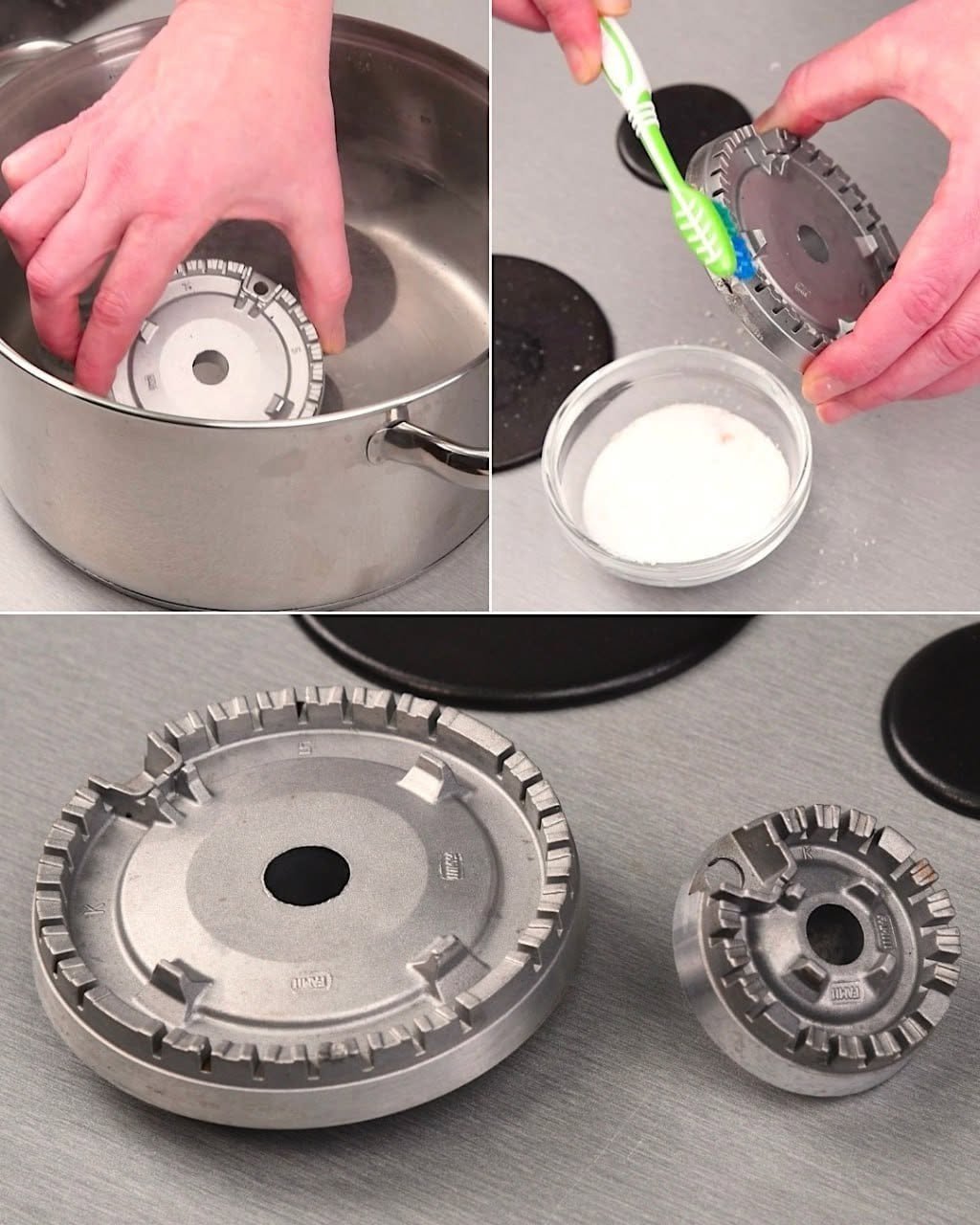
Safety First: Ensure the stovetop is completely cool and the gas supply is off. Remove the heavy iron grates, burner caps, and burner heads.
-
Degrease the Grates: Fill your sink with hot, soapy water (using plenty of dish soap). Submerge the iron grates and let them soak for 15 to 30 minutes to loosen baked-on grease. Scrub with a non-scratch nylon brush, rinse, and dry thoroughly.
-
Apply the Paste (The Main Stovetop): Sprinkle a generous layer of baking soda over the dirty stovetop surface. Drizzle a few tablespoons of liquid dish soap and a little warm water over the powder to form a thick, spreadable paste.
-
Let It Dwell (The Secret to Zero Elbow Grease): Walk away for 20 to 30 minutes. Allowing the paste to sit gives the surfactant and mild abrasive time to soften and lift the hardened carbon crust.
-
Lift, Don’t Scrape: Use a damp microfiber cloth or a plastic scraper to gently wipe away the loosened grime. The baking soda will provide just enough safe friction to lift sticky spots without scratching the finish.
-
Rinse and Shine: Wipe down the entire surface with a clean, damp cloth to remove any residual baking soda film, then buff dry with a dry cloth or paper towel for a streak-free shine.
-
💡 The Big Takeaway
You don’t need expensive specialty cleaners, but you do need patience. Letting a grease-cutting soap and baking soda paste sit to soften stubborn carbon is what truly makes a gas stovetop look brand new again—no magic required.
Are you tackling a deep-clean kitchen weekend, or did a satisfying cleaning video inspire you to scrub your stove?
