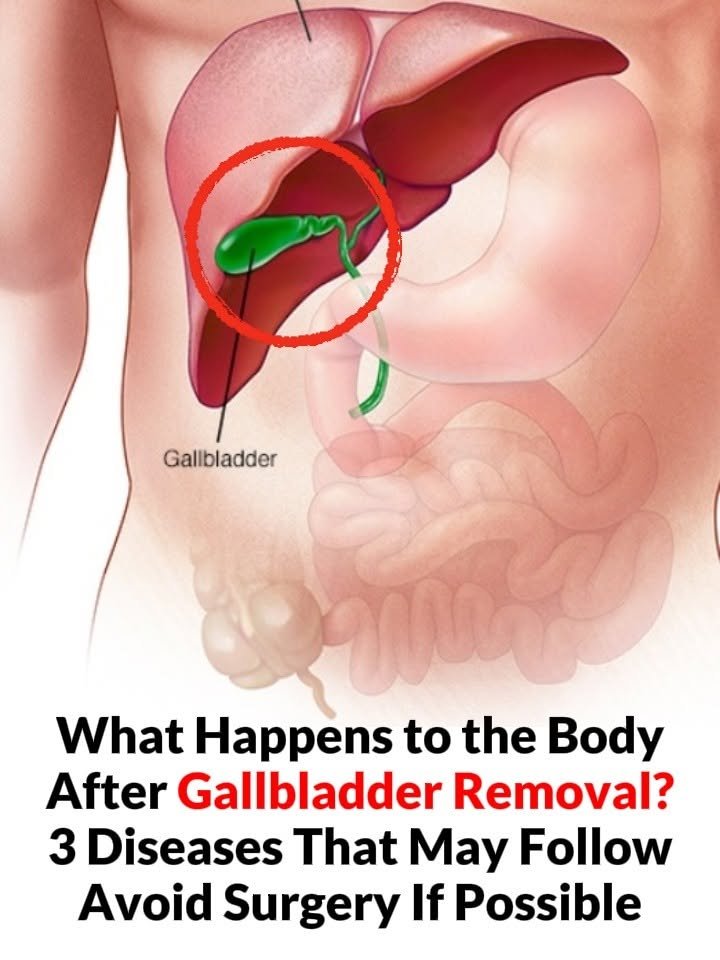
Viral health articles love to terrify people facing gallbladder surgery (cholecystectomy) with ominous warnings that removing the organ will trigger a cascade of mysterious “post-gallbladder diseases” and ruin your digestive system for life, urging you to rely on alternative “liver flushes” to avoid surgery at all costs.
Gastroenterologists, hepatologists, and general surgeons emphasize a balanced medical reality: while living without a gallbladder requires a brief physiological adjustment, the organ is not vital to survival. Conversely, avoiding surgery when a gallbladder is acutely inflamed, infected, or packed with blocking stones can lead to life-threatening complications like sepsis or pancreatitis.
What Is the Gallbladder’s Actual Job?
-
The Storage Reservoir: Your liver constantly produces bile, a fluid that helps your body break down and absorb dietary fats. The gallbladder acts as a small storage pouch that holds onto bile and concentrates it, releasing a squirt of it into your small intestine whenever you eat a fatty meal.
-
Life Without It: When the gallbladder is removed (usually because it is diseased, chronically inflamed, or blocked by painful gallstones), your liver doesn’t stop making bile. Instead, bile flows directly and continuously from the liver straight into the small intestine through the common bile duct, rather than being stored and released in bursts.
Debunking the “Post-Surgery Diseases” Narrative
Viral posts often claim that removing the gallbladder causes a set of permanent, severe diseases. While some patients experience temporary digestive changes, the clinical reality is far less dramatic:
-
1. The “Bile Acid Malabsorption” / Chronic Diarrhea Fear:
-
The Reality: Because bile is now trickling continuously into the intestine instead of waiting for a fatty meal, some people experience looser stools or mild diarrhea after surgery. For the vast majority of patients, this resolves within a few weeks to months as the digestive tract adapts. In a small percentage of cases, persistent bile diarrhea occurs, but it is easily managed with prescription bile acid sequestrants.
-
-
2. The “Liver Overload” Myth:
-
The Reality: Internet cleanses claim that without a gallbladder, your liver gets “clogged” or ruined. Physiologically, the liver simply adapts to continuous bile delivery. It does not fail or develop unique diseases purely because the small storage pouch is gone.
-
-
3. The Risk of Waiting Too Long (Why “Avoiding Surgery” Can Be Dangerous):
-
Viral articles often push herbal flushes or “stone-dissolving” teas to avoid surgery. While minor, asymptomatic gallstones found by accident often just need monitoring, a chronically infected or acutely blocked gallbladder (cholecystitis) is a surgical emergency. Waiting too long to remove a failing gallbladder can cause it to rupture, spill bacteria into the abdomen, or trigger acute pancreatitis—far more dangerous than living without it.
-
How to Manage Your Digestion After Gallbladder Removal
If you have had your gallbladder removed (or are preparing for the procedure), you can easily support your body’s new digestive rhythm with simple dietary adjustments:
-
1. Spread Out Your Fat Intake: Instead of eating a massive, greasy, heavy meal all at once (which can overwhelm the continuous trickle of bile and cause sudden diarrhea), eat smaller, more frequent meals containing moderate amounts of healthy fats.
-
2. Increase Soluble Fiber: Foods rich in soluble fiber (like oats, beans, barley, and root vegetables) help bind bile acids in the digestive tract, smoothing out transit times and firming up loose stools.
-
3. Give Your Body Time to Adapt: Most people find that within a few months, their digestive system fully recalibrates, allowing them to return to a normal, varied diet without ongoing issues.
💡 The Big Takeaway
Your gallbladder is a helpful storage tank, but it is not essential for life. While adjusting to life without it takes a little dietary patience, listening to modern surgical consensus rather than viral “detox” myths prevents dangerous complications from infected gallstones.
Are you navigating a recent digestive diagnosis, or did a sensational health article catch your eye?
