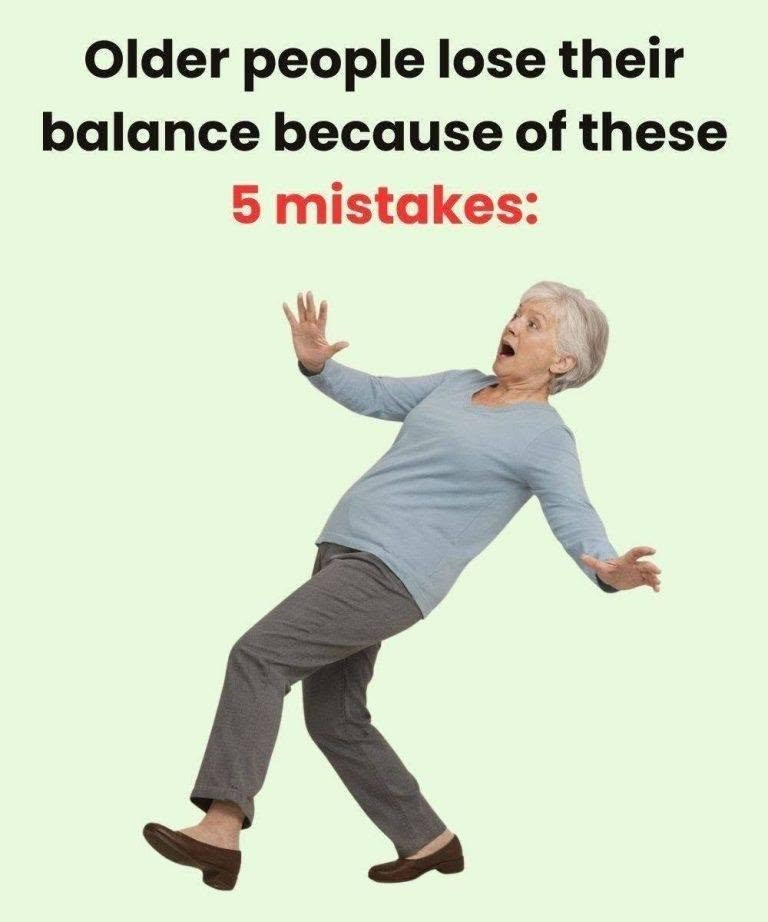
Viral health feeds and clickbait wellness sites love to target older adults with alarming videos, warning that a sudden wobble means you are on the verge of total physical collapse, and offering “secret 60-second balance hacks” to instantly reverse aging.
Geriatricians, physical therapists, and balance specialists take a much more structured, evidence-based approach to stability. Balance is not maintained by a single magic trick; it is a complex, multi-system sensory network. As people age, subtle changes occur in that network, and certain everyday habits or unrecognized mistakes can quietly undermine steadiness.
The Anatomy of Balance (Why Stability Declines)
To maintain balance, your brain constantly coordinates information from three distinct systems:
-
Vision: Letting your brain know where your body is relative to your surroundings.
-
Vestibular System: The inner-ear fluid and structures that detect gravity and head movement.
-
Proprioception: Specialized nerve receptors in your muscles, joints, and soles of your feet that tell your brain where your limbs are without you having to look at them.
When age-related changes or specific daily habits interfere with these inputs, unsteadiness and fall risks increase.
Common Mistakes That Affect Balance in Older Adults
-
1. Neglecting Strength and Resistance Training:
-
The Mistake: Believing that exercise in later life should be limited solely to gentle walking, while entirely avoiding lower-body strength work.
-
The Reality: Balance requires muscular power—especially in the glutes, quads, calves, and core—to catch yourself if you start to tip. Without regular resistance training, age-related muscle loss (sarcopenia) weakens the exact stabilizers needed to keep you upright.
-
-
2. Wearing Unsupportive or Inappropriate Footwear:
-
The Mistake: Walking around the house in slippery socks, worn-out slippers with no traction, or overly soft, spongy shoes with thick, unstable soles.
-
The Reality: Your feet are packed with proprioceptive nerve endings that need to feel the ground to help your brain calculate balance. Thick, unsupportive, or slick shoes blind those foot sensors and increase the risk of a slip or trip.
-
-
3. Ignoring Vision and Hearing Changes:
-
The Mistake: Waiting years between eye exams or dismissing gradual hearing loss as just an annoyance.
-
The Reality: The inner ear houses both your hearing and your vestibular balance center; they share a delicate vascular blood supply. Furthermore, your eyes are vital for spatial orientation. Uncorrected vision issues or inner-ear disturbances dramatically increase the risk of misjudging curbs, steps, or lighting.
-
-
4. Being Too Sedentary (The “Fear of Falling” Trap):
-
The Mistake: Stopping physical activity entirely out of fear that movement might cause a fall.
-
The Reality: Ironically, inactivity causes your balance systems and muscles to atrophy faster, making a future fall more likely. Movement is medicine; controlled, active challenges to stability actually retrain the nervous system.
-
-
5. Overlooking Medication Side Effects:
-
The Mistake: Assuming dizziness or lightheadedness is just a normal part of getting older.
-
The Reality: Many common medications—including blood pressure drugs, sedatives, antihistamines, and certain antidepressants—can cause mild drowsiness, drops in blood pressure upon standing (orthostatic hypotension), or spatial disorientation that directly impacts balance.
-
Evidence-Based Ways to Improve and Maintain Balance
You don’t need gimmicky internet routines to protect your stability. Physical therapists recommend proven, everyday strategies:
-
1. Incorporate Functional Balance Exercises: Simple movements like practicing tandem walking (heel-to-toe), standing on one foot while holding onto a kitchen counter for safety, or doing controlled sit-to-stands from a chair build real-world stability.
-
2. Participate in Tai Chi or Yoga: Numerous clinical studies show that gentle, movement-based practices like Tai Chi significantly reduce fall rates in older adults by improving lower-body strength, body awareness, and dynamic coordination.
-
3. Clear Home Hazards: Simple environmental adjustments—such as securing loose rugs, ensuring hallways are well-lit, and installing grab bars in bathrooms—remove physical traps that test even the best balance systems.
-
4. Regular Medication Reviews: Discussing your prescriptions and over-the-counter supplements with a doctor or pharmacist ensures you aren’t dealing with hidden side effects that compromise your equilibrium.
💡 The Big Takeaway
Balance isn’t maintained by viral shortcuts; it is preserved by staying active, wearing supportive footwear, addressing vision and hearing health, and consistently challenging your leg strength and coordination.
Are you looking into balance exercises for yourself or a family member, or did a sensational health article catch your eye?
