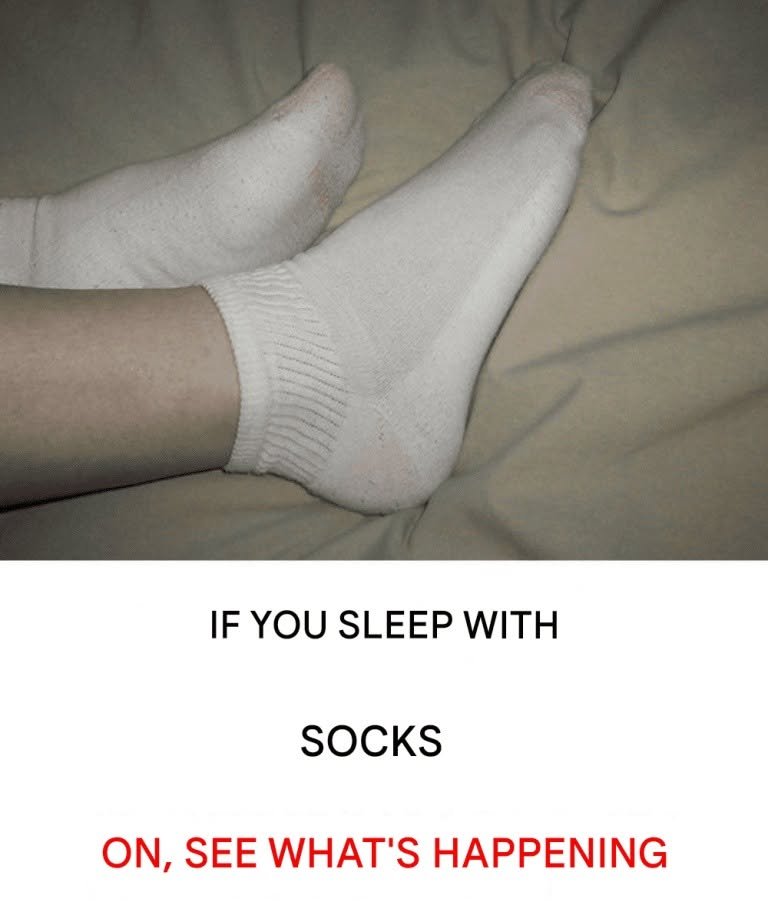
While viral senior-care advice sometimes leans into alarmist territory, the recommendation for older adults to wear socks indoors is backed by solid geriatric medicine, physical therapy, and home-safety principles.
As we age, physiological changes make our feet far more vulnerable to temperature shifts, circulatory changes, and balance issues. Wearing appropriate socks around the house serves several crucial functions:
The Medical and Safety Reasons Behind Indoor Socks
-
1. Thermal Regulation and Circulation:
-
The Science: Peripheral circulation naturally declines with age, meaning blood flow to the extremities is less efficient. This frequently leaves older adults with chronically cold feet, which can cause discomfort, stiffness, and disrupted sleep. Proper socks provide essential thermal insulation.
-
-
2. Fall Prevention and Floor Traction:
-
The Hazard of Bare Feet: Walking around a home in bare feet—especially on hardwood, tile, or laminate flooring—reduces friction and can lead to slips. Furthermore, regular socks without grips can act like ice skates on smooth indoor floors.
-
The Solution: Seniors are strongly encouraged to wear non-skid (gripper) socks or slipper socks with rubberized treads on the bottom. These provide the warmth of a sock while maintaining essential traction to prevent accidental falls.
-
-
3. Protecting Fragile Skin and Neuropathy:
-
Skin thins with age, and conditions like peripheral neuropathy (common in diabetes) reduce sensation in the feet. This means a senior might step on a small object, a crumb, or a seam and not feel a minor scrape or blister. Left unnoticed, even a tiny foot injury can develop into a serious infection. Socks act as a physical barrier against minor household hazards.
-
-
4. Joint Cushioning and Comfort:
-
The natural fat pads on the soles of our feet thin out over time. Walking barefoot on hard indoor surfaces places direct, unpadded pressure on the small joints of the feet and ankles. Quality, well-fitting socks provide a layer of soft cushioning that reduces daily foot fatigue and joint strain.
-
A Critical Warning About Sock Safety
While socks are important, poorly chosen socks can actually increase safety risks:
-
Avoid Loose, Bunching Socks: Socks that are too large can slip down, bunch up under the toes, and cause a tripping hazard.
-
Avoid Restrictive Cuffs: Socks with tight, binding elastic bands can cut into the skin and restrict fragile circulation. Look for seamless, non-binding diabetic or comfort socks if swelling is an issue.
💡 The Big Takeaway
Wearing socks at home isn’t just about comfort—for seniors, it’s a practical safety measure that protects fragile skin, insulates against poor circulation, and (when paired with rubber grips) prevents dangerous slips on hard floors.
Are you looking out for home safety tips for a family member, or researching comfortable footwear options?
