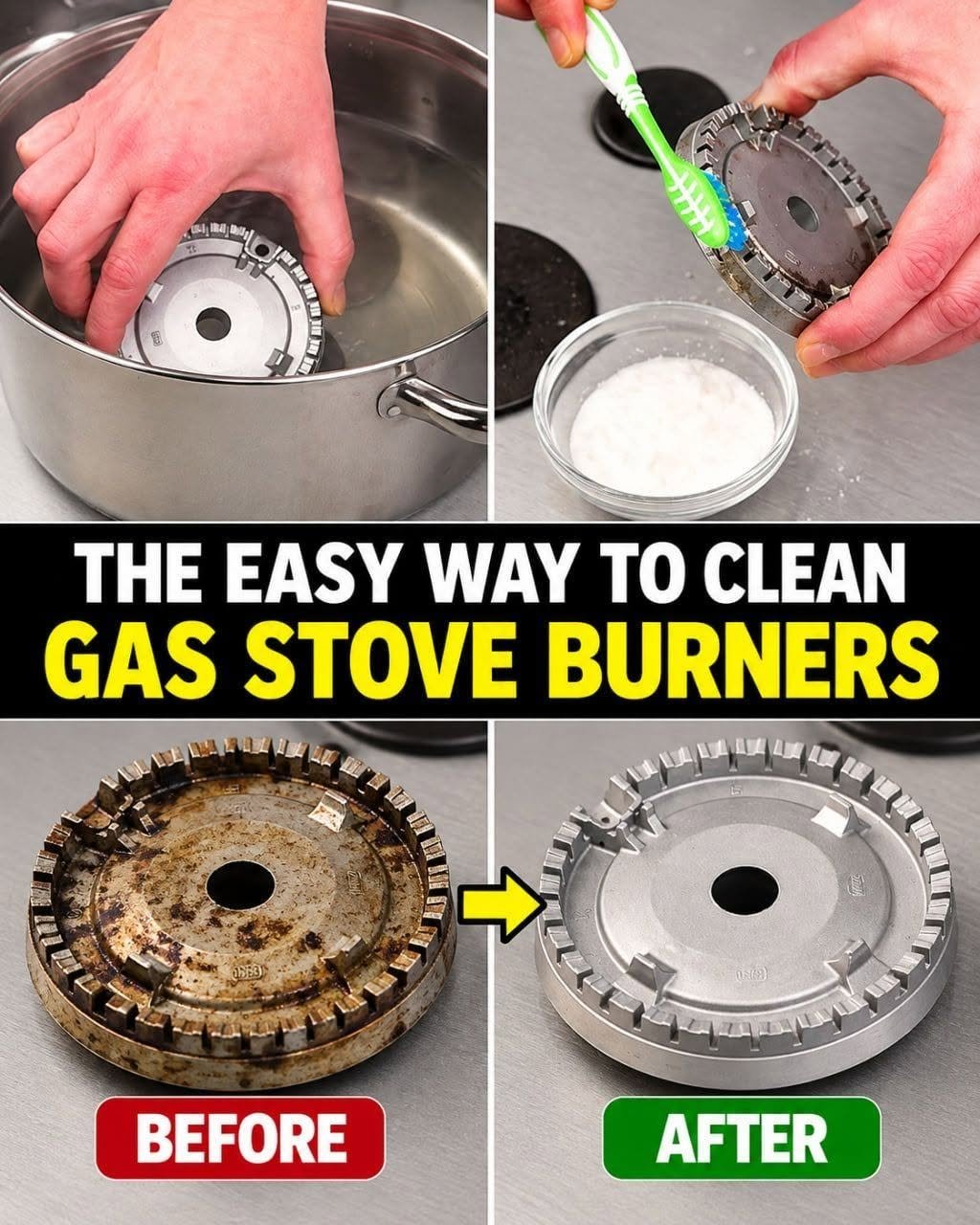
That classic cleaning headline targets one of the most frustrating kitchen cleanup battles: baked-on grease, carbonized food spills, and stubborn black soot welded onto gas stove burners. Instead of scrubbing away with harsh chemical oven cleaners or throwing your back out, the internet loves to tease a simple two-ingredient hack that supposedly makes grimy burners look brand new.
While internet titles love to sound like magic, this particular trick actually relies on solid, reliable kitchen chemistry.
Here is what is happening when burners get hopelessly caked in grime, the two ingredients that truly lift the mess, and how to safely execute the clean:
Why Gas Burners Get So Brutally Caked
-
Carbonization and Polymerized Oils:
-
The Mechanism: Every time you cook, microscopic splatters of cooking oils and food juices hit the hot metal burner caps and grates. High heat cooks those oils down, causing them to polymerize (cross-link into a hard, plastic-like varnish) and carbonize into a stubborn black crust that standard dish soap alone cannot dissolve.
-
-
Blocked Gas Ports:
-
The Mechanism: When grease and food debris overflow down the sides of the burner heads, they can clog the tiny ports where the gas flows out, leading to uneven, sputtering yellow flames instead of clean, blue rings.
-
The 2 Simple Ingredients (And the Chemistry Behind Them)
The ultimate dynamic duo for cutting through carbonized grease without harsh fumes consists of Baking Soda and White Vinegar.
-
Baking Soda (Sodium Bicarbonate – Mild Abrasive & Mild Base):
-
How it works: Baking soda provides a gentle, non-scratch abrasive grit that physically scours away loosened carbon crusts. Its mild alkalinity also helps saponify (break down) greasy organic fats.
-
-
White Vinegar (Acetic Acid):
-
How it works: Vinegar is an acid that dissolves mineral deposits, cuts through alkaline grease residue, and reacts with baking soda to create a fizzing carbon dioxide reaction. That bubbling action lifts stuck-on debris right out of microscopic pores in the metal.
-
The Step-by-Step Deep-Clean Protocol
Instead of buying expensive, toxic oven sprays, use this straightforward chemical soak:
-
The Soak (Cutting the Grease):
-
Remove your burner caps and heads once they are completely cool. Place them in a basin or plug your sink, sprinkle them generously with baking soda, and pour white vinegar over them. Watch it fizz! Let them soak in warm, soapy water or a vinegar-water bath for 30 to 45 minutes to soften the carbonized crust.
-
-
The Gentle Scour:
-
Use a non-scratch scrub sponge, an old toothbrush, or the nylon bristle brush to work the softened paste around the contours of the burner caps. The baking soda acts as a soft abrasive that strips away the black grime without scratching the metal finish.
-
-
Clear the Ports:
-
If the tiny gas holes on your burner heads are clogged with gunk, use a wooden toothpick or a straightened paperclip to gently clear them out. (Never use a steel needle that could snap off inside or warp the port size).
-
-
Rinse and Dry Completely:
-
Rinse all parts thoroughly with clean water and dry them completely with a towel before putting them back on the stove. Trapped moisture can temporarily prevent the electronic igniters from clicking on.
-
The Takeaway
You don’t need a cabinet full of industrial degreasers to restore your stovetop. A simple chemical reaction between an acid and a base, paired with a little soaking time, does all the heavy lifting safely.
Do you have a stubborn stovetop that needs a refresh, or are you looking for more chemical-free cleaning shortcuts for the kitchen?
