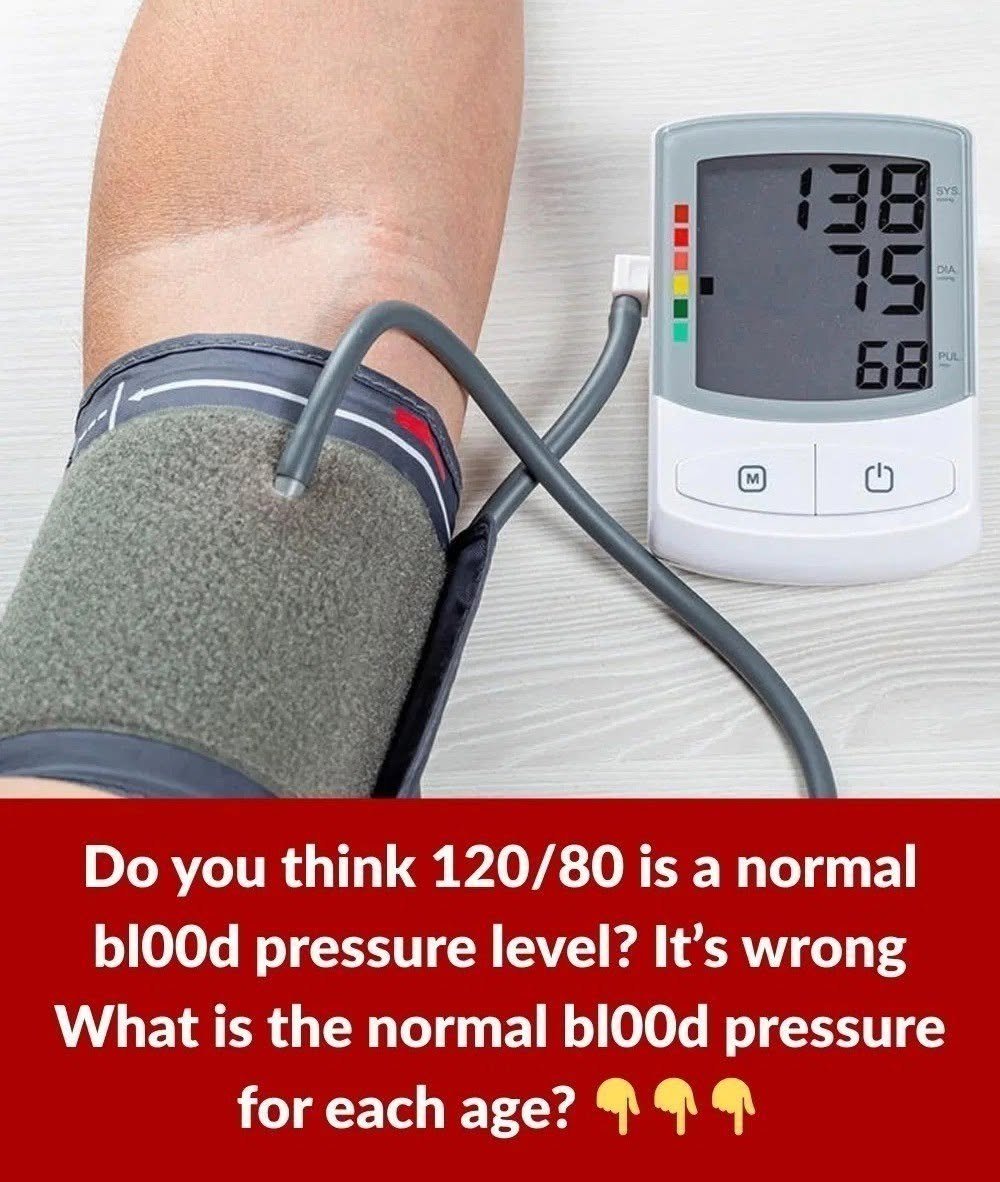
That classic health question targets one of the most monitored metrics in medicine: blood pressure. People often want a neat, static chart that tells them exactly what their numbers “should” be based on the year they were born.
However, modern cardiology and physiology reveal that blood pressure is not a rigid age-by-age staircase. While certain shifts happen naturally as our blood vessels age, medical guidelines look at specific clinical thresholds rather than a sliding scale for every decade of life.
Here is the physiological reality behind blood pressure, how it changes across the lifespan, and what the official targets actually mean:
The Numbers Explained: Systolic vs. Diastolic
Before looking at age, it helps to understand what the two numbers represent:
-
Systolic (The Top Number): The pressure in your arteries when your heart beats and contracts. This is the primary driver of cardiovascular risk as we age.
-
Diastolic (The Bottom Number): The pressure in your arteries when your heart rests between beats, reflecting baseline arterial resistance.
Normal Blood Pressure Ranges Across Adulthood
According to major cardiovascular guidelines (such as the American College of Cardiology and American Heart Association), the classification for adults generally remains consistent across most of adulthood, though the prevalence of rising pressure shifts with age:
-
Normal: Less than 120 / 80 mmHg
-
What it means: Optimal vascular health. The heart pumps efficiently, and arteries retain their natural elasticity.
-
-
Elevated: 120–129 / less than 80 mmHg
-
What it means: A warning zone. It isn’t technically hypertension yet, but without lifestyle adjustments, it often progresses to high blood pressure.
-
-
Hypertension Stage 1: 130–139 / 80–89 mmHg
-
What it means: The threshold where doctors begin to monitor cardiovascular risk closely, factoring in lifestyle, family history, and other risk factors like cholesterol.
-
-
Hypertension Stage 2: 140+ / 90+ mmHg
-
What it means: Significant mechanical strain on the arterial walls and the heart muscle.
-
How and Why Blood Pressure Changes With Age
While the definition of normal doesn’t change drastically just because you turn 40 or 60, our arterial biology certainly does:
-
Arterial Stiffening (The Aging Factor): When we are young, our arteries (especially the aorta) are stretchy and elastic, buffering the pressure wave of each heartbeat. As we age, collagen cross-linking and micro-calcification cause arterial walls to stiffen. Because stiff pipes don’t absorb pressure the way elastic ones do, the top number (systolic blood pressure) naturally tends to creep upward as we move into our 50s, 60s, and beyond—even if the bottom number stays low.
-
Isolated Systolic Hypertension: This is the most common form of high pressure in older adults, where the top number is high (e.g., 140 mmHg) but the bottom number is normal (e.g., 75 mmHg). It reflects loss of arterial elasticity rather than overall vascular constriction.
Important Nuances for Older Adults
-
The “Too Low” Trap: In older adults (particularly those over 65 or 80), aggressively lowering blood pressure too fast can sometimes cause orthostatic hypotension—dizziness, lightheadedness, or fainting when standing up—which dramatically increases the risk of dangerous falls. Physicians carefully balance cardiovascular protection with safe perfusion to the brain and kidneys.
-
Home vs. Clinic Readings: “White coat syndrome” (nervousness in a doctor’s office) can spike readings. Tracking blood pressure quietly at home in a seated, relaxed state provides a far more accurate picture of your true physiological baseline.
Have you noticed your blood pressure readings shifting recently, or are you looking at cardiovascular metrics for a specific checkup?
