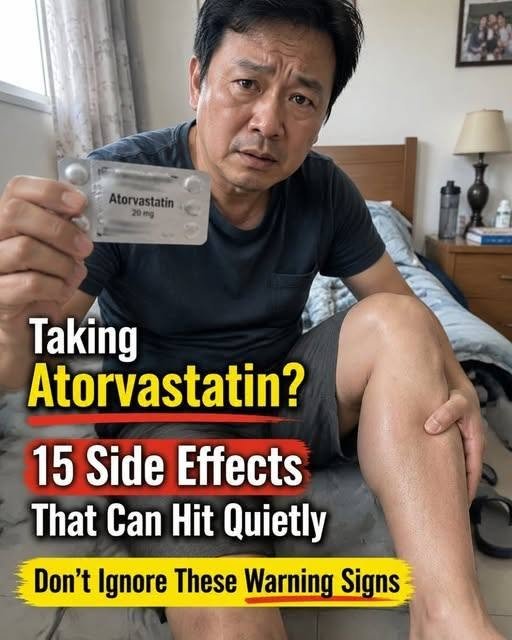
That classic statin scare headline—“Taking Atorvastatin? Could These 15 Subtle Side Effects Be Affecting You?”—is a textbook example of fear-based medical clickbait. It takes one of the most widely prescribed, life-saving medications on the planet (commonly known by its brand name, Lipitor) and frames it as a stealthy hazard lurking behind everyday human aches and fatigue.
When you strip away the alarmist listicle format and look at what clinical pharmacology and large-scale cardiology studies actually show, Atorvastatin is a thoroughly vetted cornerstone of cardiovascular health designed to lower LDL (“bad”) cholesterol and prevent heart attacks and strokes.
Here is what is happening biochemically when you take a statin, why online “side effect” lists are often deeply misleading, and what clinicians actually monitor:
The Pharmacology of Atorvastatin
-
How It Works (HMG-CoA Reductase Inhibition):
-
The Mechanism: Atorvastatin belongs to a class of drugs called statins. It works inside your liver by blocking an enzyme called HMG-CoA reductase, which is the rate-limiting step in your body’s natural production of cholesterol. By slowing down this pathway, your liver clears more LDL cholesterol out of your bloodstream, drastically reducing plaque buildup in your arteries.
-
-
Why Clickbait Expands the List to 15 (or More):
-
The Clinical Reality: In clinical trials, pharmaceutical companies must record every single symptom reported by patients taking the drug compared to those taking a sugar pill (placebo). Interestingly, in many large statin studies, patients taking the placebo reported muscle aches, fatigue, and headaches at the exact same rate as those taking the actual statin—a phenomenon known as the nocebo effect, where simply expecting a side effect makes you feel it.
-
Real Medical Monitoring vs. Internet Paranoia
While sensationalized articles want you to diagnose phantom toxicity based on a checklist of vague daily annoyances (like feeling tired after work), doctors focus on measurable, objective clinical markers:
-
Real Muscle Symptoms (Myalgia): The most discussed real side effect of statins is muscle discomfort. However, true statin-induced myopathy is relatively rare, usually presents symmetrically in large muscle groups (like thighs or hips), and is accompanied by elevated blood levels of an enzyme called creatine kinase. If a patient experiences mild aches, cardiologists and primary care physicians know how to adjust doses, switch to a different statin, or evaluate other causes (like exercise or vitamin D levels).
-
Liver Function Markers: Because statins work in the liver, doctors run periodic routine blood panels to check liver enzymes (ALT and AST). Mild, harmless enzyme bumps can occasionally happen, but true liver injury from atorvastatin is extraordinarily rare.
-
Blood Sugar Monitoring: Statins can cause a very slight, incremental increase in blood sugar levels over years, which is why doctors balance the massive cardiovascular benefits against diabetes risk, especially in patients who are already pre-diabetic.
The Takeaway
Atorvastatin is a powerful tool that prevents millions of cardiovascular events worldwide. You don’t need a 15-item panic checklist to take it safely; you just need standard lab monitoring and an open dialogue with your physician.
Are you reviewing routine lipid panel results with your doctor, or tracking down another piece of dramatic health media?
