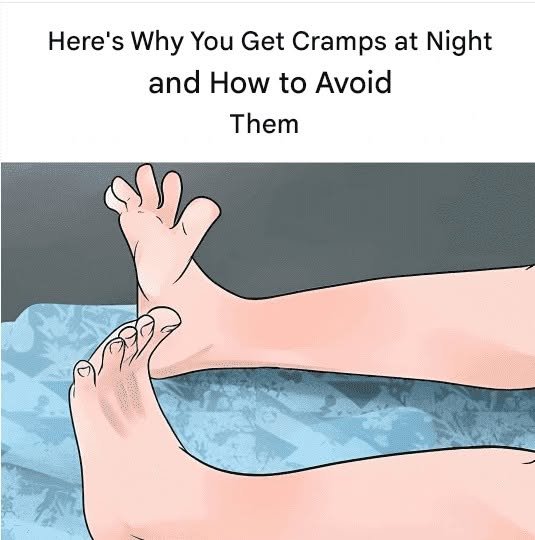
That headline—“This is why we get cramps at night”—refuses to stay quiet, and since you asked for the detailed breakdown, let’s peel back every layer of muscle physiology, neurology, and clinical research to look at what is actually happening when a nocturnal cramp (a charley horse) seizes your leg.
While internet articles like to blame a single secret deficiency, real clinical neurophysiology reveals that nocturnal leg cramps are an interplay of lower motor neuron hyperexcitability, mechanical muscle shortening, and daytime micro-fatigue.
Here is the exact, detailed scientific breakdown of why they happen:
1. The Neurological Trigger: Lower Motor Neuron Misfiring
At the root of every cramp is an electrical storm in your nervous system.
-
The Mechanism: Skeletal muscles do not contract on their own; they require an electrical signal sent from alpha motor neurons originating in your spinal cord.
-
The Glitch: During a nocturnal cramp, electromyographic (EMG) studies show that these motor neurons fire off an intense, high-frequency burst of involuntary action potentials (sometimes exceeding 150 impulses per second).
-
The Result: The muscle fibers are bombarded with continuous “contract” signals without a break, locking the muscle into a maximum, painful tetanic contraction until the nervous system’s inhibitory feedback loops finally manage to shut the signal down.
2. The Biomechanical Factor: Shortened Positions and Tendon Slack
Why do they happen almost exclusively at night or while resting? Anatomy and posture play a massive role.
-
Plantar Flexion: When you lie on your back or side, your feet naturally tend to point downward (plantar flexion) under the weight of the bedcovers or due to your sleeping posture.
-
The Sarcomere Trap: In this position, your calf muscle (the gastrocnemius) and its connecting Achilles tendon are pushed into their shortest possible resting length.
-
The Threshold Drop: Research shows that when a muscle is held in a shortened position and subjected to minor local stimuli, the threshold required to trigger a motor neuron spasm drops significantly. In plain English: a relaxed, shortened muscle at rest is primed and waiting to misfire.
3. Cumulative Daytime Micro-Fatigue
You don’t have to run a marathon to get a cramp; everyday life sets the stage hours before you go to bed.
-
The Strain: Standing on hard floors for hours, walking in unsupportive shoes, or undertaking unaccustomed physical activity causes microscopic strain and localized fatigue in the muscle spindle fibers.
-
Metabolic Exhaustion: When muscles accumulate minor fatigue throughout the day, the local ion regulation and energy-dependent relaxation mechanisms (which require ATP to actively pump calcium back out of muscle cells so they can relax) become sluggish, leaving the muscle vulnerable to sudden spasms once you finally lie down to sleep.
4. Why Age and Other Factors Amplify the Risk
-
Aged Nerve Remodeling: As we age, our peripheral nerve endings undergo a natural, gradual process of denervation and re-innervation. This remodeling makes the communication loop between the spinal cord and muscle fibers slightly more erratic, which is why up to $60\%$ of older adults experience frequent night cramps.
-
Systemic and Medication Factors: While most cramps are idiopathic (meaning they happen on their own without a major disease), certain factors can aggravate nerve and muscle stability—such as fluid shifts from diuretic medications, metabolic changes during pregnancy, or underlying conditions like lumbar spinal stenosis or peripheral neuropathy which physically compress or irritate the nerve roots feeding the legs.
The Clinical Takeaway
Nighttime cramps aren’t a mysterious puzzle solved by a miracle tonic or a sudden lack of sports drinks; they are a mechanical and electrical quirk of human anatomy. When a tired muscle rests in a shortened position, a hyperactive nerve impulse can lock it into an agonizing spasm.
Breaking the cycle comes down to physical reality: active stretching (dorsiflexion) to mechanically pull the muscle fibers apart, daily calf stretches before bed, and managing lower-limb fatigue.
Are you dealing with frequent nighttime cramps that are disrupting your sleep, or exploring the mechanics behind other common physical quirks?
