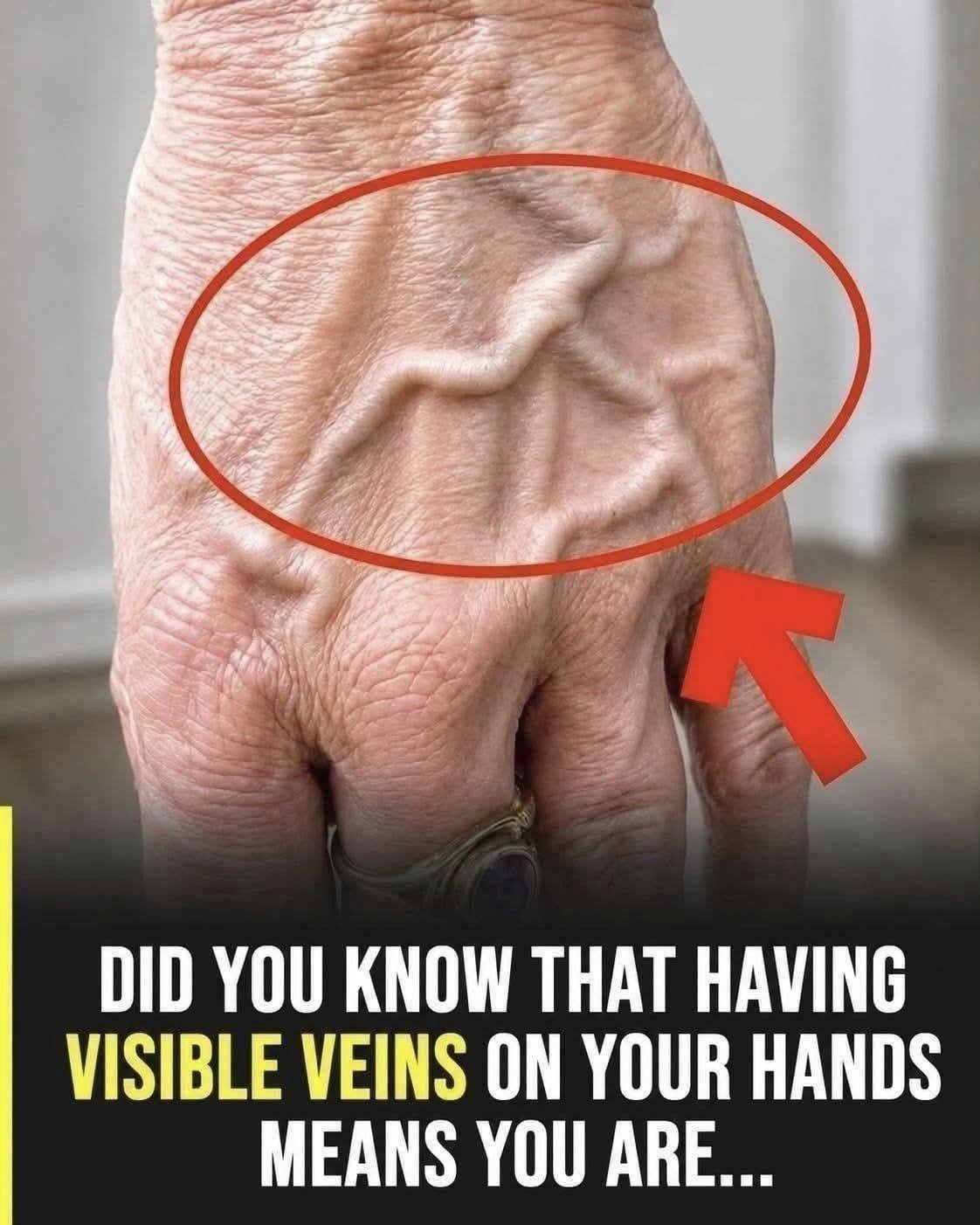
That cliffhanger headline is a classic piece of internet health clickbait, designed to make you immediately worry about a hidden deficiency, rapid aging, or a scary medical condition. In reality, having visible veins is extremely common and usually has a very straightforward, non-alarming explanation.
Depending on where those veins are visible and what they look like, the reality is much more mundane than a viral post would lead you to believe. Here is what it actually means when your veins are prominently showing:
1. Low Body Fat and High Muscle Mass (Especially on Arms and Hands)
-
What’s happening: If veins are popping out on your arms, hands, or shoulders, it is most often a sign of low subcutaneous body fat combined with good muscle tone.
-
The context: Fat acts like a blanket under your skin. When body fat percentage drops—whether through exercise, genetics, or weight loss—that insulating layer becomes thinner, allowing the blood vessels running just beneath the surface to become clearly visible.
2. Natural Thinning of the Skin (Especially on Hands and Temples)
-
What’s happening: As people age, the skin naturally loses collagen, elastin, and fat padding, and becomes thinner.
-
The context: This age-related thinning makes veins on the back of the hands, feet, and temples naturally more prominent, even if your underlying health and circulation are completely normal.
3. Genetics, Complexion, and Skin Tone
-
What’s happening: Some people are simply born with translucent skin or a fair complexion that naturally lets the blue-green tint of superficial veins show through much more easily. Family genetics play a massive role in how superficial your blood vessels sit.
4. Heat, Exercise, and Blood Pressure
-
What’s happening: When you exercise or when the weather is hot, your body works hard to cool itself down. Blood vessels dilate (expand) and move closer to the skin’s surface to release heat, making your veins temporarily more visible and prominent.
5. When Visible Veins Do Warrant Medical Attention
While most visible veins are purely cosmetic or structural, certain types of surface veins point to underlying medical issues that doctors actually look for:
-
Varicose Veins: Swollen, twisted, bulging veins (most commonly in the legs) caused by weak or damaged valves inside the veins that allow blood to pool backward instead of flowing smoothly up to the heart.
-
Spider Veins (Telangiectasias): Small, web-like clusters of red, blue, or purple veins close to the skin’s surface, which can sometimes be linked to chronic venous insufficiency or hormonal shifts.
The Takeaway: Having visible veins does not mean you have a secret health crisis. More often than not, it is simply a reflection of your genetics, skin thickness, body composition, or temperature.
Have you noticed new or prominent veins in a specific area, like your legs or hands?
