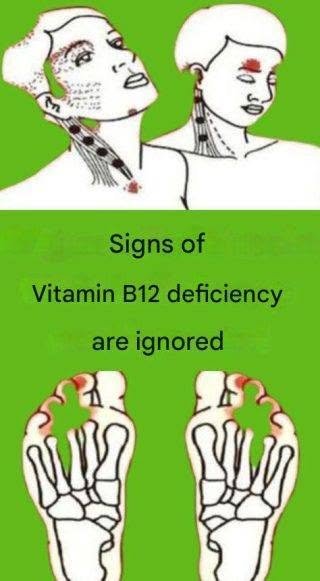
That headline taps into a very real medical truth: Vitamin B12 deficiency is notoriously underdiagnosed because its early symptoms often mimic everyday stress, aging, or minor fatigue. Because B12 is essential for nerve function, DNA synthesis, and red blood cell production, a shortage can impact nearly every system in your body.
Here are the subtle signs of a Vitamin B12 deficiency that are frequently ignored or misattributed:
1. Profound Fatigue and Weakness
-
What it looks like: Feeling completely drained despite getting a full night’s sleep, or feeling exhausted after minimal physical exertion.
-
Why it happens: Without enough B12, your body struggles to produce healthy red blood cells capable of efficiently carrying oxygen throughout your tissues and muscles.
2. Tingling, Numbness, or “Pins and Needles”
-
What it looks like: A persistent prickling sensation in your hands, fingers, feet, or toes.
-
Why it happens: B12 is critical for maintaining the myelin sheath—the protective coating around your nerves. A deficiency can literally compromise nerve signaling, leading to these odd sensory changes.
3. Brain Fog, Memory Lapses, and Confusion
-
What it looks like: Struggling to find words, feeling unusually forgetful, or having difficulty concentrating on routine tasks.
-
Why it happens: Because B12 directly supports neurological health, a shortage can affect cognitive processing speed and memory, which are often mistakenly written off as normal aging.
4. Smooth, Sore Tongue and Mouth Ulcers
-
What it looks like: A tongue that looks unusually red, swollen, or glossy (atrophic glossitis), accompanied by painful sores or a burning sensation in the mouth.
-
Why it happens: Rapidly dividing cells—like the ones in the lining of your mouth and tongue—are heavily impacted by low B12 levels.
5. Unexplained Mood Changes (Irritability or Low Mood)
-
What it looks like: Feeling persistently anxious, irritable, or dealing with low spirits without an obvious situational trigger.
-
Why it happens: B12 plays a key role in synthesizing brain chemicals like serotonin and dopamine, which regulate mood.
Who is Most at Risk? Vegetarians and vegans (since B12 is found almost exclusively in animal products), older adults (due to a natural drop in stomach acid needed for absorption), and individuals taking long-term acid-reflux medications are particularly vulnerable. A simple routine blood test can check your levels if you suspect a deficiency.
Have you been noticing persistent fatigue or tingling sensations, or are you exploring nutrition to optimize your energy levels?
