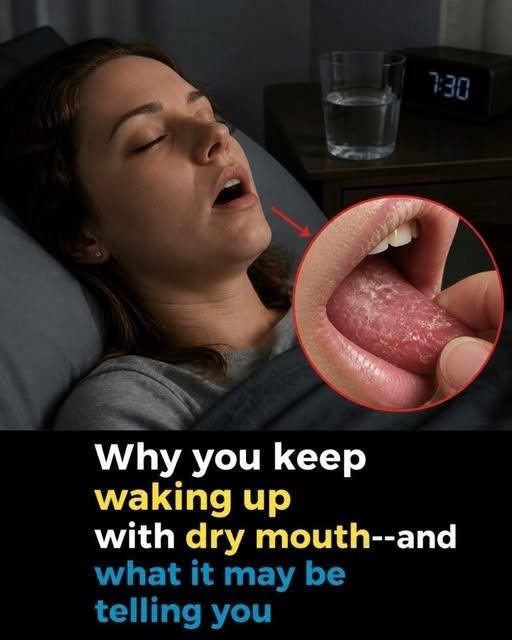
That headline uses ominous, vague phrasing (“here’s what your body might be telling you”) to hint that a dry mouth in the morning is a cryptic cry for help from your organs.
In reality, waking up with a dry mouth (nocturnal xerostomia) is almost always caused by basic airflow mechanics, medication timing, or environmental factors rather than a hidden disease.
Here is what is actually going on when you wake up parched:
1. The Physiological Reality: Circadian Rhythms
-
Natural Overnight Drop: Your salivary glands naturally slow down their output during sleep as part of your normal circadian rhythm.
-
Decreased Protection: Because you naturally produce less saliva at night, any extra drying factor—like breathing through your mouth—will quickly strip away remaining moisture.
2. What Is Usually Happening (The Common Culprits)
Rather than a mysterious internal failure, waking up with dry mouth usually boils down to four distinct factors:
-
Mouth Breathing & Airway Obstruction: If you have nasal congestion, allergies, a deviated septum, or snoring, you will naturally breathe through your mouth while sleeping. Continuous airflow acts like a fan, evaporating moisture.
-
Obstructive Sleep Apnea (OSA): Frequent gasping, heavy snoring, and prolonged open-mouth posture from sleep apnea are major drivers of severe morning dry mouth.
-
Medication Peak Levels: Taking blood pressure meds, antihistamines, or antidepressants in the evening means their peak drying effect occurs right while you sleep.
-
Low Bedroom Humidity: Heating in the winter or heavy air conditioning in the summer strips ambient moisture from the air, accelerating oral dryness.
3. Practical Solutions to Try Tonight
-
Address Airway Clearance: Use a saline nasal spray or nasal strips before bed to keep your nasal passages open so you can comfortably breathe through your nose.
-
Run a Cool-Mist Humidifier: Adding moisture back into your bedroom air reduces evaporation from your mouth and throat.
-
Hydrate Intentionally: Focus on steady hydration throughout the day rather than drinking a massive amount of water right before bed, which just leads to middle-of-the-night bathroom trips.
The Takeaway: Waking up parched simply means air has been flowing over your oral tissues while your salivary glands were on their natural night shift. Fix the airflow or room humidity, and the symptom usually resolves.
Are you experiencing this alongside snoring or a stuffy nose, or did you just happen to see this article circulating online?
