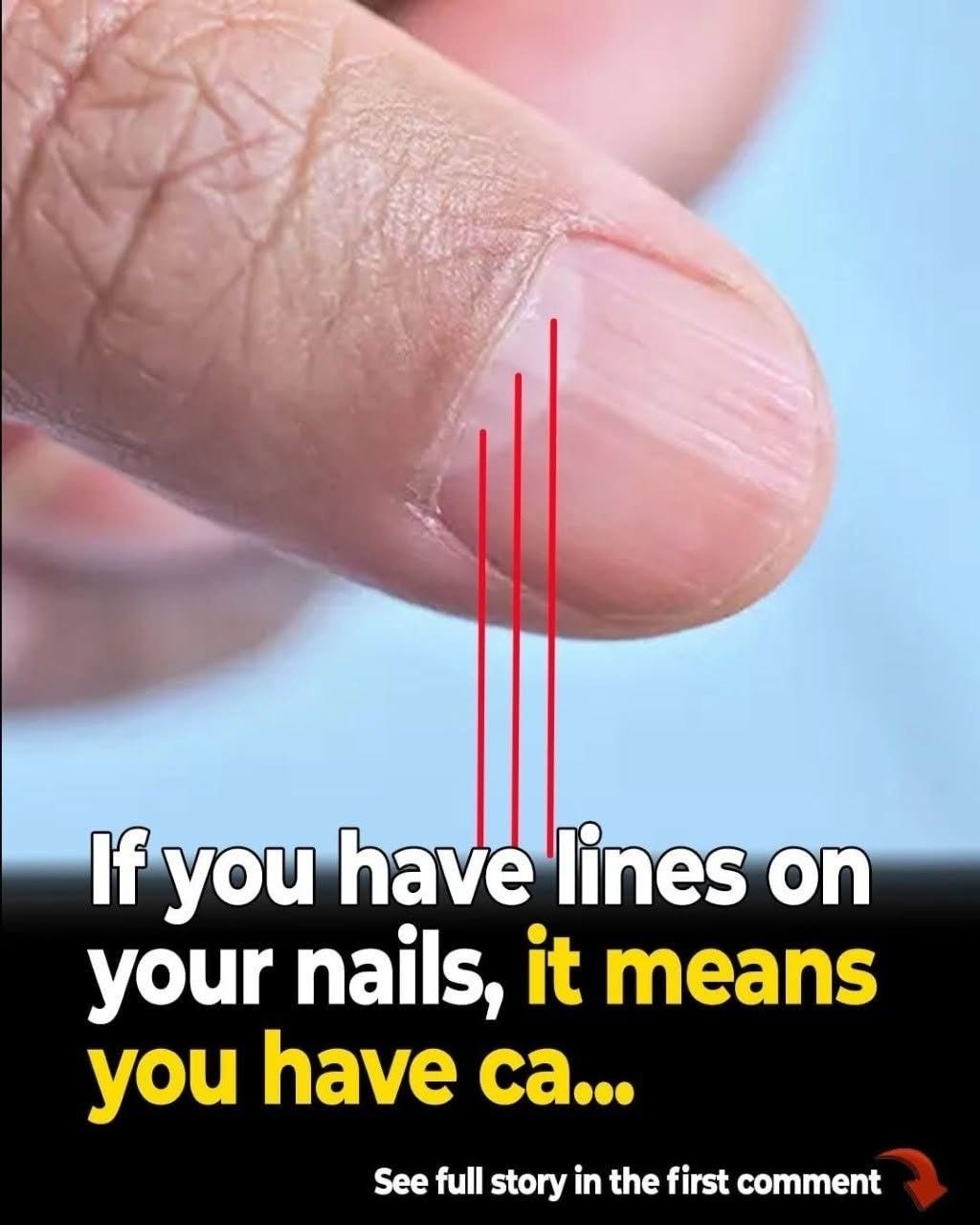
That headline is a masterclass in health clickbait. By dangling a mysterious “telltale sign” in your fingernails that supposedly predicts your life expectancy, it taps straight into existential anxiety and turns normal anatomical variations into a ticking clock.
In clinical reality, your fingernails can offer subtle clues about your overall health, but they are not a crystal ball for your lifespan. They are simply mirrors of your systemic circulation, nutritional status, and general metabolism.
Here is the grounded, clinical reality behind what your fingernails actually reveal—separating medical facts from internet fortune-telling:
1. What Nails Can Actually Tell Us (The Medical Reality)
-
A Slow-Growing Canvas: Fingernails grow at an average rate of about 3 millimeters per month. Because they grow continuously, they act like a slow-motion ticker tape recording what happened in your body weeks or months ago.
-
Systemic Reflections: Since the nail bed is packed with tiny blood vessels (capillaries) and requires steady protein, vitamins, and oxygen to form healthy keratin, significant systemic stress or nutritional deficiencies can temporarily alter how nails grow.
2. Common Nail Changes and What They Actually Mean
Instead of predicting your expiration date, specific nail patterns usually point to clear, manageable health factors:
-
Beau’s Lines (Horizontal Ridges or Dents):
-
What it is: Deep grooves running horizontally across the nail.
-
The Reality: These happen when nail growth is temporarily interrupted by a severe physical shock, such as a high fever, severe infection, major surgery, or extreme physical stress. Once the body recovers, the nail grows out normally.
-
-
Clubbing (Curved, Enlarged Fingertips):
-
What it is: The tips of the fingers widen and the nails curve downward, looking like inverted spoons.
-
The Reality: This is a classic sign that doctors look for, but it has nothing to do with general life expectancy—it specifically indicates chronic low oxygen levels in the blood, often linked to long-term pulmonary conditions (like COPD or lung cancer) or cardiovascular issues.
-
-
Koilonychia (Spoon-Shaped Nails):
-
What it is: Nails that become thin and concave, curving upward at the edges.
-
The Reality: This is a well-known marker for severe iron-deficiency anemia, which is easily diagnosed with a simple blood test and treated with iron supplementation or dietary changes.
-
-
Pale or White Nail Beds (Terry’s Nails or Pallor):
-
What it is: Nails that appear mostly white with a narrow pink strip at the top.
-
The Reality: This can sometimes reflect reduced peripheral circulation or underlying systemic conditions like liver or kidney strain, but it requires actual lab work to diagnose—not a glance in the mirror.
-
3. Everyday Nail Quirks to Ignore
-
Vertical Ridges: Tiny vertical lines running from cuticle to tip are almost always a completely normal part of natural aging, much like fine wrinkles on the skin. They are entirely harmless.
-
White Spots (Leuconychia): A random white dot on your nail does not mean you have a calcium deficiency. It is almost always the result of a minor, forgotten bump or trauma to the nail matrix.
The Takeaway: Your fingernails are helpful indicators of current nutritional status or localized trauma, but they cannot predict your life expectancy. If you notice a sudden, dramatic change in the shape, color, or thickness of your nails, it’s a great prompt to mention to your doctor during a routine checkup—no panic required.
Did a particular article or video prompt you to look closely at your nails, or were you trying to troubleshoot a specific change?
