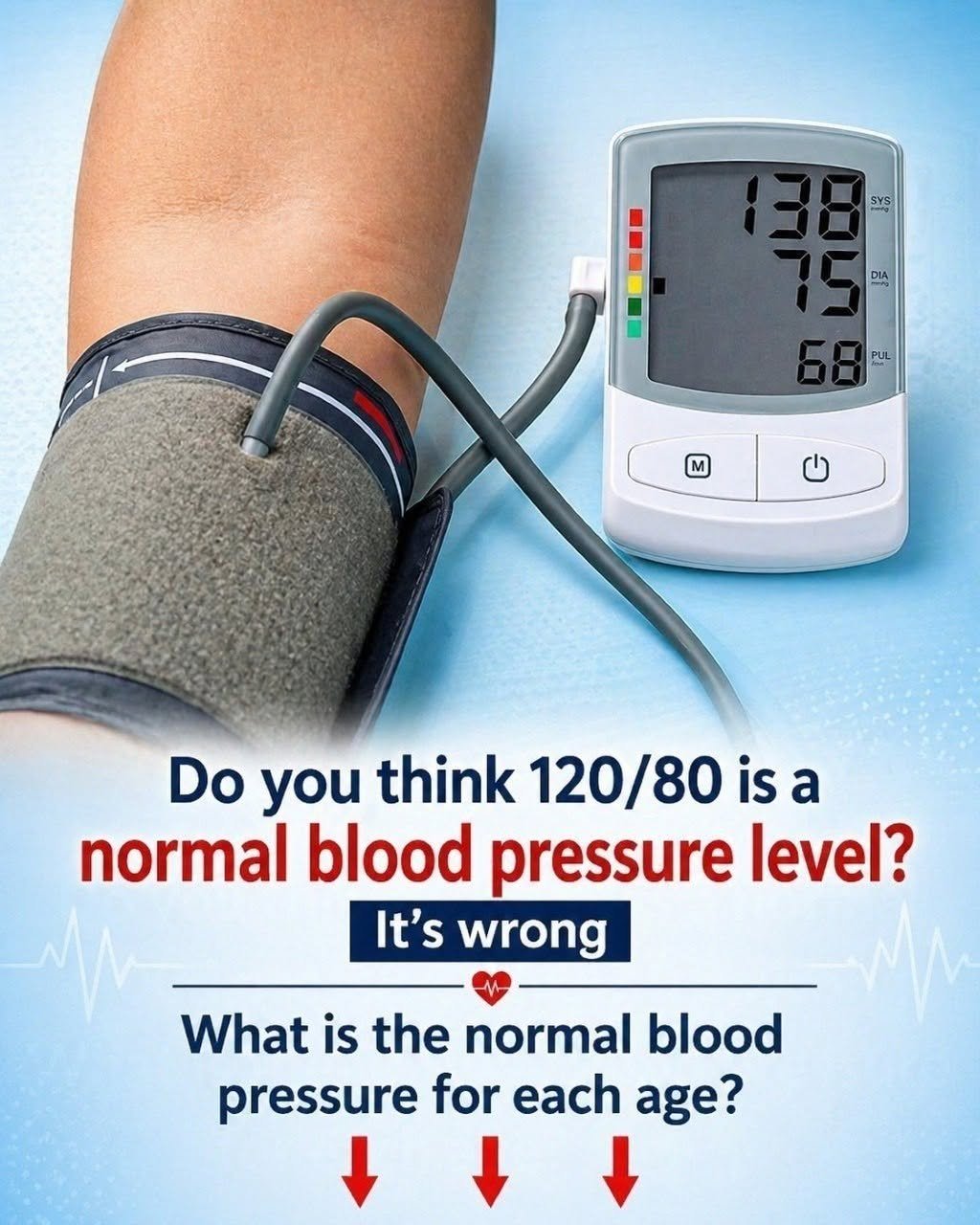
That headline tackles one of the most common medical myths on the internet: the idea that your blood pressure should naturally creep higher and higher as you age, as if a 70-year-old is supposed to walk around with numbers that would terrify a doctor.
In clinical reality, while stiffening arteries with age can slightly alter systolic pressure (the top number), the biological definition of healthy blood pressure does not change just because you had another birthday.
Here is the grounded, clinical reality regarding blood pressure across the lifespan and what the guidelines actually say:
1. The Universal Standard: What is “Normal”?
According to major cardiovascular organizations (like the American Heart Association and ACC), the clinical classification for blood pressure in adults remains consistent:
-
Normal: Less than 120 / 80 mmHg
-
Elevated: 120–129 / less than 80 mmHg
-
Stage 1 Hypertension: 130–139 / 80–89 mmHg
-
Stage 2 Hypertension: 140+ / 90+ mmHg
Note: Your body does not get a free pass to run at 150/90 just because you are 75. High pressure is high pressure, and it puts excess mechanical strain on your heart, blood vessels, kidneys, and brain regardless of age.
2. Why Age-Based Charts Are Misleading
Articles that provide a neat little table showing your blood pressure rising by 10 points every decade are pushing a dangerous myth.
-
Arterial Compliance vs. Disease: While it is true that large arteries naturally lose some elasticity over decades (leading to a higher systolic top number, known as isolated systolic hypertension), that stiffening is an age-associated risk factor, not a healthy baseline.
-
The Over-Treatment Nuance in the Very Elderly: In patients who are frail or over 80, clinicians do sometimes individualize treatment targets (for instance, being slightly more conservative to prevent dizziness or fainting from sudden drops). However, this is a personalized clinical decision made by a physician, not a blanket rule that says high blood pressure is suddenly safe for seniors.
3. How to Actually Monitor Your Blood Pressure
-
Check Context, Not Just Numbers: Blood pressure fluctuates constantly throughout the day based on stress, caffeine, physical activity, conversation, and room temperature. A single high reading at a doctor’s office (white coat syndrome) or at home doesn’t mean an instant diagnosis.
-
The Gold Standard: Doctors rely on serial home monitoring (taking it twice a day in a quiet room after resting for 5 minutes) or 24-hour ambulatory blood pressure monitors to get an accurate picture of your cardiovascular health.
The Takeaway: There is no sliding scale where high blood pressure becomes “normal” with age. The goal is the same at 20, 50, or 80: keep those numbers in a healthy range to protect your vessels and your heart.
Did this blood pressure chart pop up because you recently checked your numbers at a pharmacy machine, or is your feed trying to convince you that age-related wear and tear is an untreatable destiny?
