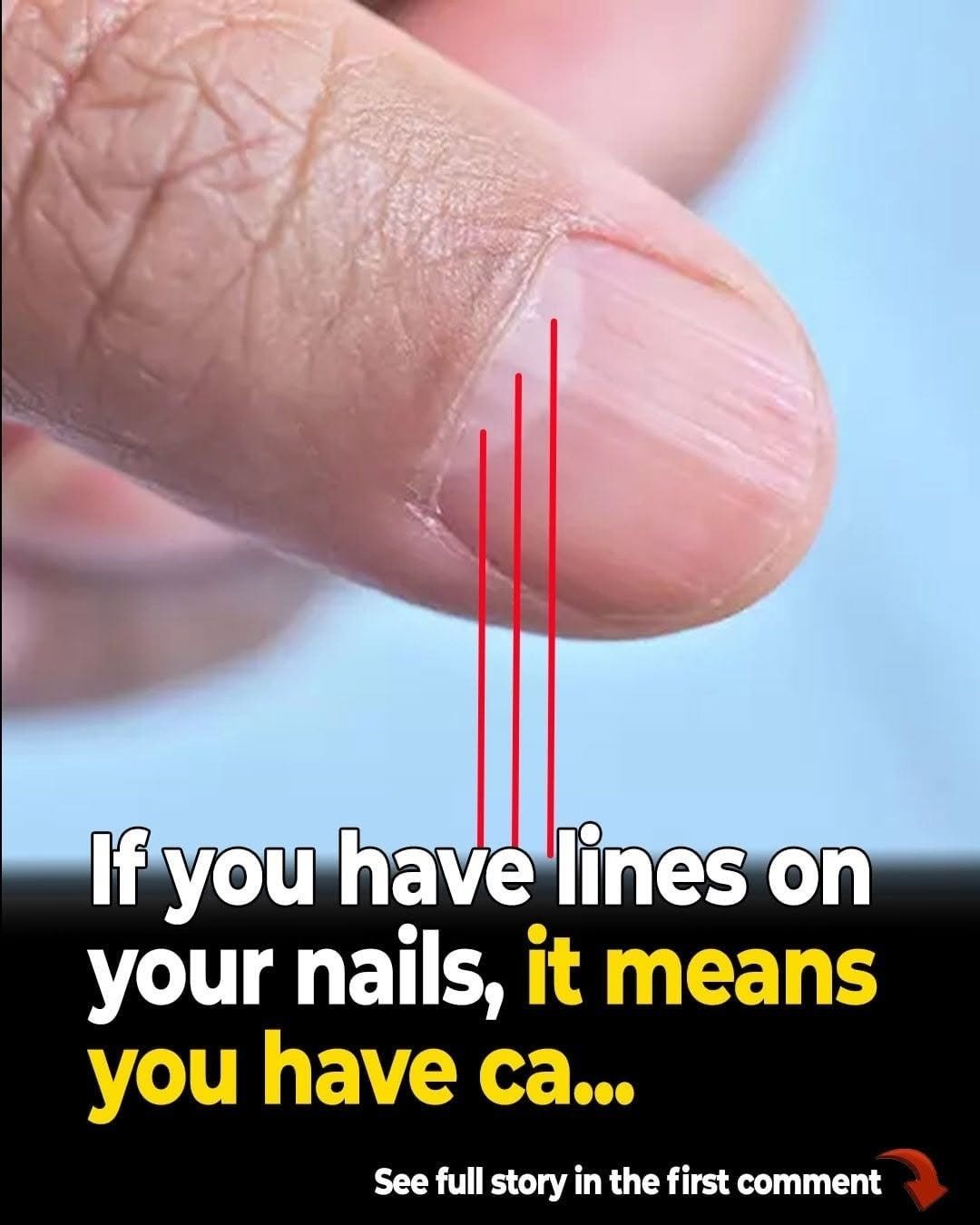
Fingernails are often called a “window into overall health.” Because the tissue beneath your nails is highly vascularized and sensitive to metabolic changes, systemic illnesses frequently show up on the nail bed long before other symptoms appear.
Sensational online headlines about “predicting life expectancy” usually refer to specific medical signs in the nails that point to severe underlying chronic diseases, such as advanced liver failure, heart disease, or lung conditions.
The 5 Major Fingernail Signs Linked to Serious Health Risks
1. Terry’s Nails (Mostly White Nails with a Red/Pink Tip)
-
What it looks like: Most of the nail plate appears ground-glass white or washed out, with a narrow dark pink or reddish band at the very tip near the edge.
-
Underlying medical link: Terry’s nails occur due to decreased blood supply and changes in vascular connective tissue. It is strongly linked to cirrhosis (advanced liver failure), congestive heart failure, kidney failure, or severe diabetes.
2. Digital Clubbing (Bulging Fingertips & Curved Nails)
-
What it looks like: The tips of the fingers enlarge or swell, and the nails curve dramatically downward around the fingertips (resembling the back of a spoon inverted). The angle between the nail bed and cuticle disappears.
-
Underlying medical link: Clubbing results from chronic low blood oxygen levels (hypoxia). It is a classic indicator of serious pulmonary or cardiovascular conditions, including lung cancer, idiopathic pulmonary fibrosis, chronic lung infections, or congenital heart disease.
3. Lindsay’s Nails / “Half-and-Half” Nails
-
What it looks like: The bottom half of the nail (near the cuticle) is solid white, while the top half (distal portion) is reddish-brown or pink.
-
Underlying medical link: Highly specific to chronic kidney disease (uremia) or end-stage renal failure, caused by a buildup of metabolic waste products affecting blood vessels under the nail.
4. Splinter Hemorrhages
-
What it looks like: Thin, dark reddish-brown vertical lines underneath the nail plate that resemble tiny wooden splinters.
-
Underlying medical link: These are tiny damaged capillaries beneath the nail. While often caused by minor physical trauma, multiple splinter hemorrhages across several nails can indicate infectious endocarditis (a dangerous heart valve infection) or systemic vasculitis.
5. Beau’s Lines (Deep Horizontal Grooves)
-
What it looks like: Prominent horizontal ridges or depressions that run straight across the width of all fingernails.
-
Underlying medical link: Beau’s lines occur when a severe illness, high fever, or major physiological stress temporarily shuts down nail matrix growth entirely. They frequently appear after severe systemic infections, heart attacks, major surgery, or uncontrolled diabetes.
Key Takeaway: Can Nails “Predict” Life Expectancy?
No fingernail sign directly predicts exact life expectancy. Instead, these nail signs act as early physical indicators that a major organ system (such as the liver, kidneys, heart, or lungs) is under severe stress.
-
Benign changes: Vertical ridges (running from cuticle to tip) are a completely normal part of the aging process and are not a sign of disease.
-
When to consult a physician: If you notice sudden, unexplained changes in color, shape, or texture across multiple fingernails—especially if accompanied by fatigue, shortness of breath, or swelling in your legs—schedule a medical evaluation with a primary care doctor.
