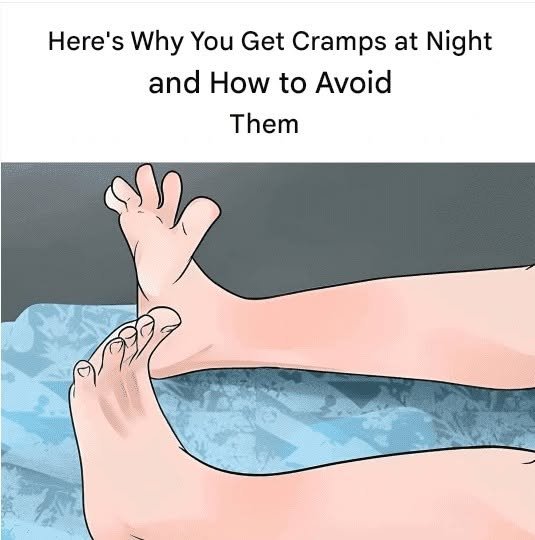
The Real Causes of Nocturnal Leg Cramps
Catchy headlines or viral posts claiming to reveal the “one hidden reason” we get cramps at night often oversimplify a complex physiological issue. While nighttime leg cramps (often affecting the calf muscles or feet) can be intensely painful and disruptive, they rarely point to just a single mysterious cause.
Medical science recognizes that nocturnal leg cramps are usually triggered by a combination of muscle fatigue, nerve activity, and fluid shifts rather than a single secret culprit.
Common Triggers for Nighttime Leg Cramps
-
Muscle Fatigue and Overuse: Standing for long periods, intense physical exercise, or working in unaccustomed ways can exhaust muscle fibers, making them prone to seizing up when relaxed.
-
Nerve Hyperactivity: As we age, nerve endings can become more sensitive. Spontaneous firing in the motor neurons that supply the muscles can cause involuntary contractions during sleep.
-
Dehydration and Electrolyte Shifts: While severe dehydration plays a role, imbalances in key electrolytes—particularly magnesium, calcium, and potassium (which govern muscle contraction and relaxation)—frequently contribute.
-
Prolonged Immobility or Poor Positioning: Sitting or lying in a fixed position for hours can shorten the muscle and restrict local blood flow, triggering a spasm when the muscle eventually stretches.
-
Underlying Medical Conditions: Frequent cramps can sometimes be linked to peripheral artery disease (poor circulation), nerve disorders (like neuropathy), thyroid conditions, or side effects from certain medications (such as diuretics).
Practical Ways to Prevent and Relieve Night Cramps
-
Gentle Stretching: Regularly stretching your calves and hamstrings before bed can significantly reduce the frequency of night spasms.
-
Stay Hydrated: Drink plenty of water throughout the day, especially if you are physically active or live in a warm climate.
-
Adjust Your Sleep Position: Avoid tucking your toes tightly under heavy blankets, which forces your calf muscles into a shortened, vulnerable position all night.
-
Immediate Relief: When a cramp strikes, gently flexing your foot upward (pulling your toes toward your shin) and massaging the muscle helps lengthen and relax it quickly.
Note: If you experience severe, frequent, or painful cramps that regularly disrupt your sleep, it is a good idea to mention them to your doctor to rule out any underlying nutritional deficiencies, circulation issues, or medication side effects.
Do you experience these nighttime cramps frequently, or did a specific remedy or article catch your eye today?
