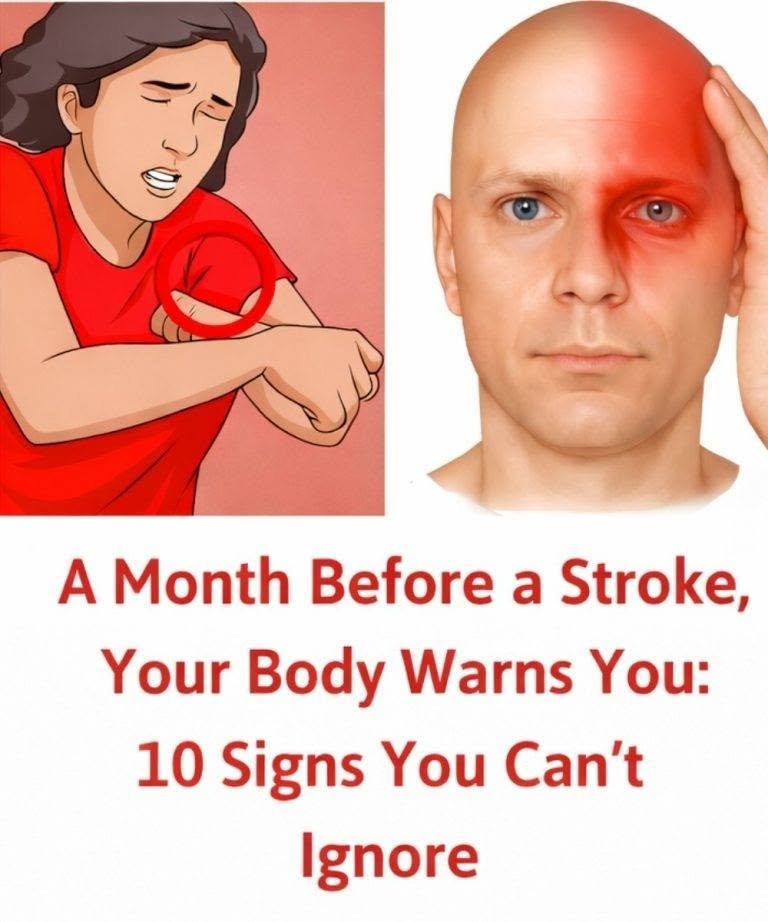
While sensationalized headlines often talk about specific signs appearing precisely “a month before a stroke,” clinically speaking, the body’s warning system usually manifests as a Transient Ischemic Attack (TIA)—commonly known as a mini-stroke—or progressive vascular distress that can happen days, weeks, or months ahead of a major stroke.
A TIA involves a temporary blockage of blood flow to the brain. Because the blockage clears on its own, the symptoms disappear quickly (often within minutes), which is precisely why people mistakenly brush them off as fatigue, stress, or “senior moments.”
The Most Critical Warning Signs Not to Ignore
Medical professionals emphasize the BE FAST framework to recognize these neurological red flags, whether they happen a month, a week, or an hour before a major event:
-
B – Balance Loss: Sudden, unexplained dizziness, loss of coordination, or a spinning sensation (vertigo) with no clear cause.
-
E – Eyes (Vision Changes): Sudden blurring, double vision, or a temporary loss of sight in one eye (sometimes described as a dark curtain or shade pulling down over your field of vision).
-
F – Face Drooping: One side of the face suddenly feels numb or sags when attempting to smile.
-
A – Arm Weakness: Sudden weakness, numbness, or clumsiness in one arm or leg. If you ask the person to raise both arms, one drifts downward.
-
S – Speech Difficulty: Slurred words, difficulty finding the right words, or an inability to understand speech.
-
T – Time to Call Emergency Services: Even if these symptoms vanish after 5 or 10 minutes, it is a medical emergency.
Subtle or “Sleeper” Signs
In the weeks leading up to a vascular event, some individuals—particularly women or older adults—experience more subtle, easily misattributed shifts:
-
Sudden, unexplained confusion or brain fog that feels out of the ordinary.
-
A sudden, severe headache with no known history of migraines, often described as the worst headache of one’s life.
-
General weakness or profound fatigue that sleep does not fix.
Why This Window Matters
Having a mini-stroke or experiencing these early neurological warnings is a massive red flag. Clinical data shows that a significant percentage of people who experience a TIA go on to have a full-scale stroke, with a high-risk window occurring shortly after the initial warning.
If you or someone you know ever experiences sudden neurological symptoms—even if they disappear completely within minutes—do not wait to see if they return. Seek immediate medical evaluation so doctors can check blood pressure, look for carotid artery blockages, and initiate preventative care.
Are you looking into these warning signs because you or a loved one recently experienced a sudden, brief symptom like dizziness or numbness?
