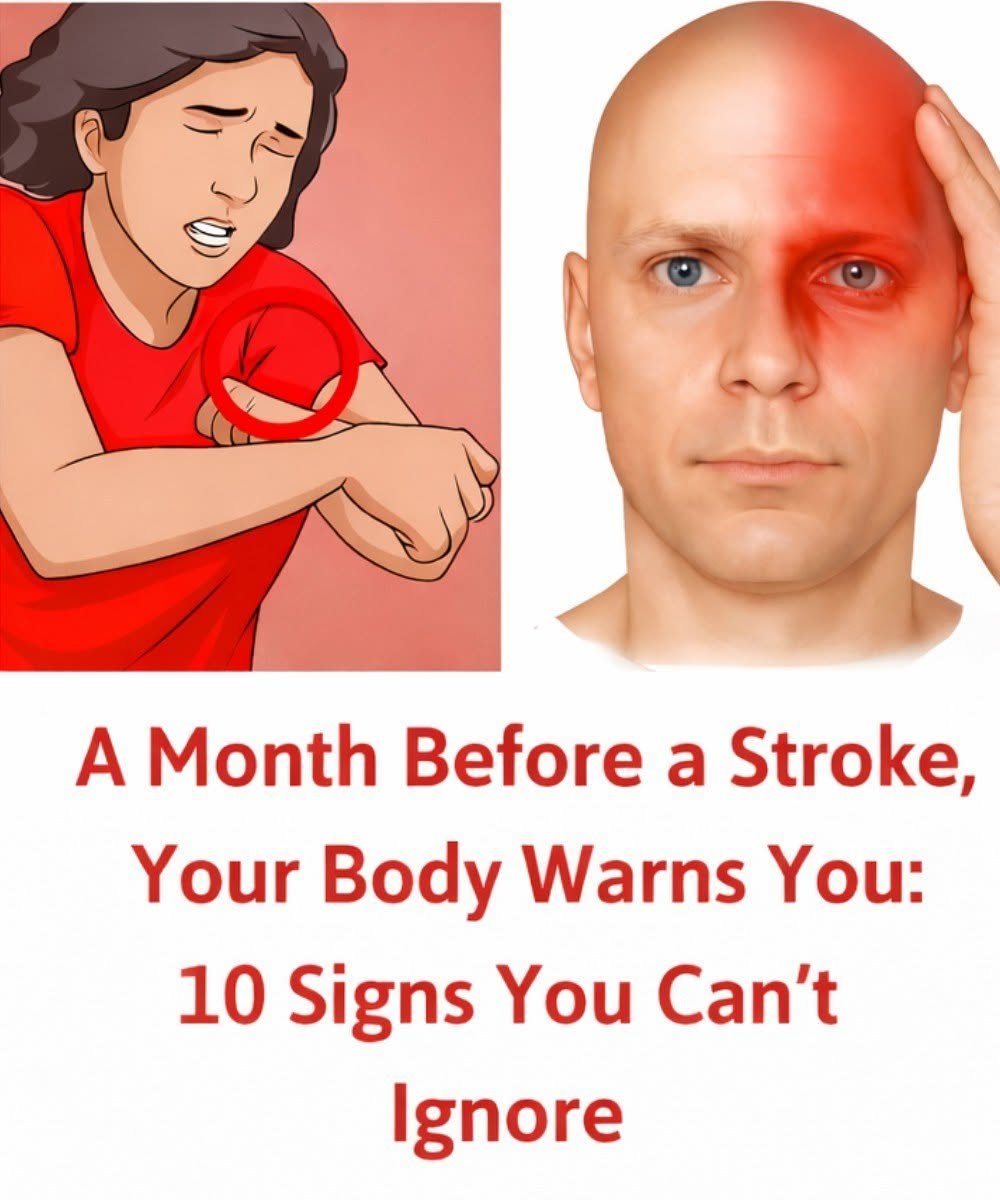
Viral health articles love to run dramatic clickbait titles claiming that your body gives you a neat, predictable countdown of 10 distinct warning signs a full month before a stroke happens.
Neurologists and vascular specialists emphasize the critical medical reality: strokes are sudden, acute emergencies—they do not send a slow, multi-week warning calendar in advance. However, the dangerous misconception behind these viral lists usually stems from a profound misunderstanding of Transient Ischemic Attacks (TIAs), commonly known as “mini-strokes.”
Why the “One Month Before” Narrative is False
-
The Sudden Nature of Brain Attacks: A stroke occurs abruptly when blood flow to a part of the brain is suddenly cut off (by a clot or a ruptured blood vessel). Brain tissue is starved of oxygen within seconds, meaning clinical symptoms appear instantly—not weeks or days ahead of time.
-
The Confusion With TIAs: When people experience stroke-like warning signs prior to a major stroke, they are not experiencing slow “pre-stroke symptoms” lasting for weeks. They are experiencing a TIA, where a blood clot temporarily blocks an artery and then dissolves on its own, causing symptoms that vanish completely within minutes to a few hours.
What a TIA Looks Like (The “BE FAST” Signs)
Because a TIA produces the exact same physical signs as a full-blown stroke, recognizing them instantly can save a life. Medical professionals use the BE FAST framework to identify these sudden neurological red flags:
-
B – Balance: Sudden loss of balance, dizziness, or unsteadiness.
-
E – Eyes: Sudden blurred vision, double vision, or loss of sight in one eye.
-
F – Face Drooping: One side of the face sags or feels numb when trying to smile.
-
A – Arm Weakness: Sudden weakness or numbness in one arm; if you try to hold both arms up, one drifts downward.
-
S – Speech Difficulty: Slurred speech, trouble getting words out, or difficulty understanding others.
-
T – Time to Call Emergency Services: Call for emergency medical help immediately.
Why a TIA Requires Immediate Action
Because a TIA resolves on its own and leaves no permanent damage, many people brush it off, assuming it was just fatigue, a pinched nerve, or “weird dizziness.” Neurologists view a TIA as an urgent alarm: Roughly 20% of people who experience a TIA will suffer a major stroke within 90 days, with nearly half of those occurring within the first 48 hours.
If someone experiences sudden neurological symptoms that vanish quickly, waiting weeks or months is dangerous. It requires immediate emergency evaluation so doctors can uncover the underlying vascular cause and start preventative treatments (like blood pressure control, statins, or blood thinners) to stop a major stroke before it strikes.
💡 The Big Takeaway
Strokes don’t give you a polite one-month warning; they hit without notice. But if you or someone nearby ever experiences sudden, temporary stroke symptoms—even if they disappear completely in 10 minutes—treat it as an immediate medical emergency.
Did a dramatic health headline spark your question, or are you looking into cardiovascular risk factors?
