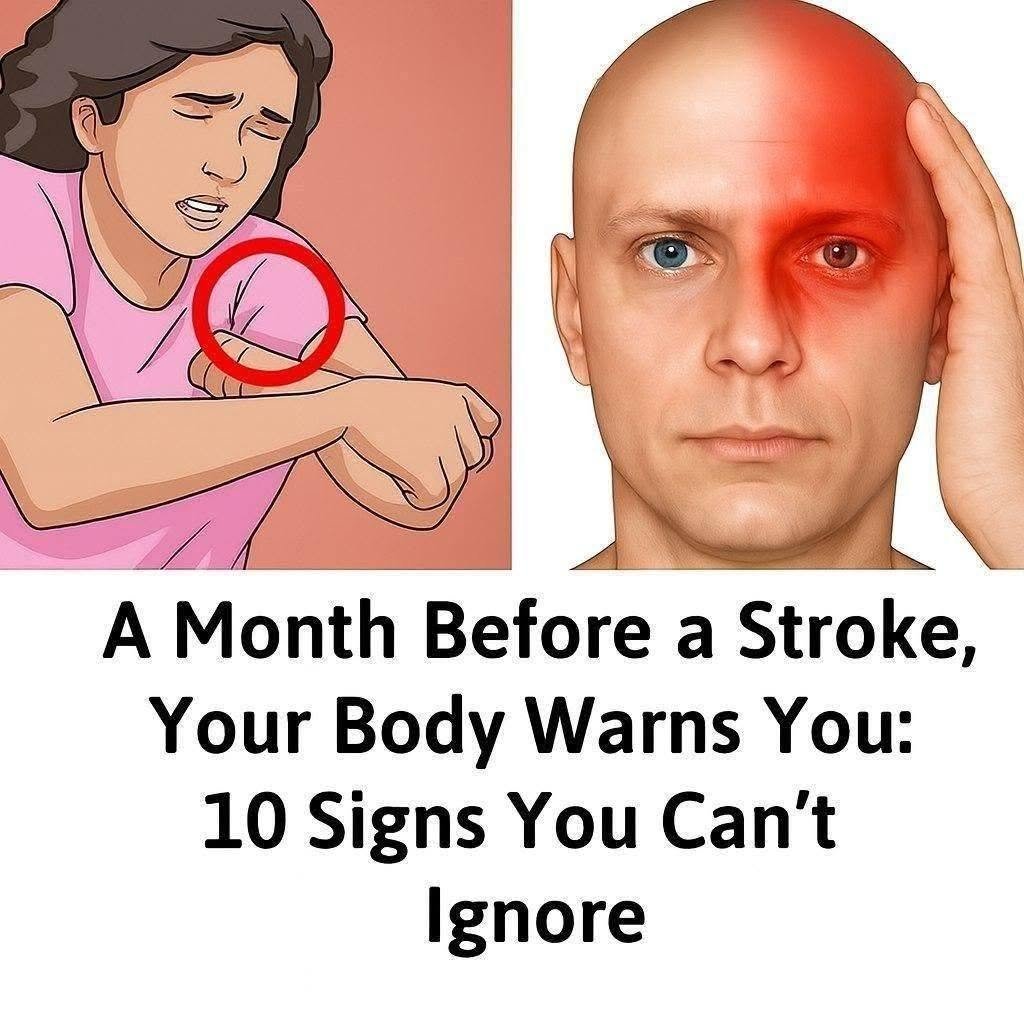
That classic viral health headline plays on a terrifying and very real reality: strokes rarely happen completely out of nowhere. While a full-blown stroke is an acute emergency, many people experience subtle, transient neurological warning signs—sometimes days or weeks in advance—that get brushed off as fatigue, stress, or “getting older.”
In clinical neurology, these precursor events are often called Transient Ischemic Attacks (TIAs) or “mini-strokes,” where blood flow to a portion of the brain is temporarily blocked before resolving on its own.
Here are the critical warning signs your body uses to signal cerebrovascular distress, explained through a physiological lens:
The 10 Warning Signs of Impending Cerebrovascular Distress
-
Sudden Unilateral Weakness or Numbness (Hemiparesis):
-
The Mechanism: The motor cortex on one side of your brain controls the opposite side of your body. If a micro-embolus temporarily chokes off blood flow to that brain region, you might experience a sudden, unexplained dropping of an arm, a heavy leg, or numbness down one entire half of your body.
-
-
Facial Droop or Asymmetry:
-
The Mechanism: Cranial nerves controlling facial expression run through delicate pathways supplied by cerebral blood vessels. When oxygen delivery drops, the muscles on one side of the face may lose their tone, causing a sudden smile asymmetry or eyelid droop.
-
-
Sudden Slurred Speech or Difficulty Finding Words (Aphasia):
-
The Mechanism: The language centers of the brain (such as Broca’s and Wernicke’s areas) require immense metabolic energy. Depriving these localized tissues of oxygen disrupts your ability to form coherent words, understand speech, or articulate thoughts clearly.
-
-
Sudden Monocular Vision Loss or Blurring:
-
The Mechanism: The ophthalmic artery feeds the retina. A tiny clot temporary lodging here can cause sudden, painless blinding or dimming in one eye—often described as a “shade pulling down” over your vision.
-
-
Sudden, Unexplained Dizziness and Loss of Balance:
-
The Mechanism: The cerebellum and brainstem regulate your equilibrium, coordination, and spatial orientation. Ischemia in these posterior circulation pathways triggers sudden, severe vertigo, clumsiness, or an inability to walk straight.
-
-
Sudden Severe Headache (“Thunderclap Headache”):
-
The Mechanism: While most common in hemorrhagic strokes (bleeding in the brain), an abrupt, blinding headache unlike anything you have ever experienced is an urgent neurological red flag signaling acute intracranial pressure or vascular rupture.
-
-
Sudden Confusion or Cognitive Fog:
-
The Mechanism: A widespread or multifocal drop in cerebral perfusion can instantly disrupt higher-order executive function, leaving you disoriented, unable to comprehend instructions, or strangely unresponsive.
-
-
Sudden Loss of Coordination in the Hands:
-
The Mechanism: Fine motor skills require seamless communication between sensory and motor pathways. Dropping coffee cups, struggling to button a shirt, or sudden clumsiness in one hand can point to localized micro-strokes.
-
-
Sudden Difficulty Swallowing (Dysphagia):
-
The Mechanism: The lower brainstem houses the cranial nerves responsible for coordinating the complex muscular choreography of swallowing. Ischemia here leads to sudden choking or difficulty managing saliva.
-
-
Transient Ischemic Attacks (TIAs) / “Warning Shots”:
-
The Mechanism: Many major strokes are preceded days or weeks earlier by a TIA—where all the symptoms above appear suddenly but vanish completely within minutes to an hour. A TIA is a medical emergency, signaling a severely narrowed carotid artery or a high risk of a permanent stroke right around the corner.
-
The FAST Emergency Protocol
Because time is brain tissue—literally losing millions of neurons every minute a vessel remains blocked—recognizing these signs early is life-saving. Remember the FAST acronym:
-
F – Face Drooping: Does one side of the face droop, or is it numb?
-
A – Arm Weakness: Is one arm weak or numb? If the person tries to raise both arms, does one drift downward?
-
S – Speech Difficulty: Is speech slurred, are they unable to speak, or are they hard to understand?
-
T – Time to Call 911: If you observe any of these signs—even if they go away—call emergency services immediately.
Are you looking into these signs out of general health curiosity, or is someone currently experiencing unusual symptoms that have you concerned?
