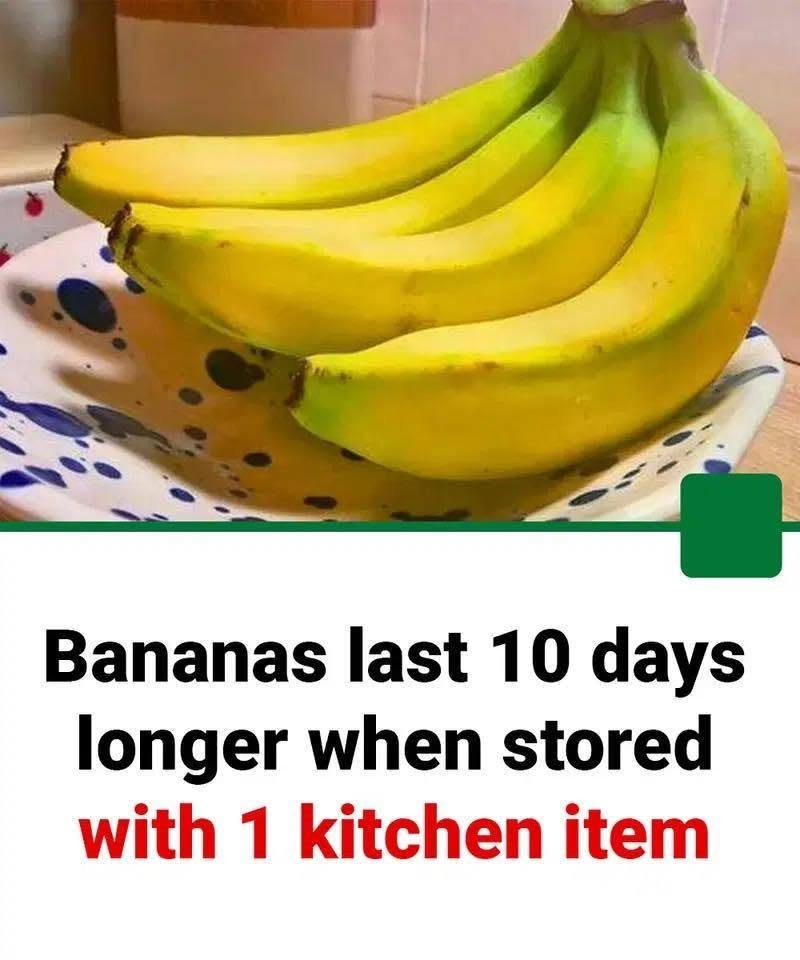
That viral headline is a classic example of internet hyperbole. While wrapping your bananas won’t magically grant them an extra 10 days of shelf life, the underlying culinary trick relies on a very real bit of plant biology.
The “kitchen item” in question is usually aluminum foil or plastic cling wrap used to cover the banana stems.
The Science Behind the Stem-Wrapping Trick
Bananas ripen differently than many other fruits because of how they release a specific plant hormone:
-
The Ethylene Gas Factor: Bananas naturally produce and release ethylene gas, which acts as the chemical signal telling the fruit to ripen, soften, and eventually turn brown.
-
Why the Stem Matters: A massive concentration of that gas escapes directly through the crown (the stem) where the bananas were cut from the bunch.
-
What Wrapping Does: Wrapping the stem tightly in foil or plastic wrap helps trap and slow down the escape of that localized gas, slightly delaying the rapid ripening process. Separating the individual bananas before wrapping them can slow the process down even further.
The Reality Check: Does It Really Work?
While wrapping stems can buy you a couple of extra days of optimal yellow firmness, claims of stretching their life out by 10 days are a stretch. Furthermore, food scientists point out that the peel itself also breathes and releases gas, meaning wrapping the stem can only do so much.
If you truly want to dramatically extend the life of your bananas past the normal window, a different kitchen appliance is actually far more effective:
-
The Refrigerator Method: Once your bananas reach your ideal level of ripeness on the counter, you can toss them straight into the refrigerator. While the cold temperature will cause the outer peels to turn completely black and look unappealing, the fruit inside will stay firm, cool, and edible for days longer because the cold halts the ripening process.
Are you trying to salvage a bunch of bananas that are ripening too fast on your counter right now?
