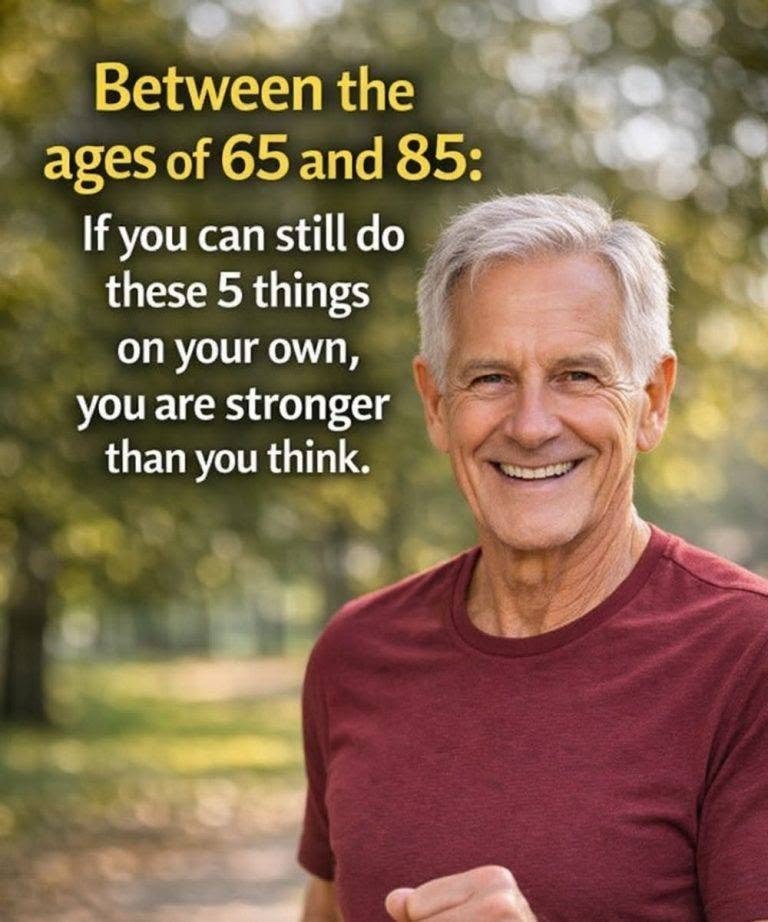
When discussing longevity and healthspan, geriatricians and physical therapists often focus less on heavy gym weights and much more on functional strength—the practical, everyday physical abilities that allow an individual to live independently, safely, and with confidence.
Between the ages of 65 and 85, maintaining independence often comes down to five fundamental physical milestones:
5 Everyday Tests of Functional Strength and Independence
-
Getting Up from the Floor Without Assistance:
-
Why it matters: This is one of the ultimate tests of total-body strength, core stability, balance, and lower-body flexibility. If you can lower yourself to the floor—and get back up unassisted without needing to haul yourself up by heavy furniture—you possess exceptional lower-limb power and joint mobility.
-
-
Climbing a Flight of Stairs Continuously:
-
Why it matters: Navigating stairs requires a combination of cardiovascular endurance, knee and hip strength, and dynamic balance. Being able to walk up a flight of stairs step-over-step without stopping to catch your breath or leaning heavily on the handrail indicates strong quadriceps, glutes, and heart health.
-
-
Carrying Your Own Groceries:
-
Why it matters: Grip strength and upper-body endurance are powerful predictors of overall vitality as we age. Being able to carry bags of groceries from the car to the kitchen unaided reflects solid hand strength, core bracing, and shoulder stability.
-
-
Standing on One Leg for 10 Seconds:
-
Why it matters: Balance relies on a complex coordination between your vision, inner ear (vestibular system), and proprioception (knowing where your body is in space). Being able to stand unassisted on one leg for 10 seconds is a remarkably strong indicator of a low fall risk and healthy nervous system function.
-
-
Dressing and Grooming Independently:
-
Why it matters: Often called an “Activities of Daily Living” (ADL) baseline, the ability to effortlessly put on socks, tie shoes, button shirts, and step into pants requires a surprising amount of upper-body flexibility, balance, and fine motor control.
-
How to Maintain and Build Functional Strength at Any Age
The encouraging news is that functional strength is “use it or lose it,” but it can be improved at any stage of life through targeted, gentle habits:
-
Chair Squats: Practice standing up from a dining chair without using your hands for support, and repeat it 5 to 10 times to build leg power.
-
Heel-to-Toe Walking: Practicing a tightrope walk down a hallway helps sharpen balance and coordination.
-
Protein and Hydration: Ensuring adequate daily protein intake helps protect against age-related muscle loss (sarcopenia), keeping these everyday movements strong and sustainable.
Have you or someone you know found certain daily tasks becoming more challenging, or have you discovered great ways to stay active and strong?
