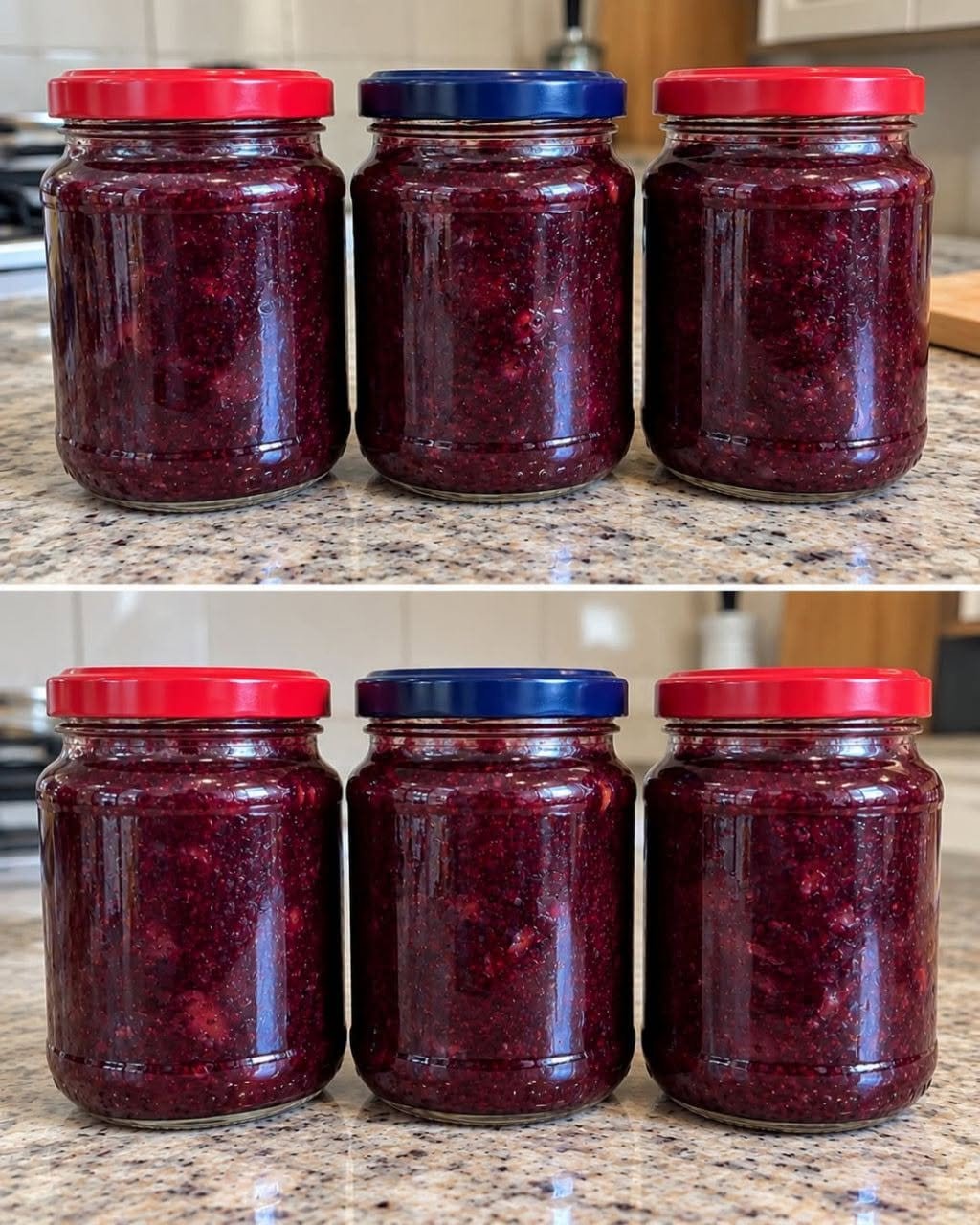
That classic lifestyle headline—“BLUEBERRIES AND APPLE: THE SUGAR-FREE JAM THAT’S NOW MY FAVORITE”—shifts us away from medical panic and right into the wholesome, enticing world of internet culinary trends. Whether it’s a cozy food blog or a viral social media reel, the phrase “sugar-free jam” always sounds like a bit of kitchen magic.
When you strip away the enthusiastic marketing, making a jam without refined white sugar is actually a brilliant exercise in fruit chemistry and natural preservation.
Here is what is happening chemically in your saucepan when you combine blueberries and apples, and how a truly “sugar-free” jam holds together without traditional preserving methods:
The Culinary Chemistry of Sugar-Free Jam
-
Natural Pectin (The Structural Gel):
-
The Science: Traditional jam relies on massive amounts of table sugar (often a 1:1 ratio with fruit) to bind water molecules and help create a firm gel when combined with commercial pectin. When you cut out added sugar, you lose that structural binding agent. That is where the apple comes in as a secret weapon. Apples (especially unpeeled and slightly tart ones like Granny Smiths) are naturally loaded with pectin, particularly in their cores and skins. Grating or chopping an apple into your blueberry jam provides the natural structural network needed to thicken the mixture without dumping in cups of sugar.
-
-
Natural Fruit Sugars (Fructose and Glucose):
-
The Nuance: When a recipe claims to be “sugar-free,” it usually means refined sugar-free. Blueberries and apples are naturally packed with fruit sugars (fructose and glucose). As you simmer the fruit down, the water evaporates, concentrating these natural sugars and intensifying the sweet, jammy flavor naturally.
-
-
Acid and Flavor Balance:
-
The Physics: Without heavy sugar to balance things out, the natural tartness of blueberries and apples takes center stage. Adding a squeeze of fresh lemon juice not only brightens the flavor profile, but the citric acid also helps activate the fruit’s natural pectin, ensuring your jam sets properly.
-
Pro-Tips for Making a Low-Sugar Fruit Jam at Home
-
It’s a Refrigerator Jam, Not a Pantry Conserve: Traditional high-sugar jams can sit on a pantry shelf for months because sugar acts as a natural preservative that inhibits bacterial growth. Sugar-free or low-sugar jams lack that heavy preservative shield; they are refrigerator jams that should be stored in a sealed jar in the fridge and enjoyed within a week or two (or frozen in small batches for later).
-
Simmer Slowly to Evaporate Excess Water: Because you aren’t using sugar to draw out and bind water quickly, you’ll need to gently simmer your blueberry and apple mixture longer, stirring frequently so it doesn’t scorch at the bottom of the pot, until it reaches a rich, spreadable consistency.
Are you whipping up a batch of homemade fruit jam for morning toast, or exploring ways to cut down on processed sweeteners in your kitchen?
