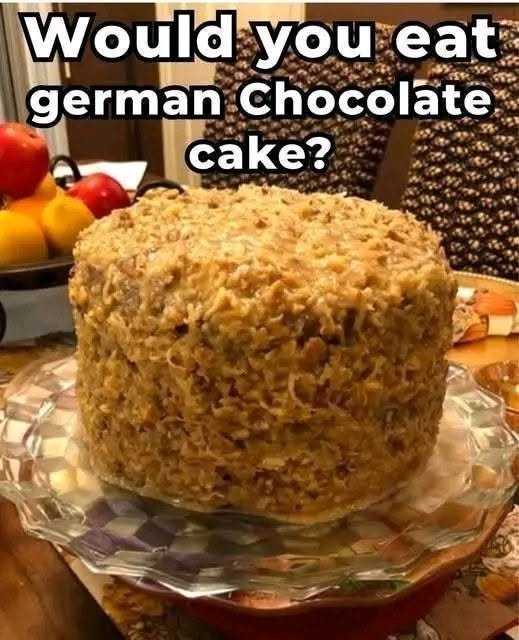
That classic baking trigger—coconut-pecan frosting—brings to mind the absolute crown jewel of southern baking: German Chocolate Cake.
Unlike a standard, fluffy buttercream that you spread smoothly with a spatula, coconut-pecan frosting is a thick, ultra-rich, gooey, cooked custard-style topping loaded with texture.
When you make this frosting from scratch, you are performing a precise culinary balancing act of dairy science, sugar crystallization, and starch thickening. Here is what is happening on your stovetop and how to nail it:
The Chemistry of a Cooked Coconut-Pecan Frosting
-
The Custard Base (Evaporated Milk, Eggs, and Sugar):
-
The Science: Traditional coconut-pecan frosting starts by simmering evaporated milk, sugar, butter, and egg yolks together on the stove. Evaporated milk has about 60% of its water content removed, meaning it is packed with milk proteins and concentrated natural sugars (lactose).
-
The Thickening Agent: The egg yolks act as the primary thickener. As the mixture heats, the proteins in the yolks denature (unfold and network together) to trap the liquid, turning a watery milk mixture into a thick, glossy, spoonable custard.
-
-
The Toasting Effect (Coconut and Pecans):
-
The Science: Folding in sweet, shredded coconut flakes and chopped pecans at the very end adds a massive contrast in texture. As the warm custard cools, the toasted pecans release their natural essential oils, while the coconut flakes absorb some of the rich caramel-sugar syrup, becoming wonderfully chewy rather than dry.
-
Pro-Tips for Perfect Frosting
-
Whisk Constantly and Control the Heat: Because this frosting contains egg yolks and a high sugar content, it can easily burn or scramble if the heat is too high. Cook it over medium-low heat and keep a constant whisk going until it thickens into a pudding-like consistency.
-
Let It Cool Before Spreading: When you first take the pot off the burner, the frosting will look a bit loose. As it cools to room temperature, the butter solidifies and the starch/protein matrix sets. If you try to frost a cake while it’s piping hot, it will slide right off the sides like a sticky waterfall.
Are you planning to slather this decadent frosting over a classic German chocolate cake, or experimenting with a different dessert?
