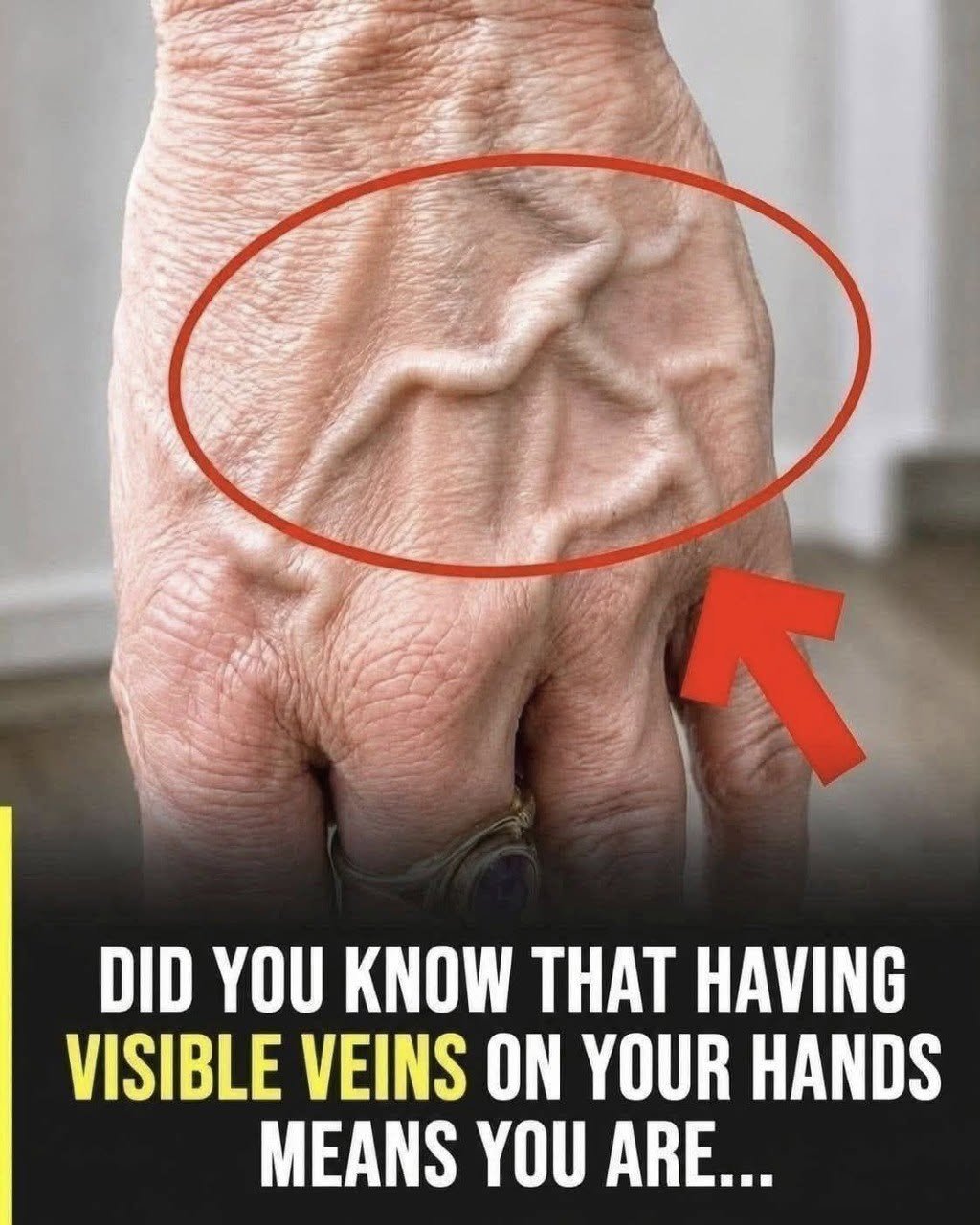
That is a classic internet cliffhanger! Health clickbait loves to use that exact setup—“Did you know that having visible veins means you are…”—to trick you into clicking by implying that a totally normal physical trait is actually a secret warning sign of some impending doom.
Depending on the specific flavor of clickbait, articles usually try to finish that sentence with one of two extremes: they either try to scare you into thinking you have a terrifying vascular disease, or they try to sell you a weird “detox” supplement.
In clinical reality, having visible veins is almost always explained by simple, mundane biology rather than a mysterious health crisis. Here is what your veins actually reveal about you:
1. The Anatomy of Visible Veins (Why They Show Up)
-
Low Body Fat and Athleticism: If your veins are prominent on your arms, hands, or legs, it frequently just means you have a lower body fat percentage and well-developed muscle mass. When muscle pushes outward and subcutaneous fat is thin, superficial veins naturally sit closer to the surface.
-
Skin Tone and Genetics: Fair skin naturally makes blue or green veins appear much more prominent because light penetrates the skin and reflects off the blood vessels. Furthermore, genetics dictate how close your superficial veins run to the surface and how translucent your skin is.
-
Natural Aging: As we age, our skin loses collagen and subcutaneous fat thins out, making veins much easier to see—the exact same normal process we talked about with skin hydration!
-
Environment and Activity: Heat causes blood vessels to dilate (expand) near the skin’s surface to help cool your body down, and temporary blood pressure spikes during exercise will make veins pop out more.
2. When Visible Veins Actually Matter
While everyday visible veins are completely harmless, medical professionals do distinguish them from actual venous issues:
-
Varicose Veins: These are enlarged, twisted, and bulging veins—usually in the legs—caused by weakened one-way valves (venous insufficiency) that allow blood to pool. They can cause aching, heaviness, or swelling, and are a legitimate medical condition worth evaluating if they cause discomfort—not a mysterious internet conspiracy.
The Takeaway: Unless your veins are suddenly bulging, painful, or accompanied by severe swelling, seeing them is usually just a combination of genetics, skin thickness, and body composition—not a secret diagnostic alarm.
Did a headline try to tell you that visible veins mean your body is “toxic” or failing, or were you just looking down at your hands and wondering why they’re suddenly so prominent?
