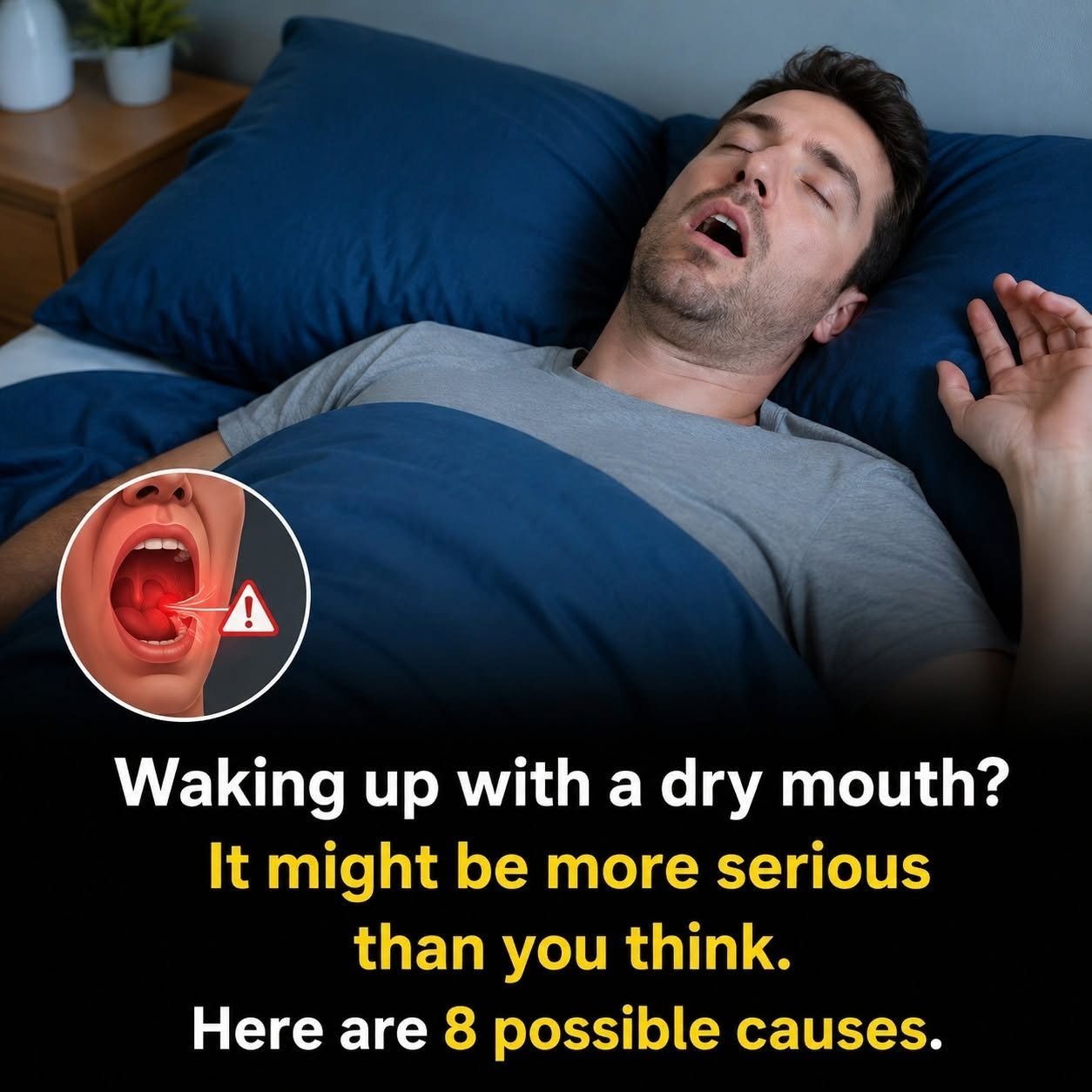
That classic sensationalized headline—“Dry Mouth at Night: 8 Warning Signs You Shouldn’t Ignore”—takes a very common, often minor physical annoyance and wraps it in a terrifying medical emergency package.
Waking up with a parched mouth can certainly feel uncomfortable, but internet wellness articles love to frame it as a secret neon sign pointing toward organ failure or rare autoimmune diseases.
When you strip away the panic-inducing clickbait and look at what dental medicine and clinical physiology actually say, nocturnal dry mouth (known clinically as xerostomia) is very real, but its causes range from simple environmental quirks to genuine health signals.
Here is what is happening physiologically when your mouth dries out at night, and how to tell the difference between normal dryness and a true clinical red flag:
The Reality Behind Nighttime Dry Mouth
-
Mouth Breathing and Environmental Physics:
-
The Mechanism: This is by far the most common culprit. If you have a stuffy nose from allergies, a deviated septum, mild sleep apnea, or you simply sleep with your mouth open, room air flows constantly across your oral mucosa. This airflow rapidly evaporates the thin layer of saliva protecting your teeth and gums, leaving you feeling like you swallowed the desert by 3:00 AM.
-
-
Medication Side Effects (The Pharmacology Connection):
-
The Mechanism: Hundreds of common prescription and over-the-counter medications have anticholinergic properties. This means they block the chemical signals that tell your salivary glands to produce saliva. Blood pressure medications, antihistamines, antidepressants, and anxiety meds are notorious for causing nocturnal dry mouth.
-
-
Age and Glandular Output:
-
The Biology: As we age, our salivary glands naturally experience a slight decline in output, and older adults are much more likely to be taking multiple medications that compound the issue.
-
Managing the Noise vs. Real Red Flags
While clickbait lists want you to panic over every dry morning, dental and medical professionals look at specific patterns to determine when dry mouth warrants an investigation:
-
Manageable Causes: If your dry mouth is linked to a temporary cold, a dry bedroom, seasonal allergies, or a new prescription medication, it is a localized or drug-induced issue. Adjusting your room humidity, using a saline nasal spray, or talking to your doctor about your medication profile usually resolves it.
-
True Red Flags (When to See a Doctor or Dentist):
-
Rapid Tooth Decay: Saliva is your mouth’s natural defense shield—it neutralizes acids, washes away food particles, and remineralizes enamel. If you experience a sudden, aggressive wave of cavities or gum disease alongside chronic dry mouth, your teeth are losing their primary protection.
-
Sjögren’s Syndrome: If severe dry mouth is accompanied by persistent dry eyes, chronic fatigue, or joint pain, doctors evaluate for autoimmune conditions where the immune system mistakenly attacks moisture-producing glands.
-
Swallowing or Speaking Difficulties: If chronic dryness makes it genuinely painful to swallow food or talk during the day, it moves far past a minor morning annoyance.
-
The Takeaway
Waking up dry-mouthed doesn’t mean your body is collapsing; it usually just means you breathed through your night air conditioning or your evening medication is doing its job a little too well.
Are you looking into nocturnal dry mouth to troubleshoot a frustrating morning symptom, or tracking down another piece of sensationalized health media?
