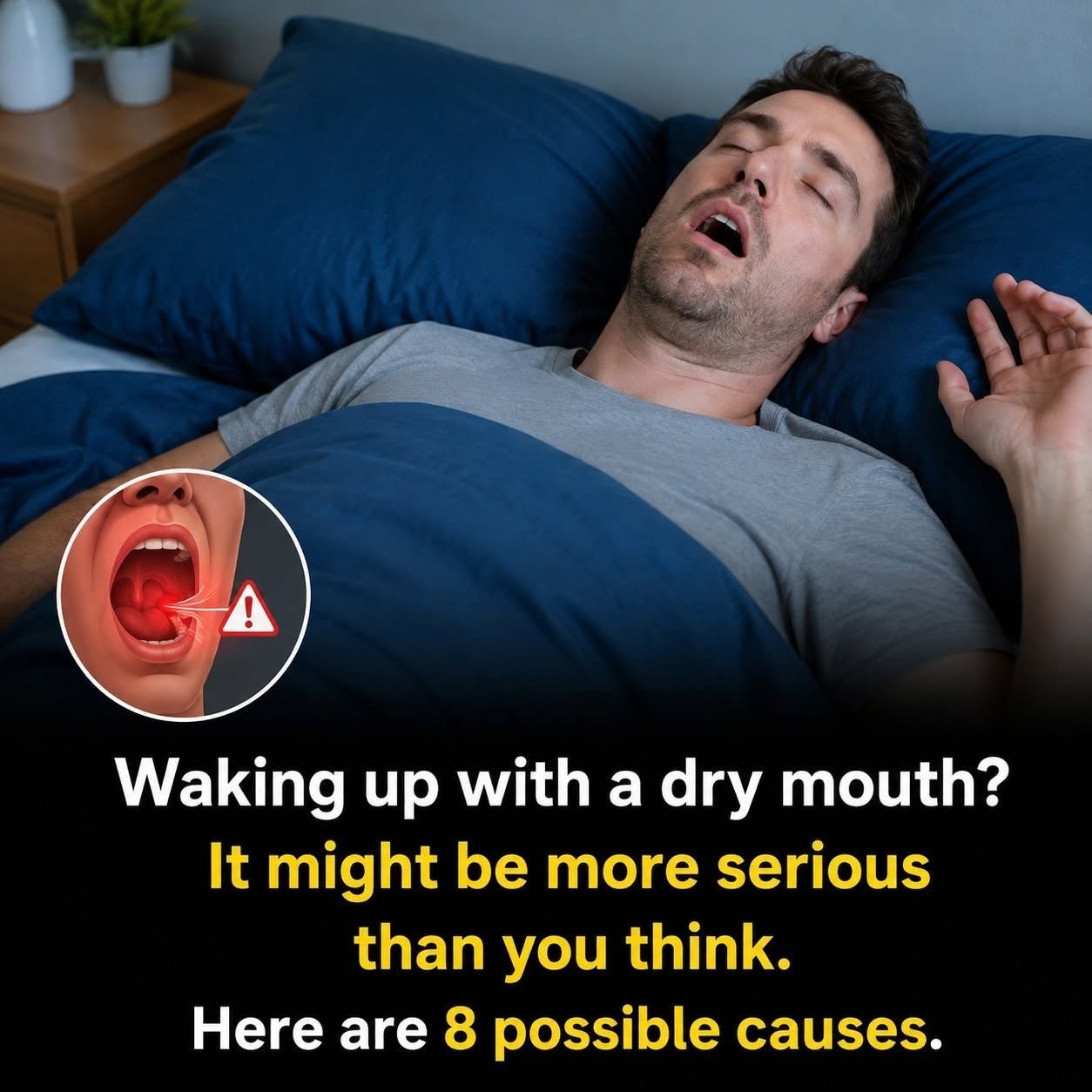
Waking up with a parched throat, a sticky tongue, or an urgent need for a glass of water is a common issue known as xerostomia (dry mouth). While occasionally sleeping with your mouth open or having a dry bedroom can cause mild dryness, chronic nighttime dry mouth often signals an underlying health issue or medication side effect that shouldn’t be ignored.
Saliva is essential for washing away food particles, neutralizing acids, and protecting teeth from decay and infections. When saliva production drops significantly at night, it triggers specific warning signs.
8 Warning Signs of Nighttime Dry Mouth You Shouldn’t Ignore
1. Frequent Nighttime Waking to Drink Water
-
What to watch for: Waking up multiple times every night feeling like your throat and mouth are coated in sand, requiring a water bottle on your nightstand just to get back to sleep.
-
Why it matters: Interrupting your sleep cycle continuously disrupts deep REM sleep and points to a significant drop in nocturnal salivary gland function.
2. Waking Up with Loud Snoring or Gasping for Air
-
What to watch for: Chronic mouth breathing, loud snoring, waking up choking/gasping, or feeling exhausted despite spending 8 hours in bed.
-
Why it matters: Persistent mouth breathing at night completely dries out oral tissues. When combined with snoring or gasping, it is a primary red flag for Obstructive Sleep Apnea (OSA).
3. A Thick, Sticky, or “Cotton-Like” Feeling in the Mouth
-
What to watch for: Your tongue feeling like sandpaper or sticking to the roof of your mouth, or saliva appearing thick, stringy, and paste-like upon waking.
-
Why it matters: Indicates that the liquid component of saliva has dropped significantly, leaving behind concentrated mucus.
4. Waking Up with Bad Breath (Halitosis) or a Metallic Taste
-
What to watch for: Morning breath that is unusually foul, severe, or accompanied by a persistent sour, bitter, or metallic taste in your mouth.
-
Why it matters: Without saliva to wash away dead cells and bacteria, anaerobic bacteria multiply rapidly overnight, releasing foul-smelling sulfur compounds.
5. Cracked Lips, Mouth Sores, or a Red, Burning Tongue
-
What to watch for: Cracks at the corners of your mouth (angular cheilitis), raw or bleeding gums, a red/glossy tongue, or a burning sensation when eating or drinking.
-
Why it matters: Saliva contains protective enzymes and antibodies. Without it, delicate oral mucosa becomes prone to fungal infections like Oral Thrush (Candidiasis).
6. Unexplained Tooth Decay or Receding Gums
-
What to watch for: Sudden cavities forming near the gumline or between teeth, sensitive teeth, or inflamed gums despite maintaining good brushing habits.
-
Why it matters: Saliva re-mineralizes tooth enamel with calcium and phosphate. Nighttime dryness creates an acidic environment where enamel erodes rapidly.
7. Difficulty Swallowing or Hoarseness in the Morning
-
What to watch for: Waking up with a dry, raspy voice, a tickle in the throat, or trouble swallowing breakfast dry foods without drinking liquids.
-
Why it matters: Points to reduced lubrication stretching down into the pharynx and esophagus, often linked to Silent Reflux (LPR) or severe systemic dryness.
8. Dry Eyes alongside Dry Mouth
-
What to watch for: Feeling grit or a burning sensation in your eyes upon waking, combined with severe nighttime dry mouth and dry skin.
-
Why it matters: The combination of persistent dry mouth and dry eyes is a hallmark triad for Sjögren’s Syndrome, an autoimmune condition affecting moisture-producing glands.
Common Root Causes of Nighttime Dry Mouth
| Cause Category | Common Triggers |
| Medications | Antihistamines, decongestants, blood pressure drugs (beta-blockers, diuretics), antidepressants, and muscle relaxants. |
| Nasal Obstruction | Deviated septum, nasal polyps, or chronic allergies forcing mouth breathing during sleep. |
| Medical Conditions | Diabetes (high blood sugar levels causing dehydration), Sjögren’s Syndrome, Parkinson’s, or Thyroid disorders. |
| Lifestyle Factors | Alcohol, caffeine before bed, smoking/vaping, or very low indoor humidity during winter. |
Practical Ways to Get Relief Before Bed
-
Use an Xylitol-Based Oral Rinse or Lozenges: Xylitol stimulates salivary flow and prevents tooth decay. Special nighttime oral gels (like Biotene) coat oral tissues.
-
Run a Cool-Mist Humidifier: Keeps bedroom air moist, preventing delicate nasal mucosa and throat tissues from drying out while sleeping.
-
Address Nasal Breathing: Try nasal strips or a saline spray before bed to open nasal passages so you don’t default to mouth breathing.
-
Review Prescription Medications: Ask your physician or pharmacist if any evening medications cause dry mouth as a side effect and whether the timing or dose can be adjusted.
