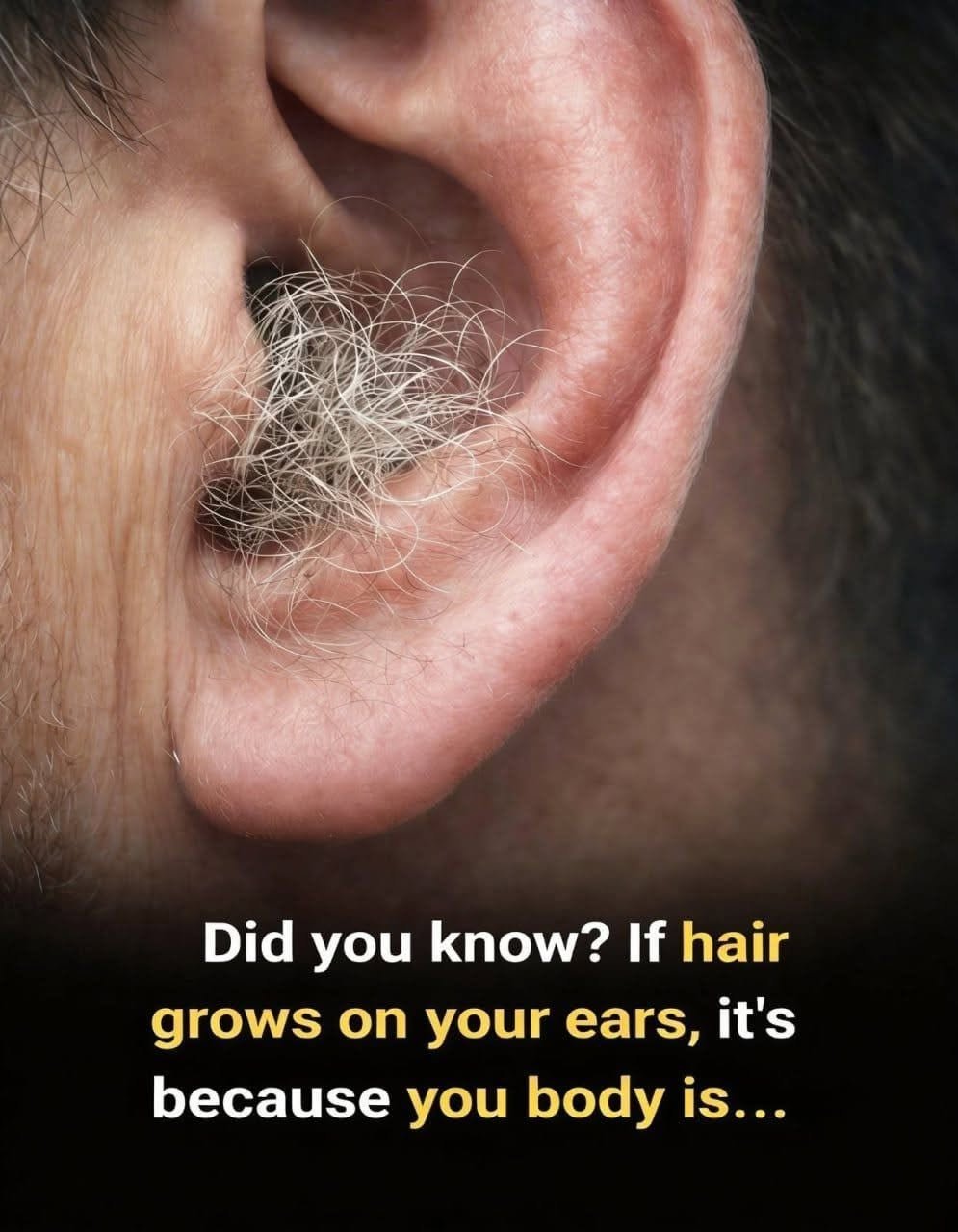
That headline manages to take a completely normal, mundane part of human aging and try to spin it into a hidden diagnostic crisis. By calling ear hair an “overlooked body sign,” it plays on the anxiety that every stray hair or physical quirk is whispering a secret warning about your internal health.
In clinical reality, ear hair has very little to do with secret organ failure and everything to do with genetics, aging, and hormones.
Here is the grounded, clinical reality behind ear hair and what it actually indicates:
1. The Real Driver: Aging and Hormones (Androgen Sensitivity)
-
The Hair Growth Cycle: As men (and to a lesser extent, women as they age) progress through life, their hair follicles respond differently to circulating hormones, particularly dihydrotestosterone (DHT), an active metabolite of testosterone.
-
The Follicle Shift: Over time, hair follicles on the scalp might shrink (leading to male pattern baldness), while follicles in areas like the nose, eyebrows, and ears can actually become more sensitive, causing hairs to grow thicker, coarser, and longer. It is a standard part of the human aging process, not a distress signal from your liver or heart.
2. The Myth of the “Heart Disease Warning”
-
Where the Clickbait Comes From: A few small, older observational studies tried to find a link between earlobe creases (Frank’s sign) or excessive ear hair and coronary artery disease in middle-aged men. However, these correlations were weak, largely driven by the fact that both aging and heart disease share a common timeline.
-
The Clinical Verdict: Modern cardiologists do not look at a patient’s ear hair to assess their cardiovascular risk. They look at objective metrics: blood pressure, lipid panels (LDL, HDL, triglycerides), fasting glucose/HbA1c, family history, and lifestyle factors.
3. Pure Genetics and Ancestry
-
Just like how thick your beard grows, where you hair line sits, or whether your hair turns gray early, ear hair density is heavily governed by genetic blueprints. If your father or grandfather had prominent ear hair as they aged, chances are high your follicles are programmed to do the exact same thing.
The Takeaway: Ear hair isn’t a mysterious health scanner giving you early warnings about your vital organs; it is simply a normal, albeit slightly annoying, byproduct of genetics and getting older.
Did this ear hair warning catch you by surprise on your feed, or is the internet just running out of body parts to turn into medical red flags?
