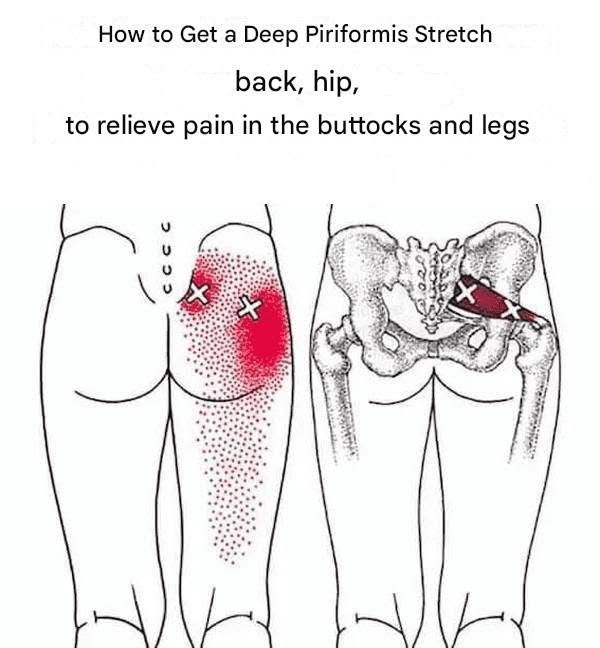
That headline combines classic clickbait formatting with a very real physical frustration. By promising that a single “deep stretch” will entirely eliminate back, hip, glutes, and leg pain, it makes a sweeping medical promise.
While tight muscles and nerve impingement in the hip can cause radiating discomfort, calling a stretch a universal cure-all oversimplifies how the nervous system and musculoskeletal structure interact.
Here is the grounded, clinical reality behind the piriformis muscle, what causes that deep pain, and how to safely stretch and manage it:
1. What is the Piriformis and Why Does it Hurt?
-
Anatomy: The piriformis is a small, deep muscle located in the gluteal region behind your gluteus maximus. It runs from the lower spine to the top of your thighbone and is responsible for externally rotating your hip.
-
The Sciatic Connection: The sciatic nerve runs directly underneath—and sometimes straight through—the piriformis muscle. When the piriformis becomes chronically tight, spasms, or inflamed, it can compress the sciatic nerve, mimicking a herniated disc and sending sharp, radiating pain down the glutes and back of the leg (a condition often called piriformis syndrome).
2. The Danger of Over-Stretching a Guarding Muscle
-
The Reflex Trap: When a muscle is intensely irritated, inflamed, or compressed, aggressively forcing it into a deep stretch can actually backfire. The muscle perceives the extreme stretch as a threat and responds by clamping down tighter in self-defense.
-
The Underlying Cause: Piriformis tightness is rarely a standalone issue. It is usually a compensation pattern caused by weak hip stabilizers, excessive sitting, pelvic misalignment, or poor core engagement forcing the piriformis to work overtime.
3. Safe, Effective Ways to Release Piriformis Tension
Instead of aggressive, painful pulling, a gentle, progressive approach works best to calm the muscle down:
-
The Figure-4 Stretch (Supine / Lying Down):
-
How to do it: Lie on your back with both knees bent and feet flat on the floor. Cross your right ankle over your left knee. Gently pull your left thigh toward your chest until you feel a comfortable, moderate stretch in your right glute. Hold for 30 seconds without forcing it or holding your breath.
-
-
The Seated Pigeon Variation:
-
How to do it: Sit upright in a sturdy chair, cross one ankle over the opposite knee, keep your spine tall, and gently hinge forward from the hips until you feel a light stretch in the hip. Avoid rounding your lower back.
-
-
Addressing Mobility and Strength: Long-term relief requires more than stretching. Strengthening your gluteus medius and core helps take the constant postural load off your piriformis.
The Takeaway: A stretch can offer temporary relief by easing muscular tension off the sciatic nerve, but it won’t magically cure systemic back or leg pain if the root cause is structural weakness or nerve entrapment elsewhere. Listen to your body and never stretch through sharp pain.
Did this stretch headline pop up because you’re dealing with a stubborn hip ache after a long day of sitting, or were you looking for ways to loosen up a tight lower body?
