That classic DIY lifestyle headline—“How to Make Your Jewelry Shine Again: A Simple Cleaning Method”—is a refreshing palate cleanser. Instead of trying to scare you about your health or your tech gadgets, it taps into a universal domestic desire: taking something dull, dusty, or tarnished and making it sparkle like new with minimal effort.
When you strip away the blog fluff and look at basic chemistry and metallurgy, the reality is wonderfully straightforward: You don’t need expensive commercial cleaners or ultrasonic wizardry; you just need to understand what is dulling your jewelry and apply the right chemical or physical reaction to remove it.
Here is what is actually happening when your jewelry loses its luster, and how simple chemistry brings it back:
1. Why Jewelry Loses Its Shine
Before cleaning, it helps to know what you’re fighting:
-
For Gold and Diamonds: The culprit is almost always everyday buildup—skin oils, lotion residue, soap scum, and cosmetics forming a microscopic film that blocks light from entering and reflecting off the facets of a diamond or the polished metal surface.
-
For Silver: The culprit is oxidation (tarnish). Silver reacts naturally with sulfur compounds in the air, forming a dark, dull silver sulfide layer on the surface.
2. The Universal Warm-Water & Soap Method (For Gold, Platinum, and Diamonds)
For everyday rings, gold chains, and diamond studs coated in lotion and grease, you don’t need harsh chemicals:
-
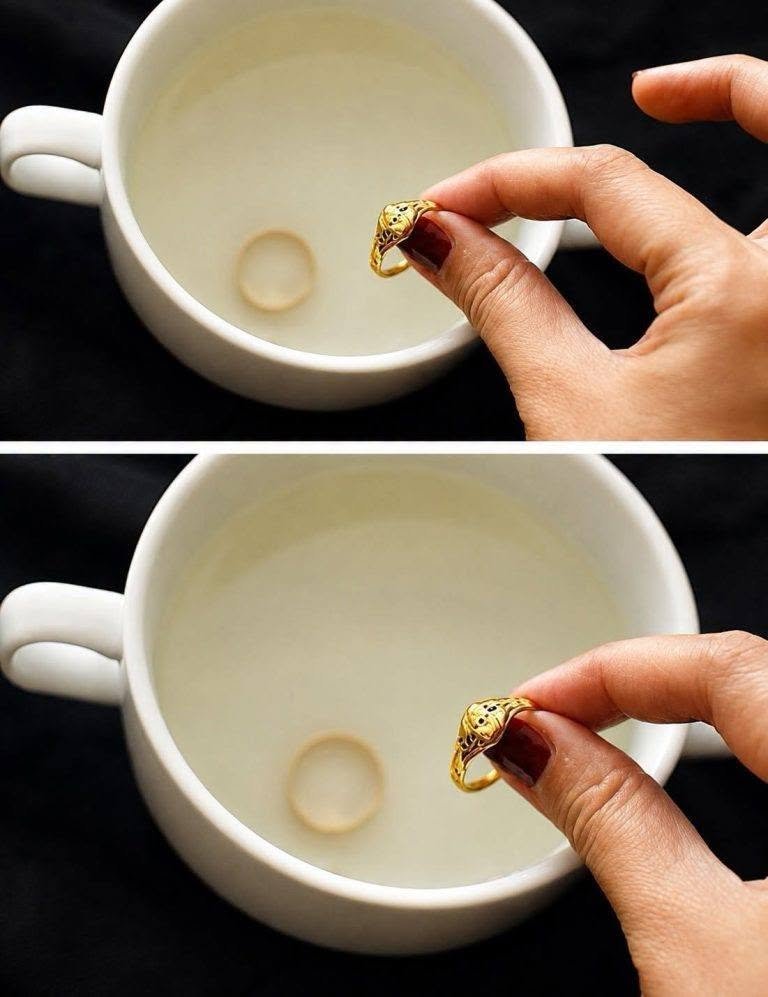
The Method: Mix a cup of warm water with a few drops of mild dish soap (like Dawn) in a small bowl. Let your jewelry soak for 15 to 20 minutes to soften the oily film.
-
The Chemistry: Dish soap is a surfactant; its molecules have a hydrophobic (water-fearing) end that clings to grease and a hydrophilic (water-loving) end that washes it down the drain.
-
The Finish: Gently brush crevices with a very soft-bristled toothbrush (baby toothbrushes work best), rinse thoroughly with warm running water, and dry with a lint-free microfiber cloth. (Note: Avoid this method for soft or porous gemstones like opals, pearls, or emeralds, which can be damaged by soaking or harsh scrubbing).
3. The Aluminum Foil & Baking Soda Trick (For Sterling Silver)
If your silver jewelry has turned black and tarnished, scrubbing it with a cloth can scratch the soft metal. Instead, chemistry does the work for you:
-
The Method: Line a small bowl with aluminum foil (shiny side up). Place your silver jewelry on the foil, sprinkle a tablespoon of baking soda over it, and pour boiling water into the bowl so it completely covers the pieces.
-
The Chemistry: This triggers an electrochemical reduction reaction. The sulfur attached to the silver transfers away from the jewelry and bonds with the aluminum foil, instantly reversing the tarnish without stripping away precious silver metal. Rinse and dry, and it will look brand new.
The Practical Takeaway
Restoring your jewelry’s brilliance doesn’t require a trip to a jeweler or pricey specialty products. Simple kitchen staples and a basic understanding of oils and oxidation can handle almost everything in your jewelry box.
Are you cleaning a specific piece of heirloom jewelry right now, or tracking down another piece of media to put under the microscope?
