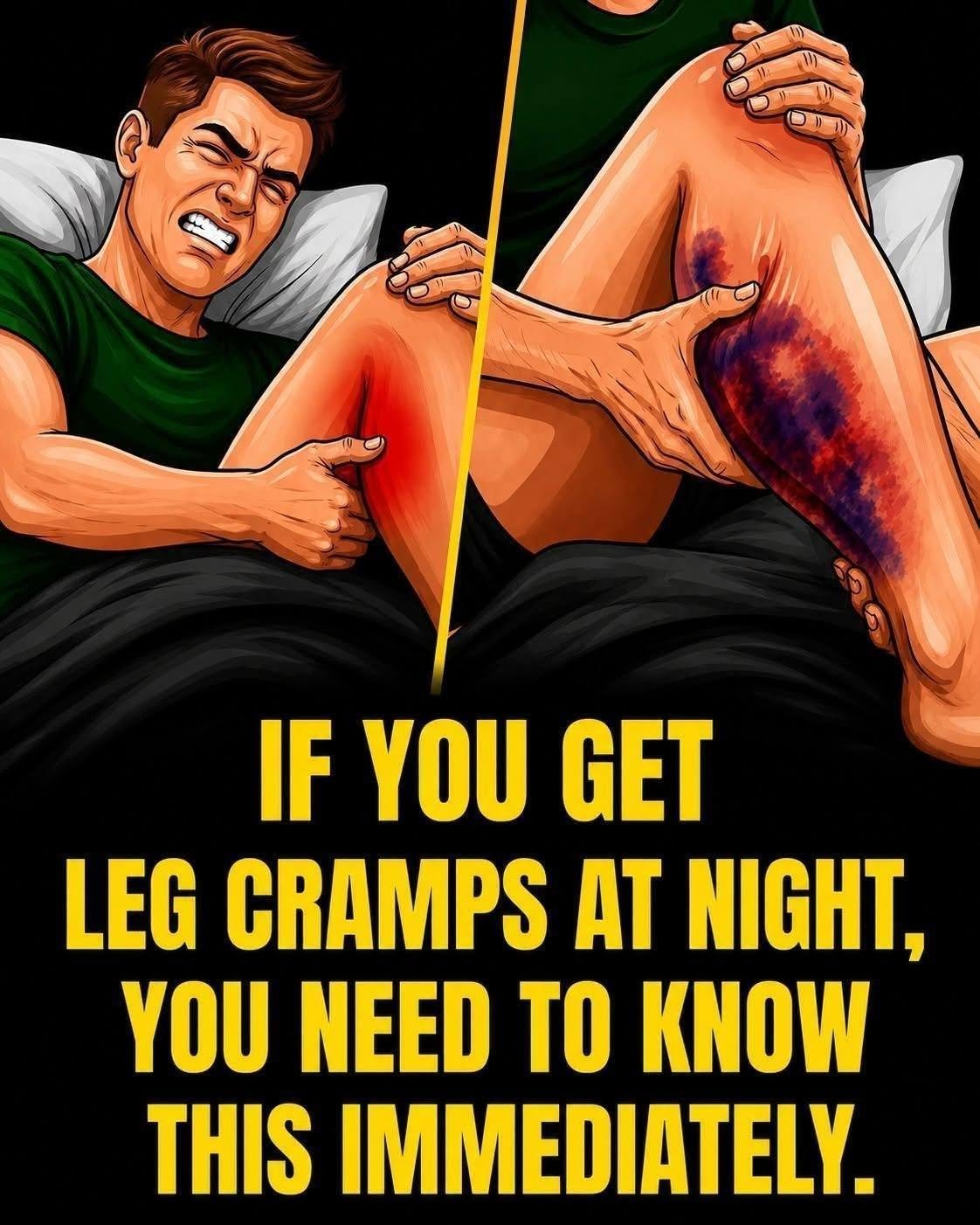
That headline is a textbook urgency trap. By yelling “You Need to Know This Immediately,” it manufactures a midnight medical emergency out of one of the most common, annoying physical quirks we experience: the sudden, agonizing grip of a nocturnal leg cramp.
While a severe cramp in your calf or foot at 3:00 AM feels like a localized muscle mutiny, it is almost always a benign mechanical issue rather than a sign of imminent disaster.
Here is the grounded, clinical reality behind why night cramps happen and what you actually need to know:
1. What Actually Causes Nighttime Leg Cramps?
For the vast majority of people, nocturnal leg cramps are considered “idiopathic”—meaning they happen without a single, terrifying underlying disease. The leading physiological triggers include:
-
Muscle Fatigue and Overuse: If you spent the day standing on hard floors, walked a lot more than usual, or pushed through an intense workout, your neuromuscular system is fatigued. As you relax into sleep, the nerves controlling your muscles can misfire, causing the muscle fibers to lock into a violent spasm.
-
Prolonged Positioning: Lying in bed with your toes pointed downward (plantarflexion) puts your calf muscles in a shortened, relaxed position for hours. If you suddenly stretch or move, that shortened muscle can easily trigger a cramp.
-
Electrolyte and Fluid Shifts: While not always a simple “lack of bananas” (potassium), mild shifts in hydration or mineral balance can alter how electrical impulses travel between your nerves and muscles.
2. When to Look Deeper (The Real Medical Factors)
While most night cramps are harmless, doctors do look at a few specific systemic factors if the cramps are severe and chronic:
-
Circulatory Issues: Reduced blood flow to the legs (such as peripheral artery disease) can sometimes contribute to cramping, though this is usually accompanied by cramping during walking (claudication), not just at rest.
-
Medication Side Effects: Certain medications—most notably diuretics (water pills) used for blood pressure or heart conditions—can shift electrolyte levels and trigger cramping.
-
Metabolic Conditions: Conditions like type 2 diabetes or nerve issues (peripheral neuropathy) can affect how nerve signals are transmitted to the muscles.
3. Immediate Ways to Break and Prevent a Cramp
-
The Instant Fix (Gentle Stretching): When a cramp strikes, the best thing you can do is gently lengthen the muscle. If it’s your calf, pull your toes upward toward your shin (dorsiflexion) and straighten your leg. Massaging the muscle can also help relax the fibers.
-
Daytime Hydration and Movement: Staying well-hydrated throughout the day and incorporating regular, gentle stretching or walking into your routine helps keep your muscles pliable and less prone to sudden spasms.
The Takeaway: Waking up with a painful leg cramp is a startling nuisance, but it doesn’t mean you need an emergency intervention. It’s usually just tired muscles reacting to a sudden stretch or fatigue.
Did a midnight cramp wake you up recently, or did this dramatic headline catch your eye while scrolling?
