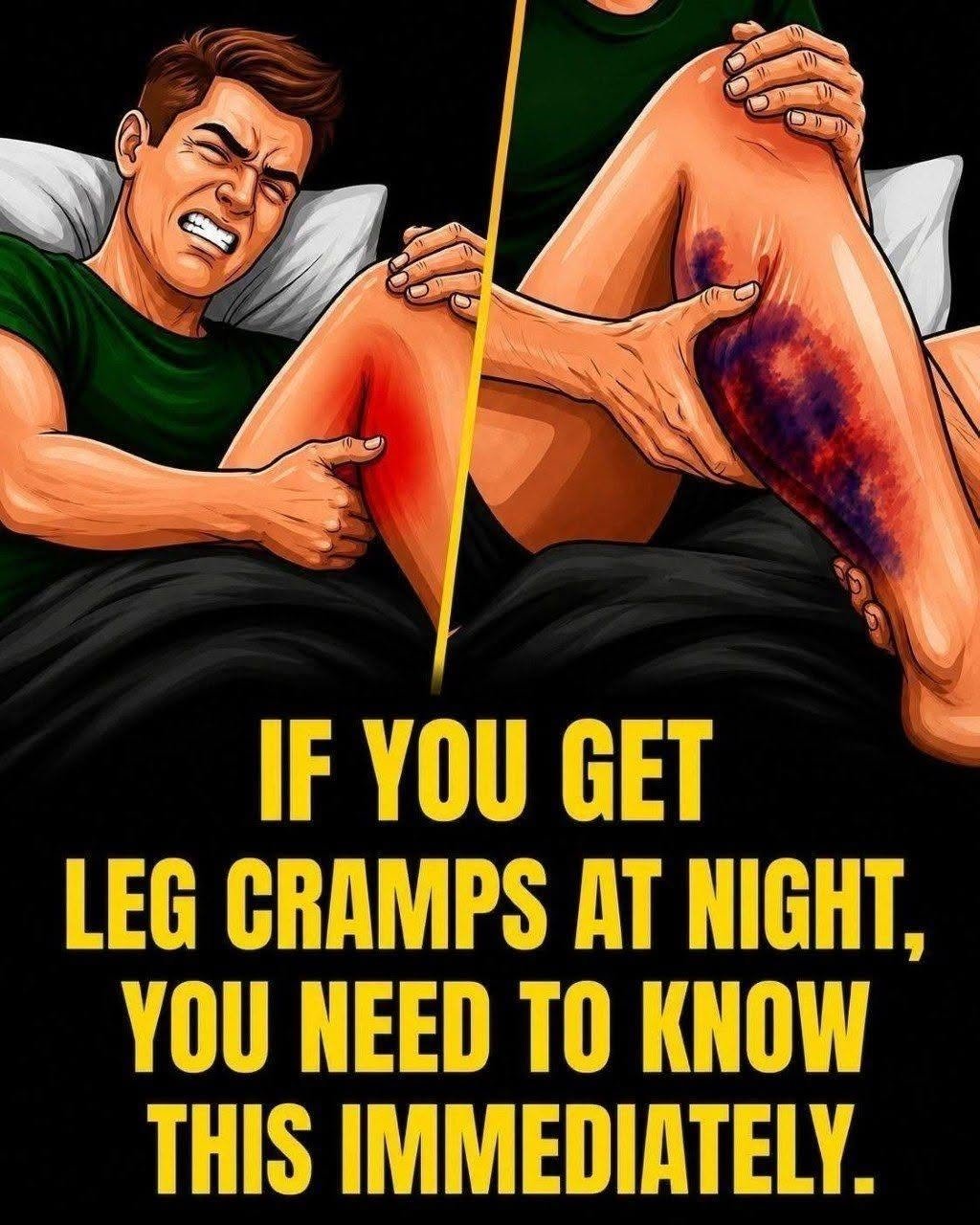
Sudden, involuntary tightening of the calf, foot, or thigh muscles during the night—commonly known as **nocturnal leg cramps** or “charley horses”—affects up to 60% of adults. While usually harmless, these painful spasms are an uncomfortable indicator that your body’s neuromuscular system or fluid balance is disrupted.
Understanding what triggers these spasms, how to halt them in seconds, and when they signal an underlying vascular or neurological condition is key to preventing them.
—
### How to Stop a Leg Cramp Instantly
When a cramp strikes, **do not try to “point your toes” or curl your foot**, as this shortens the calf muscle and worsens the spasm. Instead, follow these steps:
1. **Flex the Foot Upward (Dorsiflexion):** Fires inverse stretch reflex to relax the muscle.
Immediately flex your ankle, pulling your toes and foot upward toward your knee. Hold this stretch firmly for **30 to 60 seconds** until the muscle releases.
2. **Stand Up & Bear Weight:** Engages opposing muscle groups.
Get out of bed and stand on the affected leg, pressing your heel firmly into the floor. The force of bearing weight helps deactivate the involuntary nerve signal causing the contraction.
3. **Apply Heat & Massages:** Promotes local blood circulation.
Once the acute contraction releases, apply a warm heating pad or warm wet washcloth to the muscle, or gently massage the area to restore full blood flow and prevent a secondary spasm.
—
### Primary Causes of Nocturnal Leg Cramps
Contrary to popular belief, leg cramps are rarely just “a lack of potassium.” They are usually driven by a combination of muscle fatigue, nerve hyperexcitability, and fluid dynamics:
#### 1. Electrolyte & Mineral Imbalances
* **Magnesium & Calcium:** Magnesium regulates muscle relaxation, while calcium governs muscle contraction. A deficiency in either—or an imbalance in the ratio—causes peripheral motor nerves to become hyper-excitable.
* **Sodium & Potassium Drops:** Sweating heavily or taking certain medications alters sodium and potassium concentrations in the fluid surrounding muscle fibers, leading to spontaneous firing.
#### 2. Dehydration
* When your body lacks fluid, the volume of blood and interstitial fluid surrounding muscle tissues drops. This causes nerve endings to compress and misfire, triggering involuntary contractions.
#### 3. Muscle Fatigue & Age-Related Tendon Shortening
* **Fatigue:** Overexertion during daytime exercise or long periods of standing stresses tendon structures.
* **Tendon Shortening:** As we age, tendons naturally shorten and lose elasticity. Sleeping with feet naturally extended downward (*plantarflexion*) further shortens the calf muscle, making it vulnerable to cramping when shifting position.
#### 4. Medication Side Effects
Several widely prescribed medications can cause nocturnal leg cramps as a side effect:
* **Diuretics (Water Pills):** Used for blood pressure; drain water and essential minerals (potassium, magnesium).
* **Statins (Cholesterol Drugs):** Can cause muscle toxicity or localized muscular weakness.
* **Beta-Blockers & Bronchodilators:** Alter nerve signal transmission and peripheral blood flow.
#### 5. Poor Circulation & Peripheral Artery Disease (PAD)
* Reduced arterial blood flow to the legs (*ischemia*) starves muscle tissue of oxygen and nutrients during rest, leading to painful metabolic buildup and spasms.
—
### Nocturnal Cramps vs. Restless Legs Syndrome (RLS)
It is critical to distinguish nocturnal leg cramps from **Restless Legs Syndrome (RLS)**, as they require entirely different medical approaches:
| Feature | Nocturnal Leg Cramps | Restless Legs Syndrome (RLS) |
| — | — | — |
| **Sensation** | Sharp, intense, painful physical contraction/knotting. | An uncomfortable “creepy-crawly,” throbbing, or aching urge to move. |
| **Physical Sign** | Visibly hardened, tight muscle mass. | No physical muscle hardness or knot. |
| **Relief Mechanism** | Physical stretching, heat, and weight-bearing. | Voluntary movement (walking, pacing, shaking the leg). |
—
### Preventative Daily Checklist
* **Nightly Calf Stretch:** Before getting into bed, perform a wall stretch for 2–3 minutes to lengthen the Achilles tendon and calf muscles.
* **Hydrate Consistently:** Drink water throughout the day, not all at once right before bed (which disrupts sleep with bathroom trips).
* **Check Sleep Position:** Use a loose top sheet or blanket so your feet aren’t pressed flat and downward while you sleep.
* **Review Medications:** If cramps began shortly after starting a new medication (like a diuretic or statin), consult your physician to check electrolyte levels or adjust your treatment.
—
### When to Consult a Doctor
> **Schedule a medical evaluation if your leg cramps:**
> * Are severe, persistent, and consistently disrupt your sleep quality.
> * Are accompanied by muscle weakness, numbness, visible swelling, or redness in the leg.
> * Occur alongside daytime leg pain while walking (*claudication*), which can be a sign of Peripheral Artery Disease.
>
>
