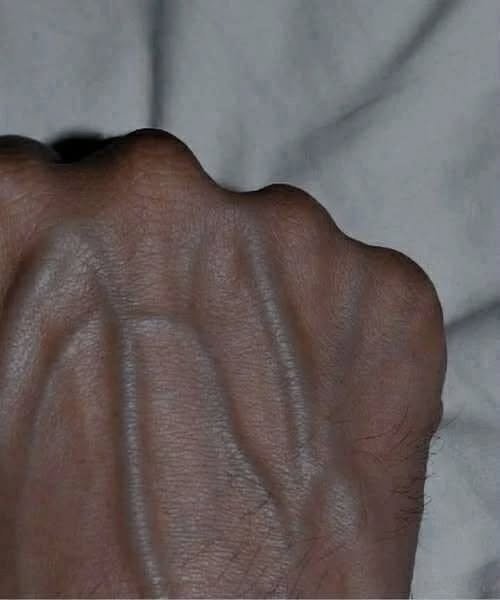
Clinical Reality Check: Visible veins in the hand are not a universal or specific signal of cancer (or cardiovascular pathology). Prominent hand veins are almost always normal anatomical variations driven by subcutaneous fat loss, low skin thickness, high ambient temperature, athletic/low-body-fat baseline, or dependent hand positioning causing temporary venous pooling.
Visible Hand Veins: Myth vs. Clinical Reality
| Observation | What Social Media Claims | Physiological / Clinical Reality |
| Prominent Hand Veins | Sign of “vascular toxicity,” cancer, or impending clot/stroke | Normal venous blood return under skin with low subcutaneous adipose tissue, aging-related skin thinning, thermal vasodilation, or physical conditioning. |
| Bulging / Engorged Veins After Exercise | Overloaded cardiovascular system | Normal physiological response: muscle contraction pushes blood upward while local metabolic heat triggers cutaneous vasodilation. |
| Localized Hard, Tender, or Cord-Like Vein | General systemic disease | Suggests superficial phlebitis or superficial thrombophlebitis (local inflammatory/clot reaction in a superficial vein, often minor or secondary to IV/cannulation, trauma, or hypercoagulable state). |
When Visible or Prominent Veins Actually Matter
-
Dependent Edema / Venous Insufficiency: If veins are accompanied by heavy swelling, aching, skin discoloration (hemosiderin staining), or ulceration (more common in lower extremities).
-
Superficial Thrombophlebitis: A cord-like, red, warm, tender segment of a superficial vein requires clinical evaluation to rule out progression or underlying hypercoagulability.
-
Signs of Systemic Warning (Unrelated to Vein Prominence Alone): Unexplained rapid weight loss, persistent night sweats, deep lymphadenopathy, or systemic constitutional symptoms are oncologic red flags—not a simple observation of hand veins.
Safety Red Line: Seek medical evaluation if a visible vein is hot to the touch, firm/cord-like, associated with spreading skin erythema/pain, or accompanied by sudden limb swelling, shortness of breath, or chest pain (deep venous thrombosis/pulmonary embolism red flags).
Are you noticing simple visible hand/forearm veins (like after a warm day or weight loss), or is there a specific tender, red, or hard cord-like segment causing concern?
