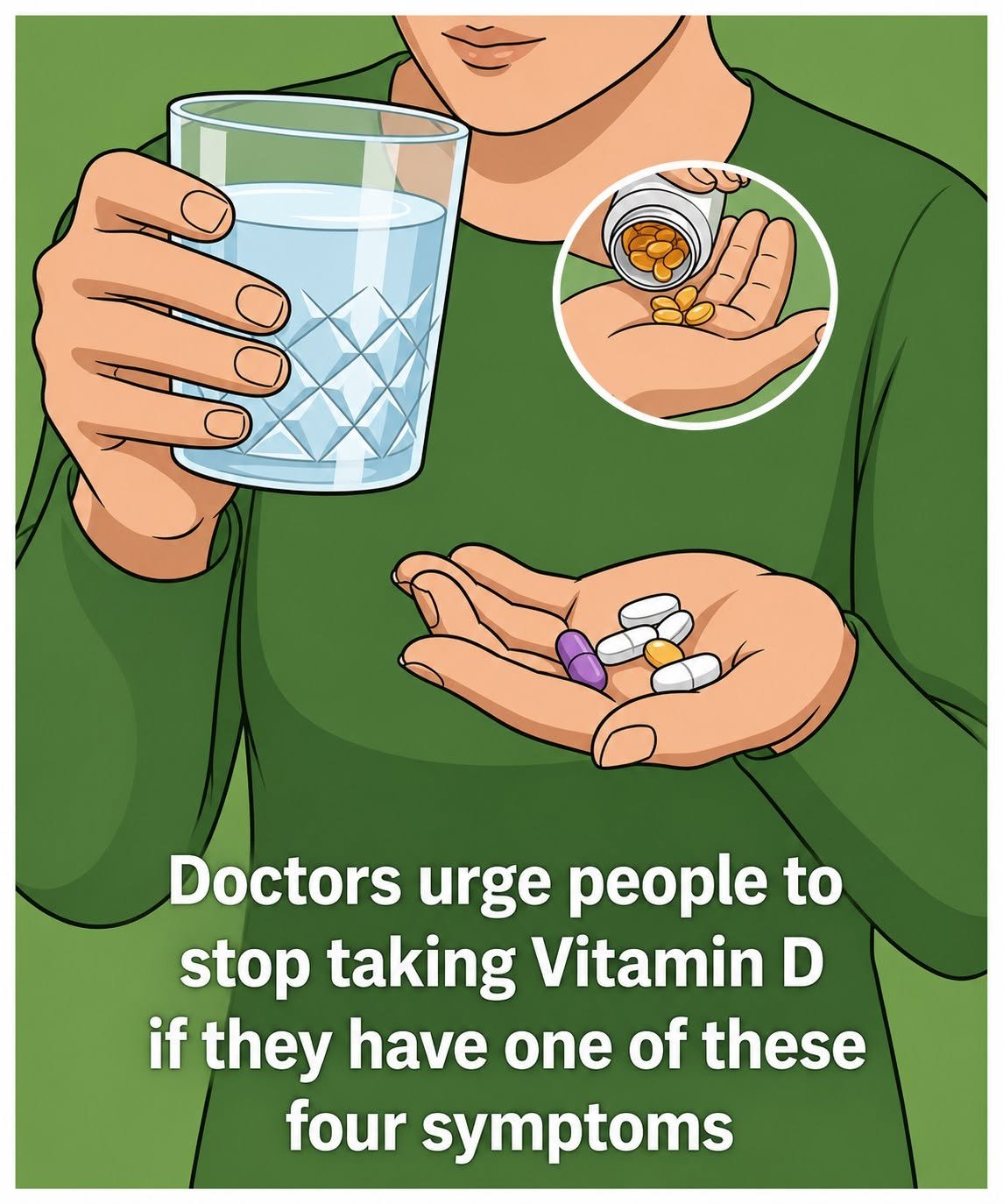
That headline is a masterclass in modern supplement clickbait. By combining an urgent “Important Warning from Doctors” with a terrifying command to “Stop Taking Vitamin D Immediately,” it weaponizes one of the most common wellness supplements on the market to guarantee a panic-driven click.
In clinical reality, Vitamin D is a vital fat-soluble nutrient, and while taking astronomical, reckless doses for months on end can cause problems, a standard daily supplement isn’t a ticking time bomb.
Here is the grounded, clinical reality behind Vitamin D toxicity, what those symptoms actually mean, and how doctors safely manage it:
1. The Reality of Vitamin D Toxicity (Hypervitaminosis D)
-
How It Actually Happens: Vitamin D is fat-soluble, meaning your body stores excess amounts rather than flushing them out like water-soluble vitamins (such as Vitamin C or B vitamins). However, toxicity almost never happens from normal daily intake or standard sunshine. It requires months of consuming massive, high-dose therapeutic prescriptions (usually tens of thousands of international units daily) far above recommended guidelines.
-
The Core Mechanism: When too much Vitamin D builds up in the body, it causes hypercalcemia—an abnormal surge of calcium in the bloodstream. Virtually all the classic symptoms of Vitamin D toxicity are actually symptoms of too much calcium floating around in your blood, not the vitamin itself.
2. What the “4 Symptoms” Usually Look Like
While clickbait frames these symptoms as a sudden medical emergency, clinically they reflect chronic hypercalcemia:
-
Gastrointestinal Distress: Nausea, vomiting, poor appetite, and frequent constipation. When blood calcium levels spike, it disrupts smooth muscle function in the digestive tract.
-
Extreme Thirst and Frequent Urination (Polyuria): Your kidneys have to work overtime to filter and excrete the excess calcium, leading to dehydration and constant bathroom trips.
-
Fatigue and Muscle Weakness: High calcium levels can alter neuromuscular function, leaving you feeling profoundly weak, sluggish, or mentally “foggy.”
-
Kidney Strain: In severe, prolonged cases, excess calcium can form deposits or stones in the kidneys, impairing their ability to filter waste.
3. How Clinicians Actually Monitor and Handle It
Doctors don’t rely on internet quizzes to diagnose Vitamin D issues; they look at hard, objective data:
-
Serum 25-hydroxyvitamin D Test: A simple blood test measures your actual storage levels to see if you are deficient, sufficient, or excessive.
-
Calcium Panels: If a patient is taking high-dose supplements, a doctor monitors blood calcium and kidney function (creatinine/eGFR) to ensure safety.
-
The Solution: If someone is experiencing true Vitamin D toxicity, the treatment is simple: stop the high-dose supplement, hydrate, and let the body clear the excess calcium under medical supervision.
The Takeaway: Vitamin D is essential for bone health, immune function, and metabolic support. Unless you are mindlessly popping megadoses without a doctor’s oversight, a standard supplement isn’t going to turn on you.
Did this dramatic warning pop up because you recently had your blood work checked and started a standard supplement, or is your feed just cycling through a new round of supplement panic?
