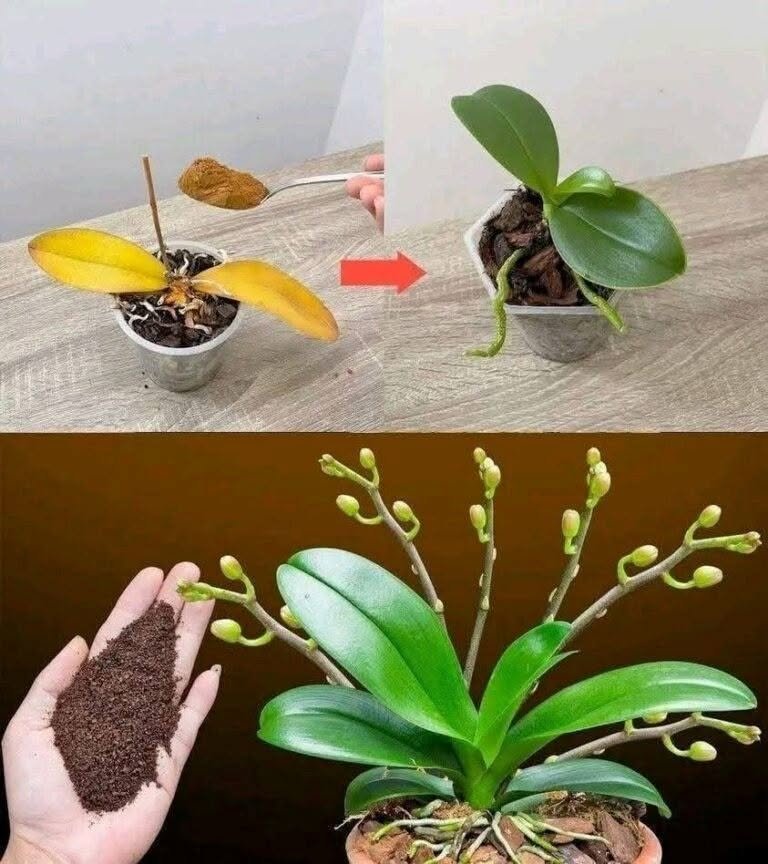
That classic viral gardening headline—“Just a teaspoon, suddenly the orchid miraculously blooms with lots of flowers”—is a staple of plant-care social media. It plays on the universal frustration of owning a stubborn Phalaenopsis orchid that drops its blooms and refuses to do anything except grow a couple of green leaves for months on end.
In these viral DIY tutorials, that magical “teaspoon” usually refers to one of a few common kitchen remedies—most frequently garlic powder/fresh garlic infusion, a spoonful of honey, or cinnamon powder used to stimulate root health and ward off fungus.
Here is a breakdown of what these popular viral concoctions are supposed to do, how they work from a botanical perspective, and what you actually need to know before pouring kitchen ingredients into your potted plants:
The Most Common “1-Teaspoon” Orchid Hacks
-
The Garlic Solution (The Growth Booster):
-
The Recipe: Usually involves dissolving 1 teaspoon of garlic powder (or crushed fresh garlic) into a few cups of warm water, letting it steep, straining it, and using it to water or soak the orchid roots.
-
The Botanical Reality: Garlic contains trace amounts of sulfur, potassium, and vitamins, and allicin (a compound found in garlic) has natural antifungal and antibacterial properties. Giving roots a mild garlic bath can help protect a stressed orchid from root rot and minor pathogens, though it isn’t an instant miracle hormone that forces blooms on command.
-
-
The Honey & Water Tonic (The Root Protector):
-
The Recipe: Mixing 1 teaspoon of raw organic honey into warm water to soak damaged or repotted orchid roots.
-
The Botanical Reality: Honey is naturally antimicrobial and contains tiny amounts of minerals. Gardeners sometimes use diluted honey water to help heal cut or shock-damaged plant tissue during propagation, but adding too much sugar can attract ants, gnats, and mold if it isn’t rinsed properly.
-
-
The Cinnamon Dusting (The Anti-Fungal Seal):
-
The Recipe: Sprinkling 1 teaspoon of dry cinnamon powder directly onto cut roots or leaf joints.
-
The Botanical Reality: This is actually one of the few internet plant tricks that has solid horticultural backing. Cinnamon is a powerful natural antifungal agent. If you trim away dead or rotting orchid roots during maintenance, dusting the wounds with cinnamon creates a dry barrier that prevents fungus from entering and killing the plant.
-
What Actually Makes an Orchid Bloom?
While a kitchen tonic can give roots a healthy environment, real, repeated blooming doesn’t come from a single spoonful of a secret ingredient. Orchids bloom based on specific environmental triggers:
-
The Temperature Drop: Most common household orchids (like Phalaenopsis) are triggered to send up a flower spike by a natural drop in ambient night temperatures (about 10 to 15 degrees cooler at night than during the day for a couple of weeks).
-
Bright, Indirect Light: Orchids fail to rebloom most often because they are sitting in a dark corner. They need plenty of bright, filtered light (like an east-facing window) to build the energy required for flowers.
-
The Wet-Dry Cycle: Orchid roots hate sitting in standing water. Letting them dry out almost completely between waterings—allowing the roots inside a clear plastic pot to turn from bright green to a silvery-gray before watering again—is the ultimate secret to keeping them thriving.
Have you tried any of these viral kitchen hacks on your houseplants, or do you have a stubborn orchid right now that is refusing to flower?
