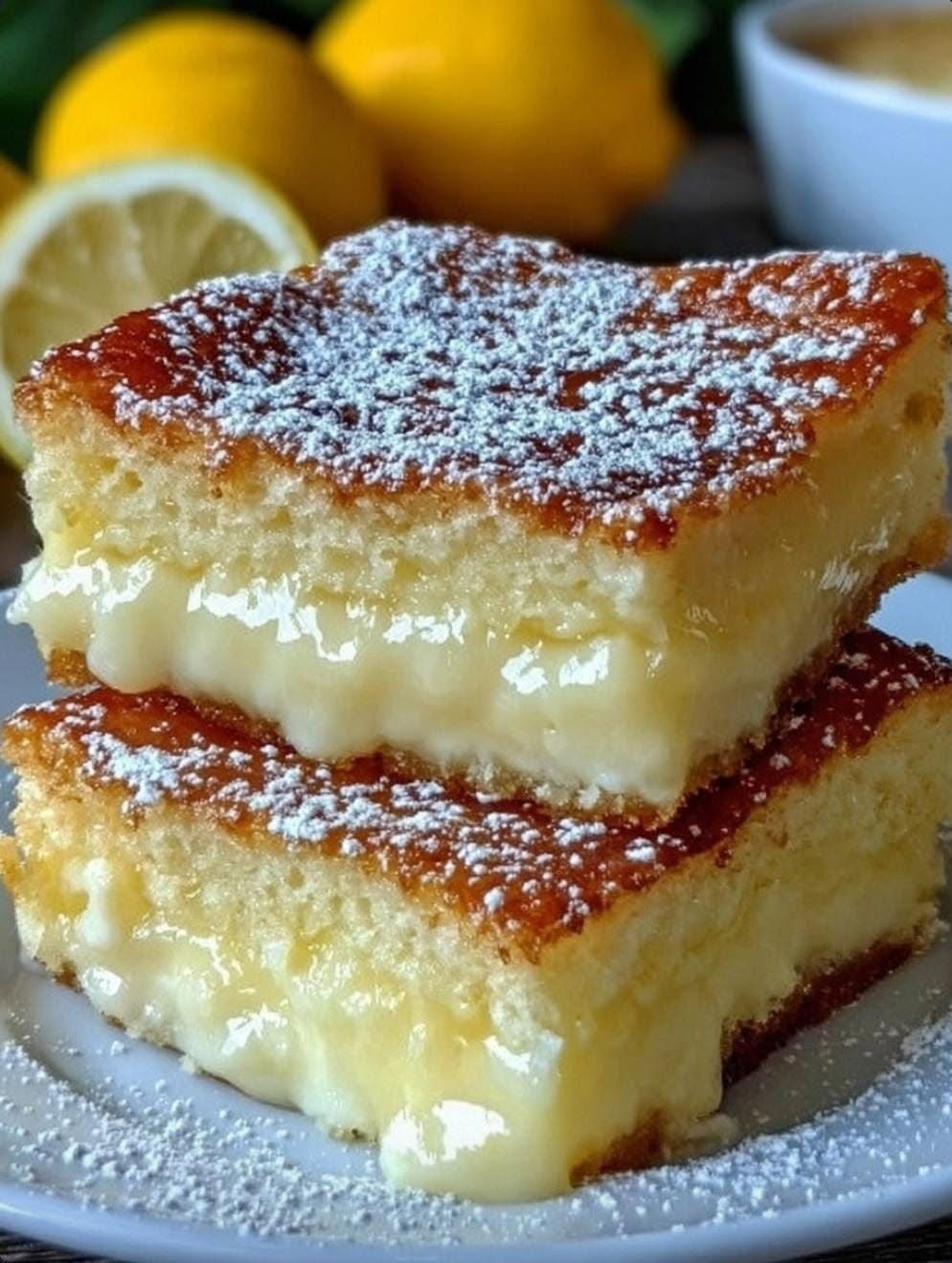
Ultimate Lemon Custard Cake: The Science and Complete Recipe
The lemon custard cake is a marvel of baking physics. By whipping egg whites separately and folding them gently into a thin, batter-like mixture, the oven transforms a single preparation into a structured dessert featuring three distinct layers: a light, spongy cake on top, a creamy, luscious custard in the middle, and a dense, flan-like base at the bottom.
Detailed Ingredients
-
Eggs: 4 large eggs, at room temperature (whites and yolks carefully separated)
-
Granulated Sugar: 3/4 cup (split if desired, but standard measurement works well)
-
Unsalted Butter: 1/2 cup (1 stick), melted and allowed to cool so it doesn’t cook the eggs
-
Lemons: Zest of 2 large organic lemons and 1/3 cup freshly squeezed lemon juice (avoid bottled juice for the best flavor)
-
All-Purpose Flour: 1/2 cup, measured accurately (spooned and leveled)
-
Milk: 2 cups lukewarm whole milk (cold milk can curdle the melted butter or shock the batter)
-
Salt & Stabilizer: A pinch of salt and 1/4 teaspoon cream of tartar (optional, for stable egg whites)
-
Finish: Powdered sugar for dusting, and fresh berries or mint sprigs for garnish
Step-by-Step Instructions
-
Prep Equipment and Oven: Preheat your oven to 160°C (325°F). Lightly butter an 8×8-inch baking pan, or line it with parchment paper leaving an overhang on the sides for easy removal later.
-
Whip the Egg Whites to Stiff Peaks: In a meticulously clean, grease-free glass or metal bowl, beat the egg whites with a pinch of salt and cream of tartar using an electric mixer on medium-high speed. Whip until stiff, glossy peaks form. Set aside.
-
Whisk Yolks and Sugar: In a separate large mixing bowl, combine the egg yolks and granulated sugar. Beat with your mixer on high speed for 1 to 2 minutes until the mixture turns pale yellow, thick, and ribbon-like.
-
Incorporate Butter and Citrus: Pour in the cooled melted butter, fresh lemon zest, and lemon juice. Mix on low speed just until combined, scraping down the sides of the bowl as needed.
-
Add Flour: Gently fold or low-speed mix the all-purpose flour into the yolk mixture until just incorporated. Do not overbeat, or the cake will lose its tender crumb.
-
Gradually Stream in Milk: With the mixer on low speed, slowly pour in the lukewarm whole milk. The batter will become extremely thin and liquid—resembling heavy cream or crepe batter. This high liquid-to-flour ratio is the secret behind the layer separation.
-
Fold in the Egg Whites: Add the whipped egg whites to the liquid batter in three separate additions. Use a rubber spatula to gently fold them in with an under-and-over motion. Crucial Tip: Leave small, floating clumps of egg white visible on top; these rise during baking to form the spongy top layer.
-
Bake to Perfection: Pour the batter into your prepared baking pan. Bake for 45 to 50 minutes. The edges should be set and golden, but the center should still have a slight jiggle when you gently shake the pan.
-
Chill and Slice: Cool the cake completely in the pan on a wire rack at room temperature, then place it in the refrigerator for at least 2 hours to fully set the custard layers. Dust with powdered sugar right before slicing.
The Science Behind the Magic
-
Top Layer (Sponge): The whipped egg whites are less dense than the rest of the liquid batter, so they naturally float to the top during baking, setting into a light, airy sponge cake.
-
Middle Layer (Custard): A balanced emulsion of milk, egg yolks, and flour thickens under gentle heat, creating a smooth, custard-like consistency.
-
Bottom Layer (Flan): A slightly higher concentration of heavy egg-and-sugar proteins settles at the base, baking into a denser, richer layer reminiscent of a baked flan.
Pro-Tip for Success: Always use room-temperature eggs. Cold eggs separate poorly and will shock the melted butter, resulting in a grainy batter that fails to layer correctly.
Are you planning to serve this lemon custard cake for a weekend brunch, a dinner party, or just a relaxing treat at home?
