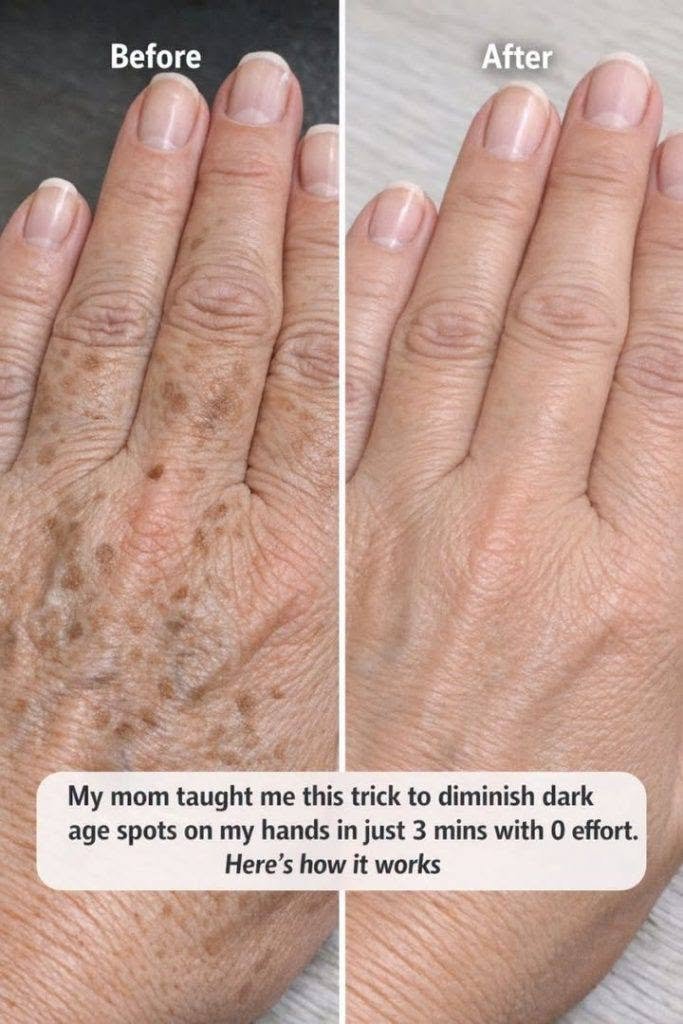
That classic health and beauty headline—“My mom taught me this trick to diminish dark age spots on my hands in just 3 mins with 0 effort”—is practically designed to stop anyone mid-scroll. Age spots (medically known as solar lentigines or “liver spots”) are a universal part of skin aging, and the promise of erasing decades of sun damage in three minutes with zero effort is the ultimate siren song of skincare marketing.
When you click on these viral articles or videos, that “0-effort mom trick” is almost always one of a few aggressive home remedies: pure lemon juice, apple cider vinegar, raw baking soda scrubs, or garlic paste left on the skin.
From a dermatological and physiological standpoint, understanding what age spots actually are reveals why a 3-minute kitchen fix is too good to be true—and why some of these viral hacks can actually do more harm than good.
The Reality Behind Age Spots
-
What Age Spots Actually Are:
-
The Biology: Age spots are localized deposits of melanin—the pigment that gives skin its color. Over decades, cumulative ultraviolet (UV) radiation from the sun triggers your skin’s melanocytes (pigment-producing cells) to go into overdrive in specific, sun-exposed areas like the backs of your hands, face, and forearms.
-
The Depth: This pigment doesn’t just sit on the very surface of your skin; it is embedded deeper down in the epidermis. Wiping a kitchen ingredient across the surface for three minutes cannot magically dissolve or bleach pigment anchored deep within the skin layers.
-
-
The Truth About the Viral “Mom Hacks”:
-
Lemon Juice & Apple Cider Vinegar: Proponents claim the natural acids act as a chemical peel. While fruit acids (AHAs) do help exfoliate dead skin cells over time, raw, undiluted lemon juice is intensely acidic and photosensitizing. Slathering it on your hands and stepping outside can cause a severe chemical burn and blistering reaction known as phytophotodermatitis, which actually leaves behind darker hyperpigmentation (post-inflammatory hyperpigmentation).
-
Baking Soda Scrubs: Using baking soda as a physical abrasive strips away the skin barrier. While it might temporarily make skin feel smooth by sloughing off surface cells, it causes micro-tears and irritation, triggering inflammation that worsens pigmentation in the long run.
-
What Actually Works to Manage and Fade Age Spots
If you want to genuinely fade hyperpigmentation on your hands, dermatology relies on slow, consistent biochemistry rather than 3-minute miracles:
-
Daily Broad-Spectrum Sunscreen (The Non-Negotiable Foundation):
-
Why It Matters: Age spots are caused by UV light. If you apply brightening treatments to your hands but leave them unprotected in the sun, UV rays will instantly reactivate the melanocytes, making the spots darken right back up. Slathering SPF 30+ on the backs of your hands daily is the single most effective “anti-aging” step.
-
-
Tyrosinase Inhibitors (Clinical Brighteners):
-
How They Work: Ingredients like vitamin C, niacinamide, alpha arbutin, and kojic acid work by blocking tyrosinase, the key enzyme your skin cells need to produce melanin. Applied consistently over weeks and months, they gradually slow down pigment production, allowing fresh, evenly pigmented skin cells to rise to the surface.
-
-
Gentle Chemical Exfoliation:
-
How It Works: Over-the-counter lotions containing low percentages of glycolic acid or lactic acid gently speed up cellular turnover, helping to shed pigmented surface cells faster without destroying your skin barrier like a harsh kitchen scrub.
-
The Bottom Line
There are no 3-minute zero-effort shortcuts when it comes to reversing cellular UV damage. The skin on the backs of our hands is thin and loses elasticity quickly, making it especially sensitive to harsh DIY kitchen remedies. Real fading requires protecting your skin from further UV damage and giving active ingredients time to gently interrupt melanin production.
Have you noticed sun or age spots creeping up on your hands, or are you navigating a broader skincare routine to keep your skin resilient as you age?
