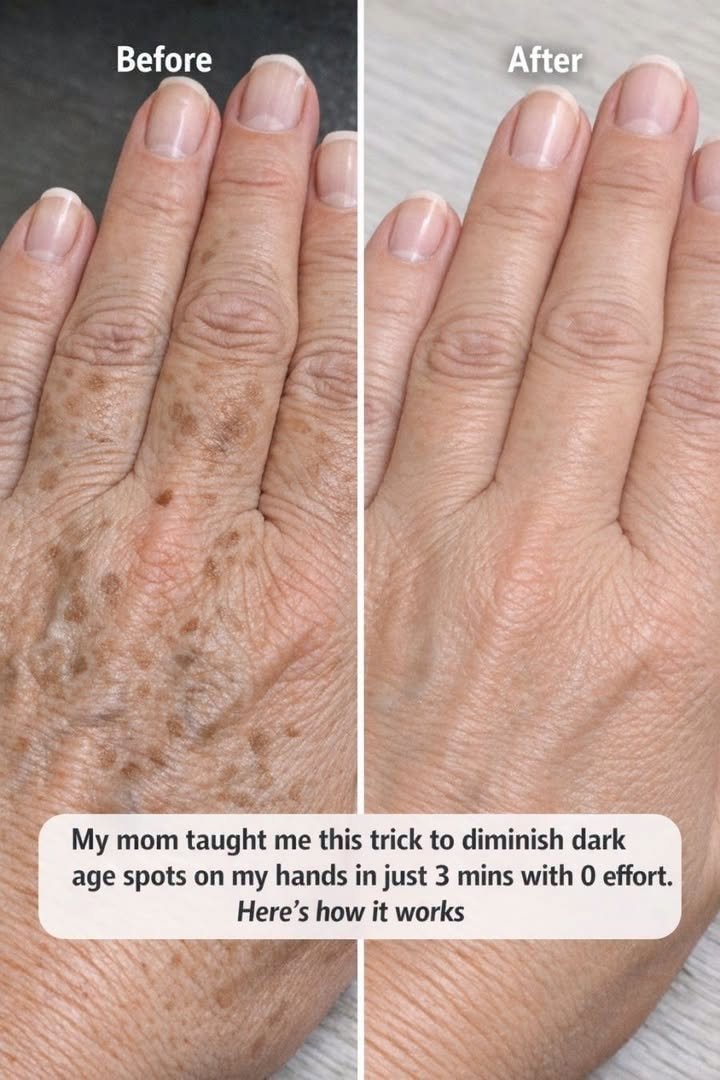
Viral skincare claims promising to permanently erase stubborn dark spots—often referred to as age spots, liver spots, or sun spots—in just three minutes with zero effort are classic clickbait. Whether they pitch a harsh lemon-and-baking-soda scrub, a miracle kitchen oil, or a sketchy online cream, the internet loves to pretend that decades of cumulative UV exposure can be magically un-done in a single commercial break.
The reality of how these spots form and what can actually be done about them is a bit more grounded in dermatology.
What Are “Age Spots” and Why Do They Appear?
-
The Root Cause (UV Damage): Despite the name “age spots,” these flat, brownish marks on the hands, face, and arms aren’t actually caused by aging alone. They are scientifically known as solar lentigines. They form when localized clusters of skin cells (melanocytes) overproduce melanin as a protective response to years of cumulative ultraviolet (UV) radiation from the sun.
-
Why Quick Kitchen Fixes Fail: Because this pigment sits deeper within the epidermis, rubbing a DIY kitchen mixture over your hands for three minutes won’t lift the pigment. At best, abrasive home scrubs just irritate the surface of the skin; at worst, harsh acidic ingredients cause chemical irritation, redness, or contact dermatitis.
What Actually Works to Fade or Manage Age Spots?
While you cannot instantly erase sun spots with zero effort, dermatologists rely on proven, evidence-based methods to safely lighten their appearance over time:
-
1. Strict, Consistent Daily Sun Protection (The Non-Negotiable First Step):
-
Why it matters: If you treat a dark spot but continue exposing your hands to the sun without protection, UV rays will instantly trigger the melanin production right back up, darkening the spot all over again. Wearing a broad-spectrum sunscreen (SPF 30 or higher) on your hands daily prevents them from getting darker.
-
-
2. Topical Brightening Ingredients:
-
What to look for: Over-the-counter or prescription topicals containing ingredients like vitamin C, niacinamide, alpha arbutin, retinoids, or hydroquinone work by gently inhibiting the enzyme (tyrosinase) responsible for melanin production, gradually fading the spots over several weeks or months of consistent use.
-
-
3. Professional Dermatological Treatments:
-
For faster results: If topical creams aren’t enough, dermatologists use clinical procedures like Q-switched lasers, intense pulsed light (IPL) therapy, or chemical peels to safely break up the concentrated pigment clusters in the skin.
-
💡 The Big Takeaway
Real skincare takes consistency, not magic. Protecting your hands from UV rays and using proven brightening agents will yield far better results than any 3-minute internet miracle trick.
Have you noticed age spots appearing on your hands recently, or did one of these fast-fix viral beauty ads catch your attention while scrolling?
