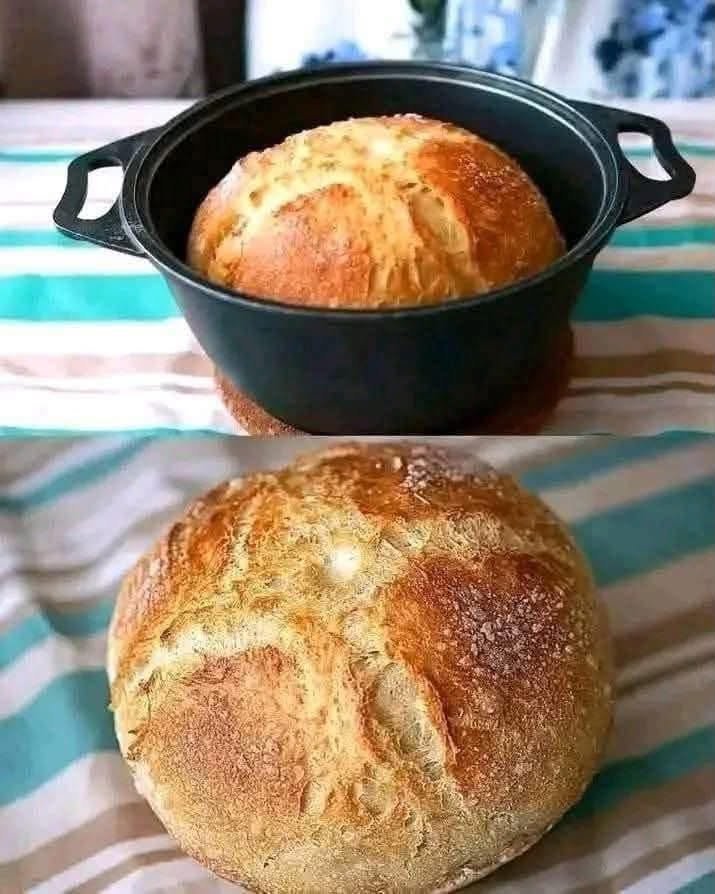
No-knead bread

No-knead bread is one of the most rewarding home baking techniques ever invented. Popularized by baker Jim Lahey and The New York Times, it relies on a high-hydration dough and a long, gentle overnight fermentation (12 to 18 hours) to develop gluten structure and complex flavor naturally—completely bypassing the need for physical kneading.

Pro-Tips for Bakery-Quality No-Knead Bread

  1. Bake in a Preheated Dutch Oven: A heavy, covered cast-iron Dutch oven mimics professional steam-injected bakery ovens. The trapped steam keeps the crust soft initially, allowing the loaf to expand fully before building a golden, crackly crust.
  2. High Heat is Essential: Baking at 450°F (230°C) ensures maximum “oven spring” (rise) and produces that blistered, bakery-style crust.
  3. Resist Slicing Immediately: Allow the loaf to cool on a wire rack for at least 45 to 60 minutes before cutting. Slicing too early lets steam escape, causing the warm interior to become gummy.

Classic Crusty No-Knead Bread Recipe

Ingredients

  • 3 cups (390g) all-purpose flour or bread flour (plus extra for shaping)
  • ¼ tsp active dry yeast or instant yeast
  • 1¼ tsp fine sea salt or kosher salt
  • 1½ cups (355ml) lukewarm water
1.Mix the Shaggy Dough:Takes less than 3 minutes.

In a large glass or ceramic bowl, whisk together the flour, yeast, and salt. Pour in the lukewarm water and stir with a wooden spoon or spatula just until a sticky, shaggy dough forms and no dry flour remains. Do not knead.
2.Long Overnight Fermentation:Time replaces physical kneading.

Cover the bowl tightly with plastic wrap or a damp towel. Let it rest at room temperature (around 70°F / 21°C) for 12 to 18 hours. The dough is ready when its surface is bubbly, expanded, and wet-looking.
3.Preheat the Oven & Dutch Oven:Preheat cast iron to maximum temperature.

30 minutes before baking, place an empty covered Dutch oven (heavy cast iron or enameled) on the middle rack of your oven and preheat to 450°F (230°C).
4.Shape the Loaf:Handle gently to keep trapped air pockets.

Scrape the sticky dough out onto a well-floured surface. Gently fold the edges over themselves once or twice to form a rough ball. Transfer the shaped ball onto a sheet of parchment paper, cover loosely, and let rest for 20 minutes while the oven finishes heating.
5.Bake Covered, Then Uncover:Covered baking creates steam; uncovered creates color.

Carefully remove the hot Dutch oven from the oven. Use the parchment paper as a sling to lift the dough and lower it directly into the pot. Cover with the lid and bake for 30 minutes. Then, remove the lid and bake uncovered for an additional 12 to 15 minutes until the crust is deep golden-brown. Cool completely on a rack before slicing.

Leave a Comment