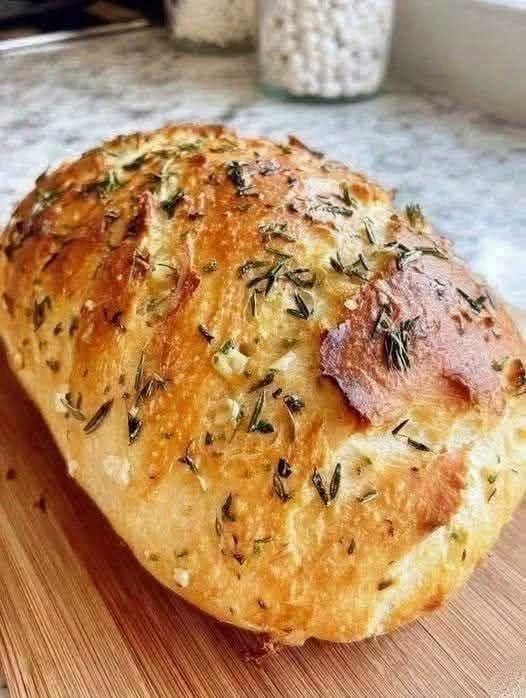
Unlike dramatic wellness myths or questionable DIY beauty hacks, no-knead bread is one internet food trend that completely lives up to the hype. Popularized globally by bakers like Jim Lahey, this method proves you don’t need a stand mixer, upper-body strength, or professional baking skills to produce a bakery-quality artisan loaf with a shatteringly crisp crust and a tender, airy interior.
The secret isn’t magic—it’s pure chemistry and time.
The Science Behind No-Knead Bread
-
The Power of Slow Fermentation: Traditional bread recipes require heavy kneading to manually stretch and align gluten strands so the dough can trap gas and rise. The no-knead method swaps muscle for patience. By using a very wet dough and letting it sit undisturbed for 12 to 24 hours, gluten develops naturally through a chemical process called autolysis and enzymatic action.
-
The Dutch Oven Steam Chamber: The second secret weapon is baking the loaf inside a preheated, covered heavy cast-iron Dutch oven. Trapping the moisture released by the dough creates a steamy mini-oven environment. This prevents the crust from hardening too early, allowing the loaf to achieve maximum oven spring, followed by removing the lid at the end to caramelize the crust to a deep, golden brown.
A Simple, Foolproof No-Knead Recipe
You only need four basic ingredients to make this at home:
-
Ingredients:
-
3 cups (approx. 400g) all-bread flour or all-purpose flour
-
1/4 teaspoon instant or active dry yeast
-
1 1/4 teaspoons salt
-
1 1/2 cups (approx. 350ml) cool water
-
-
Step-by-Step Instructions:
-
Mix (Day 1): In a large bowl, whisk together the flour, yeast, and salt. Add the water and stir with a spatula or your hands just until a sticky, shaggy dough forms with no dry flour remaining.
-
Rest & Rise: Cover the bowl tightly with plastic wrap and let it sit at room temperature for 12 to 18 hours. When ready, the surface should be dotted with bubbles and doubled in size.
-
Shape: Generously flour a work surface, turn out the sticky dough, and gently fold it over on itself once or twice. Shape it into a rough round ball (boule). Let it rest covered for about 30 to 45 minutes while you preheat your oven.
-
Preheat: Place a heavy Dutch oven (with its lid on) inside your oven and preheat the entire unit to 450°F (230°C) for 30 minutes.
-
Bake: Carefully drop the dough into the scorching hot Dutch oven (lining the bottom with parchment paper makes this effortless). Cover with the lid and bake for 30 minutes. Then, remove the lid and bake for another 15 minutes until the crust is deep and golden.
-
Cool: Let the loaf cool completely on a wire rack before slicing so the interior crumb finishes setting.
-
💡 The Big Takeaway
No-knead bread is proof that letting time and simple chemistry do the heavy lifting often yields better results than forcing the process.
Have you ever tried baking a artisan loaf at home, or are you looking for a satisfying, low-effort kitchen project to try out this weekend?
