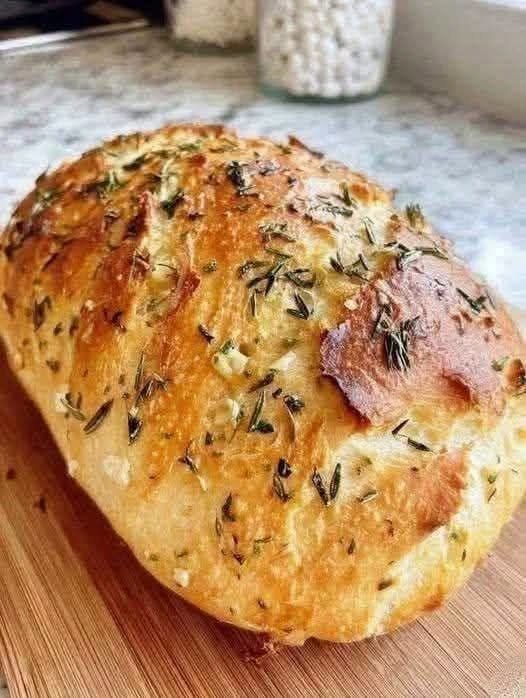
That choice—no-knead rosemary and garlic bread—is a masterclass in culinary chemistry. It takes the most intimidating part of artisan baking (kneading, shaping, and managing gluten networks) and throws it out the window, relying entirely on the slow, invisible power of time, moisture, and microbiology.
When you pull a crusty, golden loaf out of a Dutch oven filled with the aroma of roasted garlic and piney rosemary, you are harnessing food science at its finest. Here is what is happening in your mixing bowl and oven, along with how to nail it:
The Chemistry of No-Knead Bread
-
Time Replaces Muscle (Enzymatic Gluten Development):
-
The Science: Traditional bread making requires vigorous physical kneading to physically align wheat proteins (gliadin and glutenin) into a strong, stretchy gluten network. In a no-knead recipe, you use a very wet (high-hydration) dough and let it sit for 12 to 24 hours. During this long, slow fermentation, water molecules slowly penetrate the flour, and natural enzymes break down and rearrange the protein structures, building a robust gluten network all on their own with zero physical effort.
-
-
Wild Yeast and Flavor Fermentation:
-
The Biology: Even with just a tiny pinch of commercial yeast, the extended rise time allows wild yeasts and ambient bacteria to go to work. They consume sugars and produce organic acids and alcohol. This slow chemical transformation is what gives no-knead bread that complex, slightly sourdough-like tang that fast-rising sandwich bread completely lacks.
-
-
The Dutch Oven Steam Chamber (The Oven Spring):
-
The Physics: Artisan crust requires intense, trapped steam. When you drop your wet, sticky dough into a preheated cast-iron Dutch oven with the lid on, the moisture evaporating from the dough creates an instant steam chamber. This keeps the outer crust soft just long enough for the trapped internal gases to expand to their absolute maximum (the “oven spring”). Removing the lid halfway through lets the dry heat blast the surface, caramelizing the sugars and starches into a shattering, crispy crust.
-
Infusing the Rosemary and Garlic
Getting aromatics like garlic and rosemary into a wet, slow-rise dough without disrupting the fermentation requires a specific touch:
-
Don’t Use Raw Garlic in the Dough: Raw, minced garlic contains antimicrobial compounds (like allicin) that can actually inhibit yeast activity and create bitter, harsh pockets in a long-ferment dough. Instead, gently roast or sauté whole garlic cloves in olive oil until golden and sweet, then mash them into a paste or fold the infused garlic-olive oil directly into the dough.
-
Blooming the Rosemary: Finely chop fresh rosemary needles and let them sit in your warm mixing water or oil for a few minutes before adding the flour. This draws out the volatile essential oils, distributing that aromatic pine flavor evenly throughout every single slice rather than leaving it trapped in isolated dry clumps.
The Takeaway
No-knead rosemary and garlic bread proves that patience is the ultimate ingredient in the kitchen. By letting time and moisture do the heavy lifting, you get bakery-quality results with minimal effort.
Are you baking this loaf to pair with a specific meal, or just exploring the magic of artisan baking at home?
