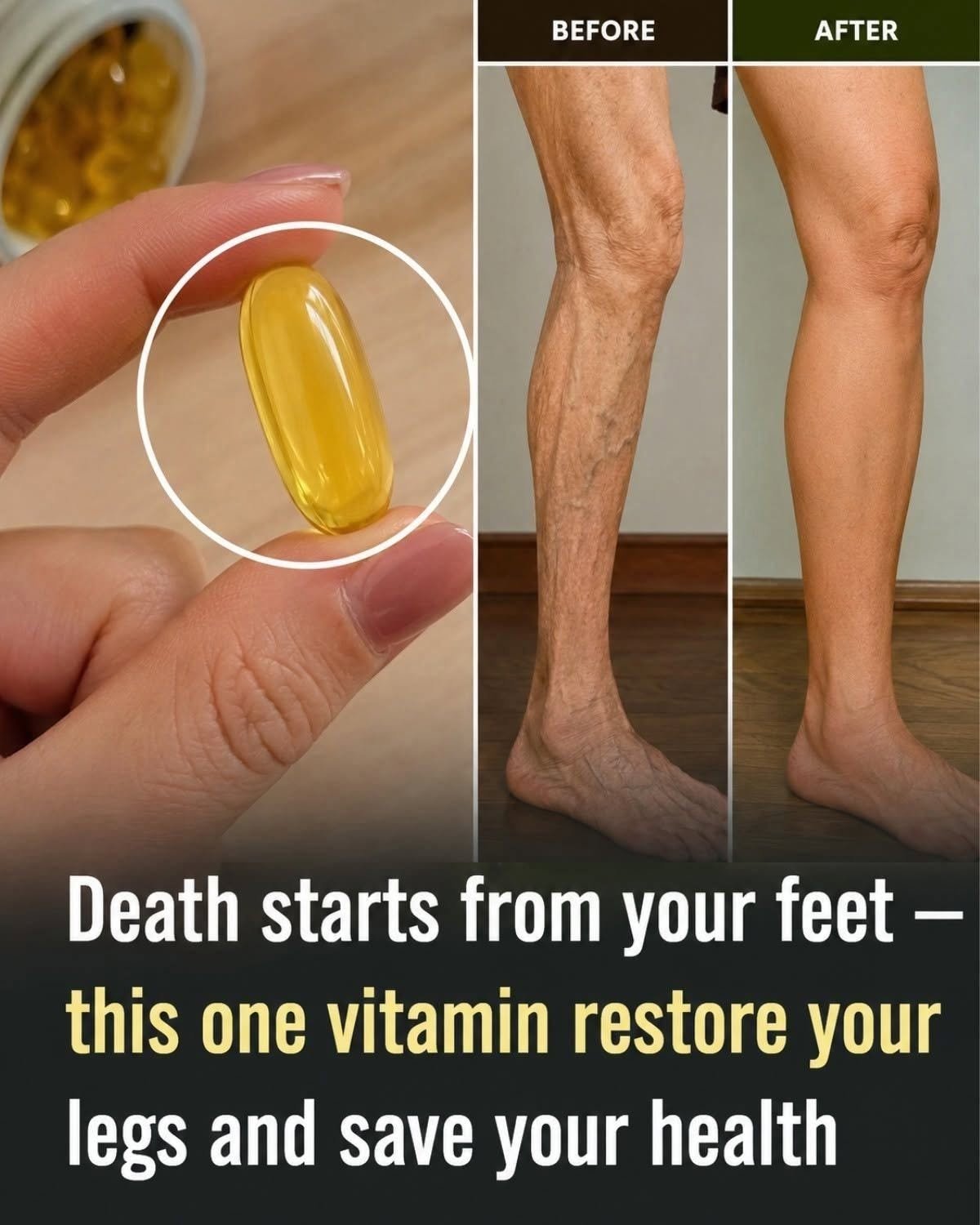
That classic headline plays on a very distinct and deeply uncomfortable physical sensation: that heavy, sluggish, “dead” feeling in your lower limbs, or calves that feel like they’re dragging through wet cement by the end of the day. When articles point to a single vitamin for leg health, they are usually hunting for the key driver of micro-vascular oxygenation, nerve signaling, or muscular energy.
While “dead feet and heavy calves” can stem from a few different physiological bottlenecks, looking at what those tissues are desperately missing points us directly to a specific powerhouse: Vitamin B1 (Thiamine), closely followed by its vascular partner, Vitamin B3, and the critical non-vitamin co-factor, Magnesium.
Here is what your lower extremities are actually trying to tell you when they feel heavy, numb, or sluggish:
What “Dead Feet and Heavy Calves” Are Missing
-
Vitamin B1 (Thiamine) – The Nerve and Energy Fuel:
-
The Mechanism: Thiamine is essential for glucose metabolism in nerve and muscle cells. When your lower limbs are starved of B1, nerve conduction slows down. This is why a severe deficiency classically manifests as “dry beriberi”—characterized by burning feet, lower leg numbness, heavy calves, and progressive muscle weakness as peripheral nerves struggle to fire properly.
-
-
Vitamin B3 (Niacin) – The Micro-Capillary Opener:
-
The Mechanism: As we touched on earlier, poor lower-leg circulation often means blood is struggling to return efficiently against gravity or micro-capillaries are constricted. Niacin acts as a powerful vasodilator, relaxing the smooth muscle walls of peripheral blood vessels and flooding starving lower-leg tissues with fresh oxygen and warm blood.
-
-
Magnesium & Potassium – The Cellular Pump (The Electrolyte Missing Link):
-
The Mechanism: Sometimes it’s not just a vitamin, but an ionic shortage. Without adequate magnesium and potassium, the sodium-potassium pumps in your muscle cells cannot reset efficiently after movement. This leaves the calves feeling chronically tight, heavy, and prone to microscopic fatigue buildup.
-
The Physiological Reality of “Heavy Legs”
Gravity makes the lower legs the hardest place for your circulatory and nervous systems to service. When blood pools, fluids stagnate, or peripheral nerves experience mild metabolic stress, the legs literally feel leaden and unresponsive.
Beyond checking key micronutrients like the B-complex family, supporting heavy calves and tired feet comes down to mechanical fundamentals: activating the “calf muscle pump” (the skeletal muscle contractions that physically squeeze blood back up toward the heart), avoiding prolonged static sitting, and ensuring your hydration and electrolyte balance are dialed in.
Do your legs usually feel heavy after sitting for long periods, or is it a sensation that creeps up on you throughout the day?
