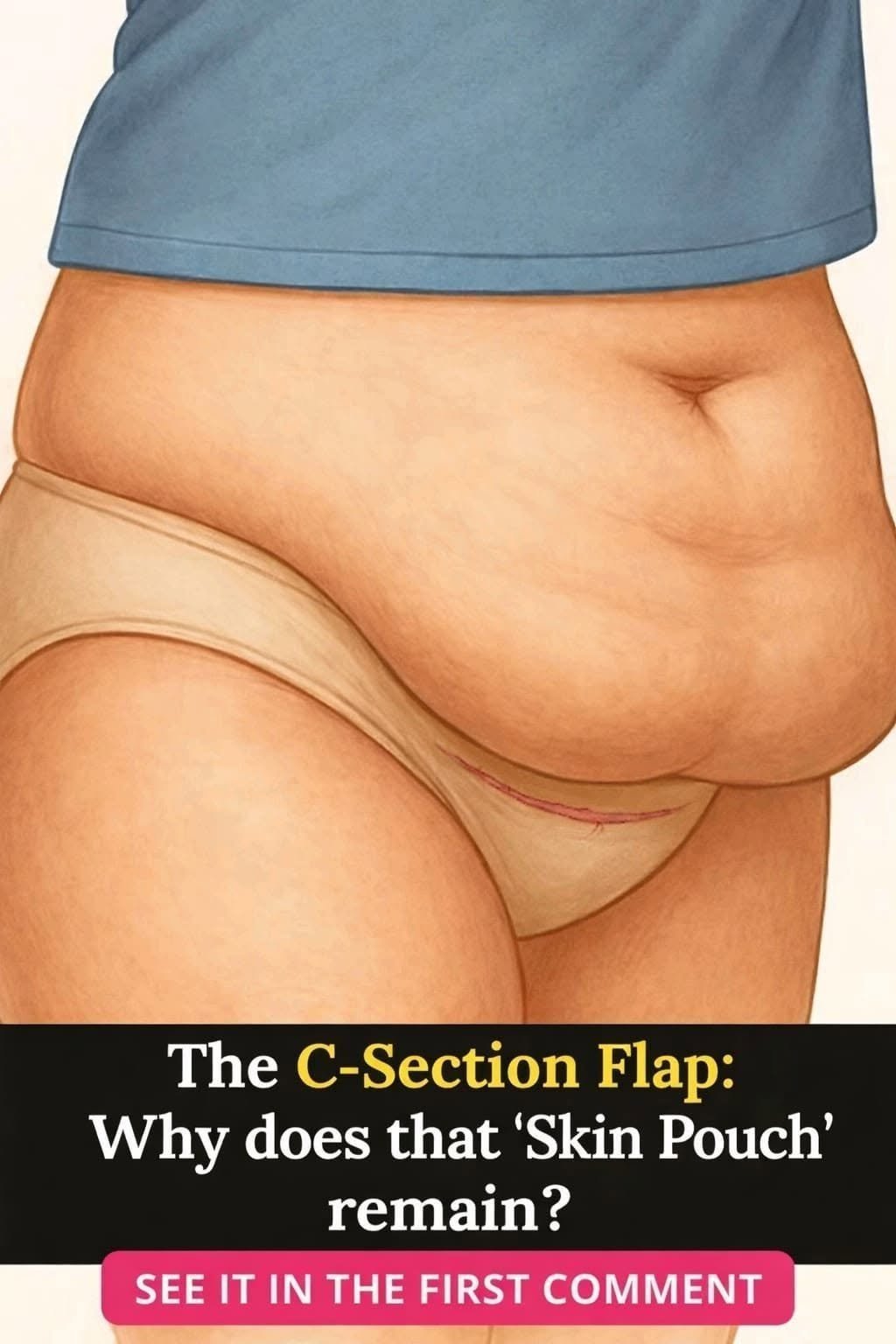
The lower abdominal pouch, shelf, or “flap” that frequently appears after a Cesarean section is a remarkably common post-pregnancy feature. Often referred to colloquially as a “C-section shelf,” this small ledge or overhang of skin and tissue sitting directly above the incision line can feel puzzling—especially because it often persists even after a person returns to their pre-pregnancy weight or builds core strength.
Understanding why this physical contour happens comes down to a combination of surgical anatomy, tissue healing, and the physiological changes of pregnancy.
Why the C-Section “Bag” or Shelf Forms
-
Scar Tethering and Adhesions:
-
During a C-section, a surgeon makes a horizontal incision through multiple layers of tissue—including skin, fat, fascia, and the uterine wall. As these layers heal, internal and external scar tissue forms.
-
In some cases, the scar tissue becomes anchored or “tethered” tightly to the deeper layers of the abdominal wall. This creates a fixed, indented line across the lower abdomen. Because the scar stays securely fastened inward while the flexible skin and tissue directly above it remain mobile, the upper tissue naturally folds forward over that fixed point, creating a ledge or shelf.
-
-
Skin Laxity and Pregnancy Stretch:
-
Throughout pregnancy, the skin and connective tissues of the abdomen stretch immensely to accommodate a growing baby. After delivery, skin elasticity does not always snap completely back to its original state. This remaining loose skin tends to drape downward, accumulating right above the low horizontal incision line.
-
-
Abdominal Muscle Separation (Diastasis Recti):
-
Pregnancy frequently causes the paired outermost abdominal muscles (rectus abdominis) to separate down the midline. When these muscles remain stretched apart postpartum, they lose some of their natural structural tension. Without that firm internal “girdle” holding everything flat, the lower abdomen is more prone to a soft, rounded protrusion.
-
-
Changes in Fascia and Fat Distribution:
-
Anatomical layers like the Scarpa fascia (a membranous layer beneath the skin) are altered during surgery. If these layers aren’t or can’t be re-approximated identically during closure, it can sometimes allow underlying soft tissue to shift slightly upward or bunch near the scar boundary.
-
What Can Help (and What Can’t)
-
Time and Natural Remodeling: In the first 3 to 6 months postpartum, swelling, fluid retention, and fresh scar remodeling can make the overhang look more prominent. Over the course of the first year, collagen softens and skin retracts to its final baseline.
-
Targeted Physical Therapy: While you cannot “spot-reduce” skin, working with a pelvic floor physical therapist to address deep core weakness and diastasis recti can dramatically improve overall abdominal wall support and posture.
-
Scar Mobilization: Once the incision is fully healed and cleared by a physician, gentle, specialized scar massage can sometimes help free up tight, adhered tissue and improve flexibility along the incision line.
-
Surgical Realities: Because a C-section shelf is often driven by actual structural changes—such as stretched-out skin laxity or deep scar adhesions—diet and exercise alone may not completely eliminate it if the skin’s elastic recoil has been permanently altered. For those seeking a structural correction, options range from minor scar revisions to targeted abdominal plastic surgery (like a mini-tuck).
Are you or someone you know navigating postpartum recovery right now, or were you curious about the anatomy behind how surgical scars heal?
