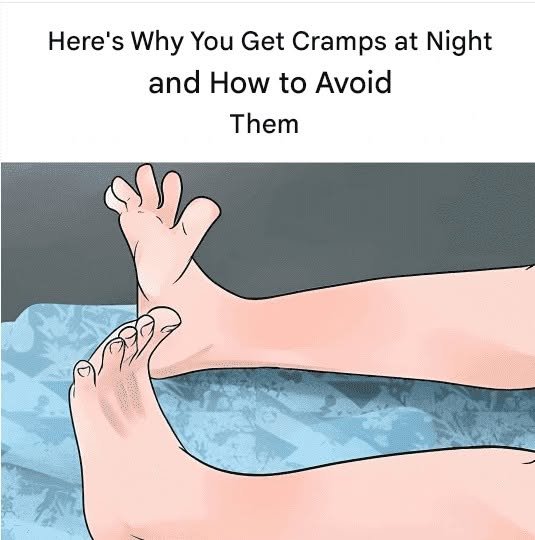
That classic wellness headline—“This is why we get cramps at night”—taps into one of the most universally frustrating sleep disruptions: the sudden, agonizing nocturnal leg cramp that jolts you awake in the middle of the night, making you point your toe and instantly regret your life choices.
Internet health articles love to wrap this in definitive, one-size-fits-all claims (blaming everything from severe mineral deficiencies to secret organ failure). When you strip away the hype and look at what sports medicine physicians and clinical neurophysiologists actually study, nocturnal leg cramps—often called “charley horses”—remain a bit of a physiological mystery, but they come down to basic nerve and muscle mechanics.
Here is what is actually happening in your body when a cramp strikes, separating common physiological triggers from internet myths:
The Physiology of a Nocturnal Muscle Cramp
-
Involuntary Motor Neuron Firing:
-
The Mechanism: A muscle cramp is essentially a massive, painful, involuntary contraction of a skeletal muscle (most commonly the calf muscle, the gastrocnemius). Inside your spinal cord and peripheral nerves, something triggers the motor neurons that supply the muscle to fire at a frantic, unregulated rate. Instead of relaxing during sleep, the muscle fibers lock into maximum contraction.
-
-
Muscle Fatigue and Tendon Tightness:
-
The Physics: During the day, if you’ve been standing for hours, sitting in a restrictive position, or pushing through an unusual workout, your calf muscles and their connecting tendons experience micro-fatigue. As you sleep, especially if you lie on your back with your toes pointed downward, your calf muscle shortens into a relaxed state. In that shortened, fatigued position, the nervous system is sometimes prone to misfiring, setting off a sudden spasm.
-
Separating Myth from Reality
-
The Electrolyte Myth: For decades, the automatic assumption was that night cramps always meant you were severely dehydrated or low on potassium, sodium, or magnesium. While extreme electrolyte imbalances can cause muscle issues, modern clinical studies show that most people who suffer from regular nocturnal cramps actually have normal blood electrolyte levels. Simply chugging sports drinks won’t magically cure them.
-
The Aging Factor: Nocturnal cramps become genuinely more common as we get older. This is largely due to the natural, gradual loss of nerve endings that supply our muscles (age-related motor neuron remodeling), making the electrical communication between brain and muscle a little more prone to static.
What Actually Helps When a Cramp Strikes
You don’t need a secret elixir or a complicated protocol to handle a nighttime cramp when it hits:
-
Active Stretching: The fastest way to break a cramp is to manually lengthen the contracting muscle. If your calf seizes, pull your toes upward toward your shin (dorsiflexion) or stand up gently and put weight on the leg to force the muscle to stretch out.
-
Gentle Movement and Heat: A warm shower, a heating pad, or a light walk around the bedroom can help relax the residual muscle tightness after a severe spasm subsides.
-
Hydration and Daily Mobility: While not a magic bullet, staying reasonably hydrated and maintaining a habit of stretching your calves before bed can keep your muscles from remaining in shortened, irritable positions overnight.
The Takeaway
Waking up with a sudden muscle cramp is a painful, annoying quirk of human biology—usually born of muscle fatigue, awkward sleeping positions, or normal nerve aging—not a mysterious medical emergency.
Are you dealing with frustrating nighttime cramps after a long day on your feet, or tracking down another piece of health media?
