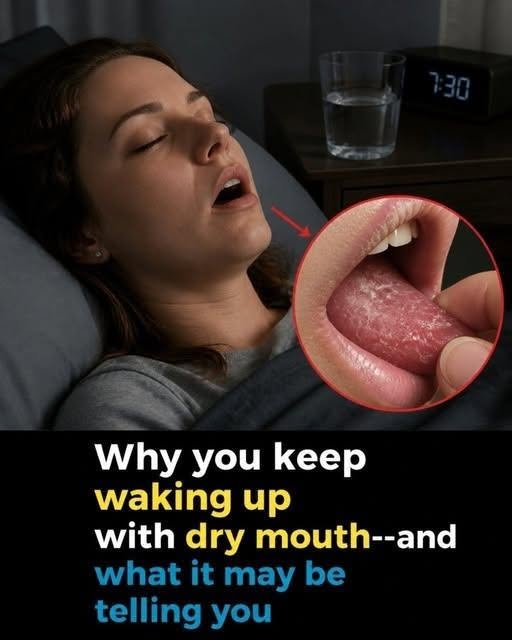
Cutting Through Dry Mouth Clickbait
Headlines asking “Waking up with dry mouth? Here’s what your body might be telling you” love to frame a common morning symptom as a mysterious, ominous warning sign of hidden chronic illnesses. They hint at dramatic systemic failures just to keep you scrolling.
In clinical medicine and dental physiology, waking up with a dry mouth (xerostomia) is extremely common and almost always has simple, mechanical, or environmental explanations rather than being a scary diagnostic riddle.
The Real Science Behind Morning Dry Mouth
When doctors and dentists evaluate why someone wakes up with a dry mouth, they look at how salivary gland production naturally shifts overnight:
-
Mouth Breathing (The #1 Culprit):
-
The reality: Salivary glands naturally slow down their production while you sleep. If you have mild nasal congestion, allergies, a deviated septum, or sleep apnea, you are much more likely to breathe through your mouth all night. Moving a continuous stream of dry air across your oral tissues rapidly evaporates what little saliva is present, leaving you waking up feeling parched.
-
-
Medication Side Effects:
-
The reality: Hundreds of common prescription and over-the-counter medications—including antihistamines, decongestants, blood pressure drugs, and antidepressants—have anticholinergic properties. This means they intentionally or unintentionally reduce fluid secretions throughout the body, frequently causing dry mouth as a side effect.
-
-
Evening Dehydration and Environment:
-
The reality: Going to bed slightly dehydrated or sleeping in a bedroom with very low humidity (especially with forced-air heating or air conditioning running) will naturally dry out your mucous membranes by morning.
-
Why Clickbait Scares Fall Short
-
Ignoring Simple Fixes: Clickbait articles skip over straightforward lifestyle solutions—like using a bedside humidifier, staying hydrated, or addressing seasonal allergies—in favor of sensationalizing worst-case scenarios.
-
Overstating Medical Conditions: While chronic, persistent dry mouth can occasionally be linked to specific autoimmune conditions (like Sjögren’s syndrome) or controlled metabolic shifts (like untreated diabetes), these present with persistent, daytime symptoms—not just a standard, occasional dry mouth upon waking up after a night of breathing through your nose.
Dental & Health Reminder: Chronic dry mouth isn’t just uncomfortable; saliva protects your teeth from decay. If your mouth feels dry all day long or wakes you up constantly, mention it to your dentist or doctor so they can review your medications or check for sinus and breathing issues.
Are you dealing with persistent dry mouth, or did a sensational wellness headline catch your attention today?
