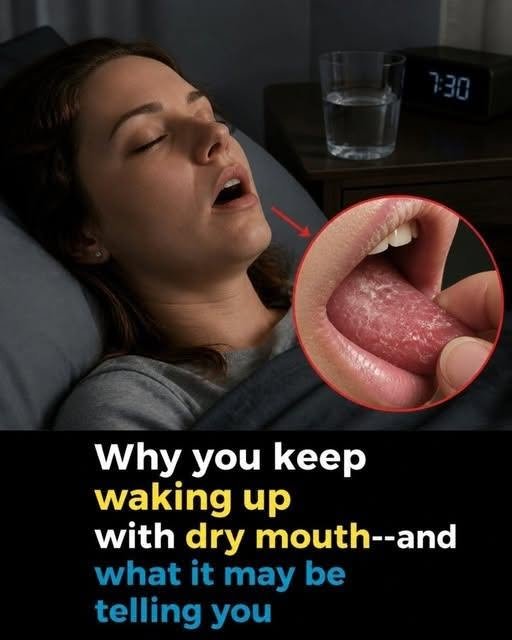
Waking up with a dry mouth—medically known as xerostomia—is more than just an annoying morning annoyance. It is often your body’s way of signaling that your salivary glands aren’t producing enough moisture while you sleep.
Common Reasons for Morning Dry Mouth
-
Mouth Breathing: If you sleep with your mouth open (often due to nasal congestion, allergies, a deviated septum, or sleep apnea), the continuous airflow quickly evaporates the moisture in your mouth.
-
Dehydration: Not drinking enough fluids throughout the day or evening can leave your body short on the water it needs to produce adequate saliva overnight.
-
Medication Side Effects: Hundreds of common medications—including antihistamines, decongestants, high blood pressure drugs, and antidepressants—list dry mouth as a frequent side effect.
-
Lifestyle Factors: Consuming alcohol, caffeine, or salty foods close to bedtime, or using tobacco products, can significantly dry out your mucous membranes.
-
Aging and Underlying Health Conditions: Salivary flow naturally decreases somewhat with age, but chronic dry mouth can also be linked to conditions like diabetes, Sjögren’s syndrome, or nerve damage.
Simple Ways to Find Relief
-
Hydrate Strategically: Keep a glass of water by your bed to sip if you wake up parched, and make sure you are drinking enough fluids steadily throughout the day.
-
Breathe Through Your Nose: Address underlying congestion with saline sprays, humidifiers in the bedroom, or by treating allergies.
-
Avoid Evening Triggers: Limit alcohol, sugary drinks, and heavy caffeine use in the hours leading up to sleep.
-
Protect Your Teeth: Because saliva acts as a natural defense against cavities and gum disease, persistent dry mouth makes dental hygiene extra important. Consider using a moisturizing mouthwash formulated specifically for dry mouth.
Are you experiencing morning dry mouth occasionally, or is it a nightly occurrence that’s been bothering you for a while?
