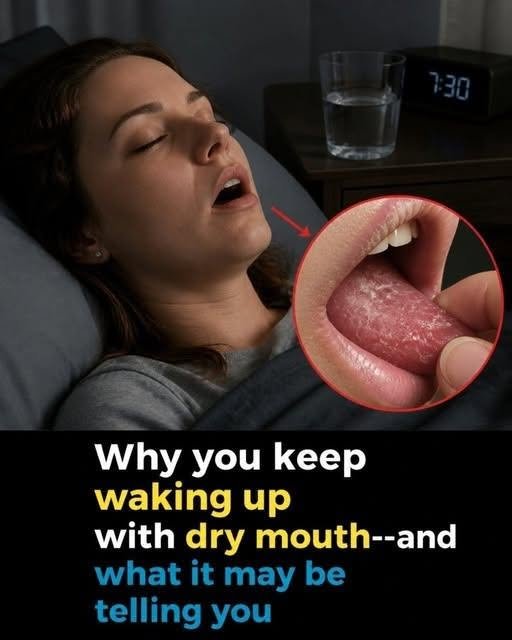
That classic health headline addresses a very common morning annoyance that most people brush off as a quirky result of sleeping with their mouth open. While nocturnal mouth-breathing is indeed the most frequent culprit, chronic morning dry mouth (xerostomia) can also serve as an early biological indicator of underlying systemic, metabolic, or environmental imbalances.
Saliva is far more than just moisture; it is a critical protective fluid packed with enzymes, minerals, and antibodies that defend your teeth and digestive tract. When your salivary glands slow down overnight, your body is often sending a specific signal.
Here is what your body might be telling you when you wake up with parched lips and a dry tongue:
What Morning Dry Mouth Can Mean
-
Chronic Nocturnal Mouth Breathing (The Structural Culprit):
-
What’s happening: If your nasal passages are blocked due to a deviated septum, seasonal allergies, chronic sinus inflammation, or sleep apnea, your body is forced to breathe through your mouth all night. This constant airflow acts like a convection oven, evaporating the delicate film of saliva by morning.
-
-
Dehydration and Electrolyte Imbalance:
-
What’s happening: Just like dry skin or sluggish muscles, dry mouth is an immediate sign of overall low fluid volume. If your total body water and electrolyte levels are depleted before bed, your autonomic nervous system conserves moisture, dramatically dialing down salivary gland production.
-
-
Medication Side Effects (The Pharmacological Factor):
-
What’s happening: Hundreds of everyday medications—including antihistamines, blood pressure drugs (like diuretics or beta-blockers), antidepressants, and anxiety medications—have potent anticholinergic properties. These drugs actively block the chemical signals that stimulate your salivary glands, leaving you bone-dry by morning.
-
-
Blood Sugar and Metabolic Imbalance:
-
What’s happening: Unregulated blood sugar or insulin resistance can significantly impact fluid balance and kidney function, often causing excessive thirst and dry mucous membranes. When blood glucose levels creep up, the body pulls water from tissues to help flush out excess sugar through urine, drying out the mouth in the process.
-
-
Evening Alcohol or High-Sodium Diets:
-
What’s happening: Having a glass of wine or a salty dinner close to bedtime acts as a double whammy. Alcohol is a potent diuretic that inhibits anti-diuretic hormones, while high sodium pulls fluid out of cellular tissues, leaving you parched and dehydrated by dawn.
-
The Practical Takeaway
If morning dry mouth is an occasional thing after a salty meal or a stuffy nose, it’s easily remedied by hydration or clearing nasal passages. However, if it’s a chronic daily occurrence, it’s worth auditing your evening habits, reviewing your medication list, or checking in on your hydration and nasal breathing.
Do you notice dry mouth happening mostly when you have a stuffy nose, or has it become a persistent morning routine?
