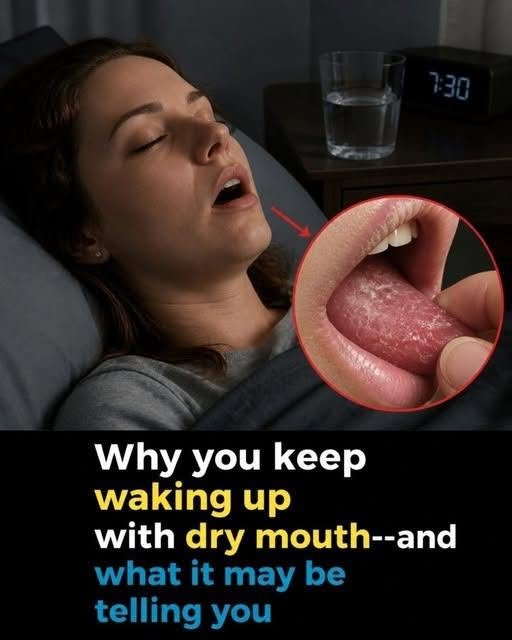
That headline loves to recycle the same dramatic hook, wrapping a very common morning annoyance in mysterious “body-whispering” language to make you feel like your physiology is sending out secret warning flares.
As we’ve looked at before, waking up with a parched mouth is almost always a simple mechanical issue—like overnight mouth breathing, low bedroom humidity, or evening medication timing—rather than a cryptic health crisis.
Here is the quick, grounded breakdown of why it happens and how to fix it without the drama:
1. The Real Culprits
-
Overnight Mouth Breathing: If a stuffy nose or allergies force you to sleep with your mouth open, continuous airflow acts like a mini-oven, evaporating your natural saliva by morning.
-
Medication Timing: Taking blood pressure meds, antihistamines, or antidepressants in the evening means their peak drying effect hits right while you sleep.
-
Dry Air: Low indoor humidity (from heaters or AC units) strips moisture right out of your airway and mouth.
2. Simple Ways to Fix It
-
Run a Humidifier: Adding moisture to your bedroom air keeps your throat and mouth from drying out.
-
Clear Your Airways: A saline nasal spray before bed can help you breathe comfortably through your nose all night.
-
Hydrate Consistently: Sip water steadily throughout the day rather than chugging a glass right before bed.
The Takeaway: Waking up dry doesn’t mean your body is malfunctioning; it just means air flowed over your tongue while your salivary glands were on their natural night shift.
Are you looking for a long-term way to stop waking up parched, or did this headline just keep popping up in your feed?
