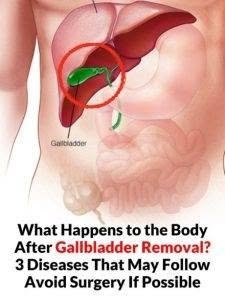
Viral health articles love to use fear-mongering titles to convince people that routine medical procedures—like gallbladder removal (cholecystectomy)—are inherently catastrophic traps designed to wreck your health, pushing you to avoid surgery at all costs.
Gastroenterologists and surgeons take a much more evidence-based view: while living without a gallbladder requires a few minor physiological adjustments, the surgery is often a life-saving or life-improving intervention for acute inflammation, severe infection, or painful gallstones.
What Actually Happens After Gallbladder Removal?
-
The Gallbladder’s Job: Your gallbladder is essentially a small storage pouch that holds bile—a digestive fluid produced by your liver that helps break down dietary fats.
-
Life Without the Pouch: When the gallbladder is removed, your body doesn’t stop making bile. Instead, bile flows continuously and directly from your liver into your small intestine, rather than being stored and released in concentrated bursts when you eat a fatty meal.
-
The Adjustment Period: For most people, the digestive system adapts seamlessly within a few weeks or months. However, because bile is constantly trickling down, some individuals experience temporary changes, such as more frequent bowel movements or mild sensitivity to very greasy foods.
Sorting Myth From Medical Reality: The “Post-Surgery Diseases” Claim
Viral posts often point to scary-sounding conditions they claim “follow” gallbladder removal. Here is what gastroenterology actually says about those risks:
-
1. Chronic Diarrhea (Bile Acid Malabsorption):
-
The reality: Some patients do experience loose stools or urgency after surgery because continuous bile flow can act as a mild natural laxative in the intestines. For the vast majority, this resolves on its own or is easily managed with simple dietary tweaks (like smaller, more frequent meals containing healthy fats rather than massive, greasy feasts). In persistent cases, prescription bile acid binders solve the issue entirely.
-
-
2. Liver Disease (NAFLD):
-
The reality: Viral claims sometimes suggest that removing the gallbladder causes fatty liver disease. In truth, non-alcoholic fatty liver disease is driven by metabolic syndrome, insulin resistance, and diet—not the absence of a gallbladder. In fact, removing a chronically inflamed, diseased gallbladder prevents systemic inflammation that can strain overall metabolic health.
-
-
3. Digestive Enzyme Deficiencies or “Ruined” Digestion:
-
The reality: Your liver still produces all the bile you need, and your pancreas still produces your digestive enzymes. Your digestive tract is remarkably adaptable; it simply reroutes the flow.
-
When Is Gallbladder Surgery Actually Necessary?
While internet gurus suggest “avoiding surgery at all costs,” leaving a severely diseased gallbladder in place can lead to life-threatening medical emergencies:
-
Acute Cholecystectomy: If gallstones block the bile duct, it can cause excruciating pain, dangerous infections (cholecystitis), jaundice, or life-threatening inflammation of the pancreas (pancreatitis). In these cases, removing the gallbladder is not optional—it is a critical, curative procedure.
💡 The Big Takeaway
Gallbladder removal is a common, highly successful surgery. While your digestive tract has to adjust to a steady, un-stored flow of bile, it does not mean a lifetime of chronic disease. For those with severe gallstone pain or infection, surgery provides immense relief, not ruin.
Are you or a loved one navigating gallbladder issues or upcoming surgery, or did a sensational health warning catch your eye?
