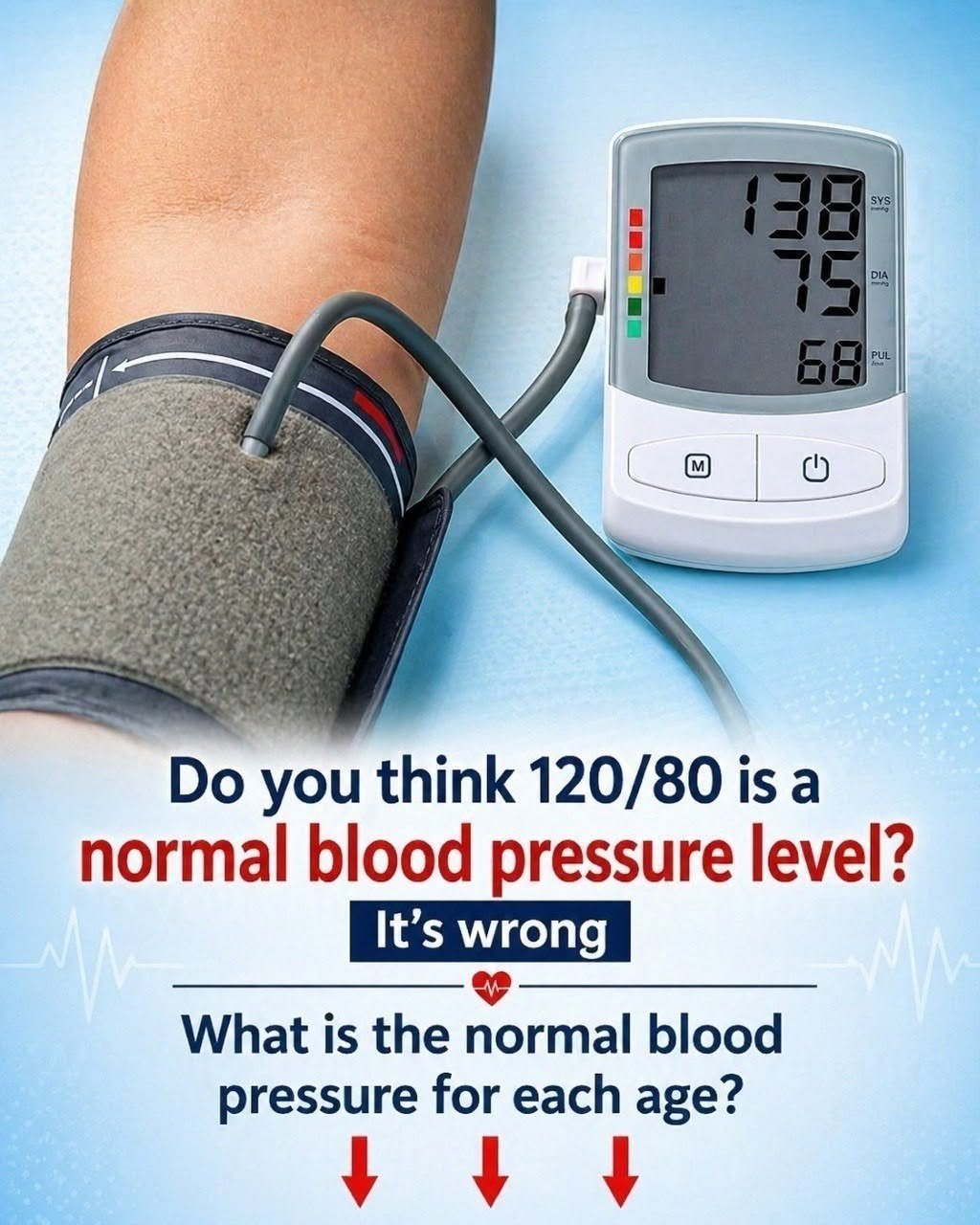
When looking at blood pressure charts, there is often a disconnect between what is clinically considered healthy and what is statistically average for a given age.
While average blood pressure naturally creeps upward as we get older due to the gradual stiffening of our arterial walls, major medical organizations (like the American Heart Association and the American College of Cardiology) maintain a universal target for all adults.
Here is how normal blood pressure breaks down across different life stages, separating the clinical targets from population averages:
The Universal Adult Standard (Ages 18 and Older)
According to current clinical guidelines, the ideal target for all adults—regardless of whether you are 20, 50, or 70—is:
-
Normal: Less than 120 / 80 mmHg (Systolic under 120 and Diastolic under 80)
-
Elevated: 120–129 / Less than 80
-
Hypertension Stage 1: 130–139 / 80–89
-
Hypertension Stage 2: 140 or higher / 90 or higher
Even though older adults frequently record higher averages, a reading of 130/80 mmHg or higher is clinically classified as high blood pressure.
Average Blood Pressure by Age (What is Statistically Common)
Population health data shows that average blood pressure rises steadily over the decades. While these figures represent what people typically measure, higher numbers in later decades indicate increased cardiovascular wear rather than an inherently “healthy” target:
-
Young Adults (Ages 18–39):
-
Average Reading: Roughly 110/68 to 122/76 mmHg
-
Context: Arteries are highly elastic, and cardiovascular resistance is low, keeping baseline numbers safely in the optimal range.
-
-
Middle-Aged Adults (Ages 40–59):
-
Average Reading: Roughly 122/76 to 131/82 mmHg
-
Context: This is the decade where blood pressure commonly crosses into the “elevated” or “Stage 1” category due to lifestyle factors, stress, and early arterial stiffening.
-
-
Older Adults (Ages 60 and Beyond):
-
Average Reading: Roughly 133/69 to 143/72+ mmHg
-
Context: It is very common for adults over 60 to experience isolated systolic hypertension (where the top number climbs while the bottom number stays low or drops). This happens because the main arteries lose their youthful elasticity, forcing the heart to work harder during contractions.
-
Children and Adolescents (Height & Age Dependent)
For minors, blood pressure standards cannot be fixed because a child’s cardiovascular system grows alongside their body. Pediatric guidelines rely on percentiles based on age, gender, and height:
-
Newborns: Typically range around 60–90 / 20–60 mmHg (very low due to small body mass and developing vessels).
-
School-Aged Children (6–12 years): Typically average around 95–110 / 60–75 mmHg.
-
Adolescents (13–18 years): Gradually approach adult ranges, typically sitting around 110–120 / 65–80 mmHg.
The Takeaway
While a slight rise in blood pressure can accompany aging, hitting targets below 120/80 mmHg remains the gold standard for reducing long-term strain on your heart, brain, and kidneys.
Are you looking at a specific home blood pressure reading you recently took, or keeping an eye on your cardiovascular wellness?
